

Article
A notable degree of participative democracy has firmly arrived in Europe. But to have more far-reaching impact, democratic deliberation needs to move into a radically new phase.
Richard Youngs
{
  "authors": [
    "Milan Vaishnav",
    "Devesh Kapur"
  ],
  "type": "other",
  "centerAffiliationAll": "dc",
  "centers": [
    "Carnegie Endowment for International Peace"
  ],
  "collections": [
    "Anti-Corruption"
  ],
  "englishNewsletterAll": "ctw",
  "nonEnglishNewsletterAll": "",
  "primaryCenter": "Carnegie Endowment for International Peace",
  "programAffiliation": "SAP",
  "programs": [
    "South Asia"
  ],
  "projects": [],
  "regions": [
    "South Asia",
    "India"
  ],
  "topics": [
    "Political Reform",
    "Democracy",
    "Civil Society"
  ]
}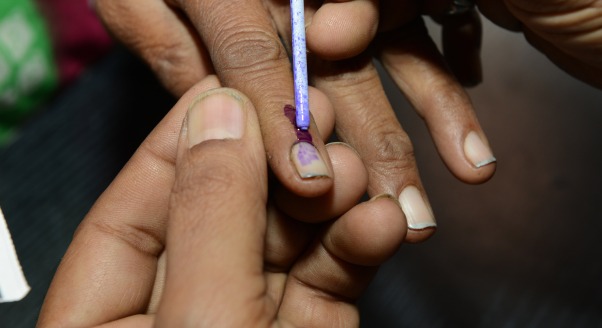
Source: Getty
A new measure of construction activity reveals evidence that builders in India use their assets to help politicians circumvent election finance laws.
Source: Center for Global Development
Where elections are costly but accountability mechanisms are weak, politicians often turn to private firms for illicit election finance. Where firms are highly regulated, politicians can exchange policy discretion or regulatory forbearance for bribes and monetary transfers from firms. Due to its regulatory intensity, we focus on the role of the construction sector. Specifically, we argue that builders will experience a short-term liquidity crunch as elections approach because of their need to re-route funds to politicians as a form of indirect election finance. We use variation in the demand for cement to investigate the presence of an electoral cycle in building activity in India consistent with this logic. Using a novel monthly-level dataset, we demonstrate that cement consumption does exhibit a political business cycle consistent with our hypothesis. Additional tests provide confidence in the robustness and interpretation of our findings.
This full text of this article is available at the Center for Global Development.

Director and Senior Fellow, South Asia Program
Milan Vaishnav is a senior fellow and director of the South Asia Program and the host of the Grand Tamasha podcast at the Carnegie Endowment for International Peace. His primary research focus is the political economy of India, and he examines issues such as corruption and governance, state capacity, federalism, and electoral behavior. He also conducts research on the Indian diaspora.
Devesh Kapur
Starr Foundation Professor, Johns Hopkins (SAIS)
Devesh Kapur is the Starr Foundation Professor of South Asian studies at the Johns Hopkins School of Advanced International Studies (SAIS). He is the author of three books on migration, including The Other One Percent: Indians in America (with Sanjoy Chakravorty and Nirvikar Singh).
Carnegie does not take institutional positions on public policy issues; the views represented herein are those of the author(s) and do not necessarily reflect the views of Carnegie, its staff, or its trustees.

A notable degree of participative democracy has firmly arrived in Europe. But to have more far-reaching impact, democratic deliberation needs to move into a radically new phase.

Richard Youngs

The domestic impacts of how long it is taking to end the war in Ukraine have pushed the French electorate to the political extremes and compromised the country’s diplomatic capacity.

Rym Momtaz

Before the next wave of EU enlargement takes place, the union needs to grapple with thorny questions of how power is distributed among its members.


Emil Sondaj Hansen, Ditte Brasso Sørensen

Radical-right parties are expected to do well in upcoming elections in four of the EU's biggest member states. If successful, they could prevent the union from addressing key challenges ahead.

Stefan Lehne

An overwhelming victory by a far-right-wing party in a small state in eastern Germany will have major repercussions for Chancellor Friedrich Merz’s coalition.

Judy Dempsey