

In The Media
David Rothkopf
{
  "authors": [
    "David Rothkopf"
  ],
  "type": "legacyinthemedia",
  "centerAffiliationAll": "",
  "centers": [
    "Carnegie Endowment for International Peace"
  ],
  "collections": [],
  "englishNewsletterAll": "",
  "nonEnglishNewsletterAll": "",
  "primaryCenter": "Carnegie Endowment for International Peace",
  "programAffiliation": "",
  "programs": [],
  "projects": [],
  "regions": [
    "North America",
    "United States"
  ],
  "topics": [
    "Political Reform",
    "Security"
  ]
}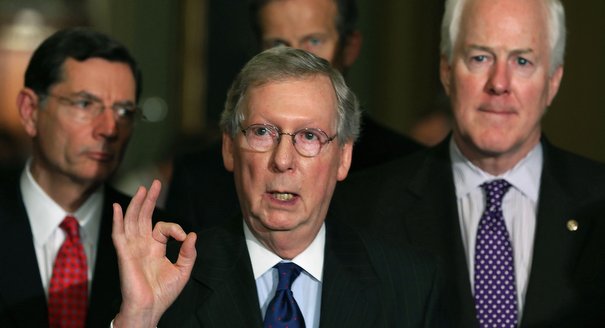
Source: Getty
The threat posed by Americans with guns is greater than the threat posed by North Korea will ever be.
Source: Foreign Policy
America is rightly on edge. When a man with the power to make life-or-death decisions affecting thousands of U.S. citizens recklessly shows contempt for decency and international norms of behavior, it is no wonder the American people would be both angry and fearful. When his threats are so clearly contrary to the interests of those he represents and even those who might otherwise support him, it is natural to wonder whether he has somehow become unhinged.
But we should react calmly. We should not let such disregard for the public good and such an imminent threat to the lives of so many of our neighbors and our children cloud our thinking. The mad man must be stopped.And nothing underscores the grotesque nature of the threat he poses than the existence of another mad man seeking the spotlight at the very same time. The interloper, North Korea's Kim Jong Un, also threatens Americans, also flaunts the interests of his constituents, also baffles the world with his apparently callous indifference to life.
But Kim Jong Un is no Mitch McConnell. Because Kim, even with his nuclear weapons, is hardly likely to launch an attack on Americans anywhere given that the response would produce the instant and certain obliteration of his regime. What that means is that for all his bluster, the chubby little autocrat is very unlikely to cost one American his life. But in vowing to block any vote on even the most modest legislation to rein in America's out-of-control gun culture, the Senate minority leader all but guarantees that the toll in America's street-corner war will continue to rise.
Let's put the threats in perspective. More people die from gun violence in the United States every 15 months than died in the Korean War. More people die daily in homicides using guns in the United States than combatants died each day in the Vietnam War. This is why, perhaps, while a recent Gallup poll shows only 55 percent of Americans favor aiding treaty ally South Korea should North Korea attack, fully 90 percent of Americans think their country should make it harder for people to buy a gun in the United States through means such as background checks.
While cable news networks play up the danger associated with Kim's mugging for the cameras in response to long-scheduled joint U.S.-South Korean military exercises in the region, they treat more or less as business as usual McConnell's political maneuvering to not only block any progress on reform, but actually deny the victims of tragedies such as Newtown and Aurora the opportunity to see a vote on the Senate floor.
The threat posed by Americans with guns is immeasurably and undeniably greater than the threat posed by North Korea will ever be. (Still not convinced? Sometime in the next two years, the number of people who have died in gun violence in the United States since 2000 will surpass the number of Americans who died in World War II.
This is not a public safety issue. It is a national security issue. And the politicians using legislative tricks to do the bidding of special-interest groups -- the National Rifle Association spent some $3 million in 2012 on lobbying, according to the transparency website OpenSecrets.org -- are not protecting the rights of Americans: They are violating them in the grossest possible way.
The path forward to fixing this problem now falls squarely on the shoulders of the Democratic leadership in the Senate. Majority Leader Harry Reid has said filibuster reform is possible. Now is the time for him to stop talking the talk and start walking the walk. The word "filibuster" does not appear in the U.S. Constitution. It is a Senate "tradition" that is being abused at the expense of America's most fundamental national interests. Reid should move as swiftly as the U.S. military did to respond to Kim's provocations and call McConnell's bluff by following through on filibuster reform. (An encouraging sign was the movement of a small number of GOP senators who publicly spoke out against the filibuster proposed by McConnell and 13 other conservative colleagues of his. With Reid now promising a vote on Thursday, perhaps this move will lead others to treating the gun-control issue with the respect and concern for the public well-being it deserves.)
States like Colorado and Connecticut, sites of gun tragedies, are starting to recognize that this is a national security crisis in which the federal government has consistently abrogated and ignored its responsibilities. They are passing tougher gun laws, and we can hope, given the overwhelming thrust of U.S. public opinion, that the trend will continue.
So let's not mince words: The same congressional obstructionists who are blocking common-sense reforms on guns are also blocking common-sense cuts to the bloated U.S. defense budget and common-sense solutions to America's broader fiscal problems, which are weakening the country and reducing its ability to respond to foreign threats in the future, and have blocked progress on other looming international threats such as global warming. It should be clear to those who care about U.S. national security that the tin-pot demagogues Americans ought to fear the most are the ones they elected right at home.

Former Visiting Scholar
David Rothkopf was a visiting scholar at the Carnegie Endowment as well as the former CEO and editor in chief of the FP Group.
Recent Work
David Rothkopf
David Rothkopf
Carnegie does not take institutional positions on public policy issues; the views represented herein are those of the author(s) and do not necessarily reflect the views of Carnegie, its staff, or its trustees.

Before the next wave of EU enlargement takes place, the union needs to grapple with thorny questions of how power is distributed among its members.


Emil Sondaj Hansen, Ditte Brasso Sørensen

The new U.S.–Denmark–Greenland agreement will help Washington exert political, economic, and financial dominance under the guise of security. Yet, it acknowledged Copenhagen’s and Nuuk’s sovereignty on the island.

Marc Pierini

A summer of escalation in the Black Sea has hurt Ukraine economically and is exacerbating world food security. A truce is needed—as is a broader reframing of Europe’s Ukraine strategy.

Thomas de Waal

Are Germany’s economic, industrial, and political struggles becoming a liability for the EU’s ability to rise to the geopolitical moment?

Rym Momtaz, ed.

European Commission President Ursula von der Leyen is about to give her annual address on the state of the EU. Here’s what she won’t—but should—say.
Rym Momtaz