

In The Media
David Rothkopf
{
  "authors": [
    "David Rothkopf"
  ],
  "type": "legacyinthemedia",
  "centerAffiliationAll": "",
  "centers": [
    "Carnegie Endowment for International Peace"
  ],
  "collections": [],
  "englishNewsletterAll": "",
  "nonEnglishNewsletterAll": "",
  "primaryCenter": "Carnegie Endowment for International Peace",
  "programAffiliation": "",
  "programs": [],
  "projects": [],
  "regions": [
    "North America",
    "United States"
  ],
  "topics": [
    "Political Reform",
    "Democracy"
  ]
}
Source: Getty
The systematic, persistent acceptance of women's second-class status is history's greatest shame.
Source: Foreign Policy
If, after reading through the FP Power Map that is at the heart of this issue, you were to conclude that the most disturbing aspect of the list is that only 10 percent of the people on it are women, you would be right. If you were to conclude that this fact is merely a cultural anomaly, a troubling quirk, or only the concern of the politically correct, however, you would be deeply and dangerously wrong.
Because our list is admittedly imperfect and impressionistic, you might decide there was a problem with our process or our tabulation. But the 10 percent figure is consistent with other such lists, and in fact that's the point: It's culled from many of the lists and groupings that track and monitor global power, from the G-20 to the Fortune 500. Several years ago, when I wrote a book called Superclass focusing on the global power elite, I put together a list of the world's 6,000 most powerful people based on a fairly rigorous definition of global clout: Each person on the list influenced millions beyond his or her national borders on a regular basis. My list included religious, media, business, financial, military, cultural, and political leaders. Women represented 6 percent of the list. Today the 18 women who are chief executives of Fortune 500 companies constitute less than 4 percent of those 500 firms. And that latter percentage would be even lower if you were listing women in top positions in globally influential religious groups or military organizations.The New York Times recently ran a story noting that women are flexing their muscle in the U.S. Senate because 20 of them now serve in that (largely inert) deliberative body. This was celebrated as a sign of progress, which, of course, given America's lamentable past, it is. But women are half the population. They are still grossly underrepresented. Worldwide, the numbers are much the same, with women making up approximately 20 percent of those at work in global legislatures. Representation proportional to their numbers would give them nearly three times as many seats.
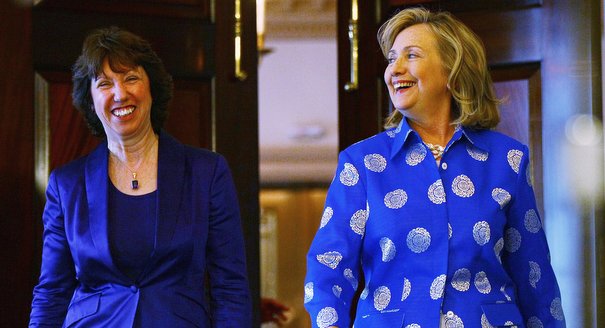
Because these figures are so familiar to us, so broadly accepted, we end up celebrating the occasional story of progress or individual success as representing far greater gains than are actually being realized. For every legislature that manages to achieve a surprising gender balance, like Rwanda's, which leads the world with 56 percent female representation; for every corporate board with an equal number of women and men; for every balanced cabinet, like that of former Chilean President Michelle Bachelet; for every powerful woman made good, whether world leaders like German Chancellor Angela Merkel and former U.S. Secretary of State Hillary Clinton or chief executives like Marissa Mayer of Yahoo!, Ursula Burns of Xerox, and Indra Nooyi of PepsiCo, literally hundreds of millions of women are denied equal protection under the law, the ability to pursue the careers they want, or even the right to count on the most basic freedoms that men take for granted.
In fact, the underrepresentation of women in positions of power is proof not so much that men still dominate the top of the pyramid as it is of a system of the most egregious, widespread, pernicious, destructive pattern of human rights abuses in the history of civilization. There is no genocide against any people that has produced more victims than the number of females who have lost their lives to discrimination against the birth of girl babies (in Pakistan alone, for instance, there is a culturally encouraged "shortage" of an estimated 6 million females), or who have died from the unwillingness of societies to provide the health care women need, or who die as a result of social customs that allow fathers to kill daughters for "shaming" families, husbands to kill wives for adultery, and men to perpetrate other horrific violence against women. That countless millions of women are also regularly raped, beaten, and abused by men only compounds these atrocities.
The systematic, persistent acceptance of women's second-class status is history's greatest shame. And for all our self-congratulations about how far we have come, we live in a world where even in the most advanced countries, deep injustices against women remain. These injustices, of course, have other costs beyond the purely human ones. Nothing would help societies grow more than educating and empowering women economically. Democracy is a sham until the planet's majority population actually achieves equitable representation in deliberative bodies and executive positions of government. And the absence of women in positions of power is also, of course, a guarantee that women's interests will continue to be minimized, ignored, or repressed.
We're talking about nothing less than an epoch-long war on a people here, an effort to hold back the economic -- and social -- progress of the majority of humanity. So how come the tough guys of the foreign-policy community continue to denigrate this as a "soft" issue, one of secondary importance at best?
Lists like Foreign Policy's should not simply be pored over to see who made it and who did not. They should be taken in instances like this one as evidence that we are so inured to abusing and undervaluing our mothers, sisters, and daughters that we have come to accept the unacceptable. Here's to the day when we no longer treat as customary that which, like slavery, ethnic slaughter, and religious inquisitions, must be seen as anathema to civilization.

Former Visiting Scholar
David Rothkopf was a visiting scholar at the Carnegie Endowment as well as the former CEO and editor in chief of the FP Group.
Recent Work
David Rothkopf
David Rothkopf
Carnegie does not take institutional positions on public policy issues; the views represented herein are those of the author(s) and do not necessarily reflect the views of Carnegie, its staff, or its trustees.

When the U.S.-Iran memorandum of understanding was announced, the UK, France, Germany, and Italy declared their readiness to help demine the Strait of Hormuz and lift nuclear sanctions on Tehran. But does Europe need new tools to recover a diplomatic role?

Rym Momtaz, ed.

As geopolitical rivalry weaponizes global supply chains, the EU’s true vulnerability lies in emerging-risk imports. For these goods, suppliers are growing more concentrated, substitution more difficult, and political risk is looming.

Sinan Ülgen
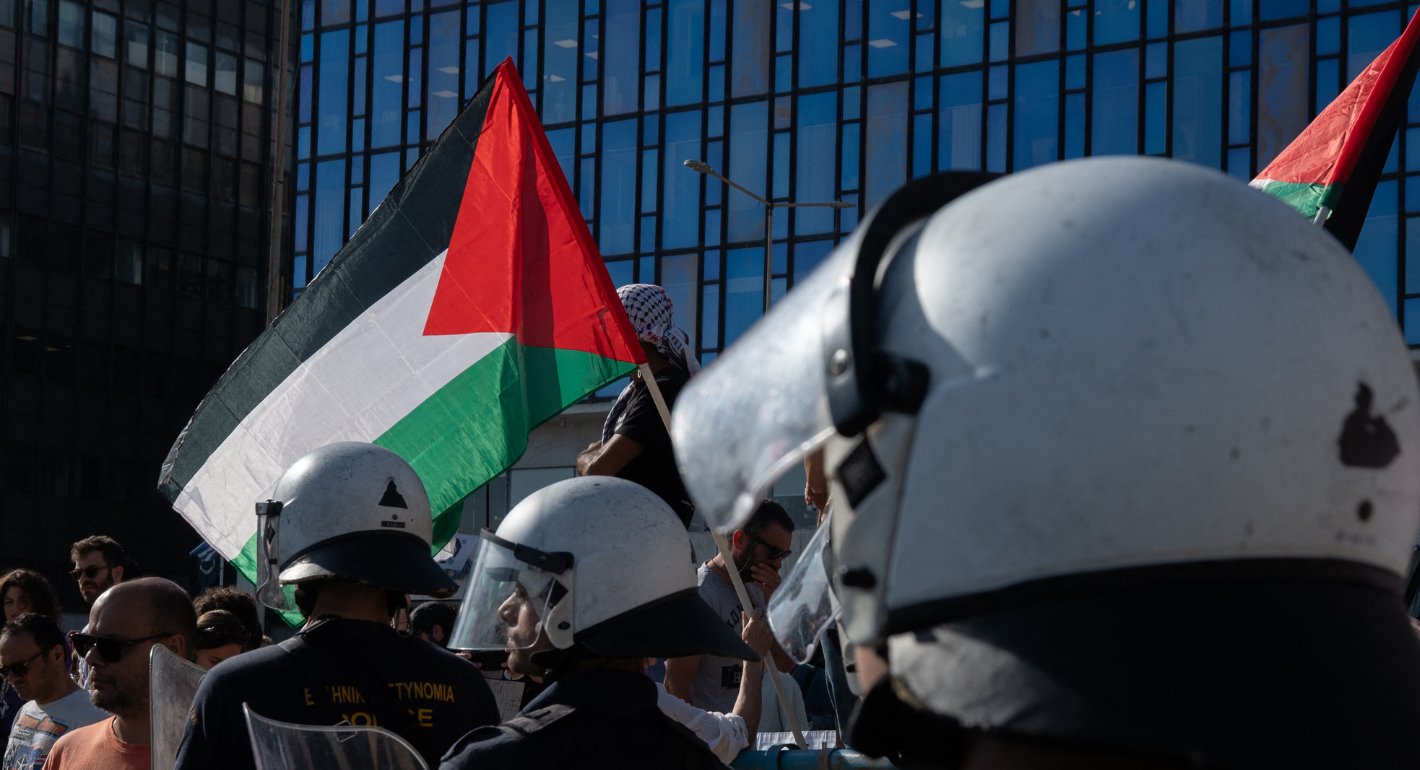
The battle over free speech has taken center stage since U.S. Vice President JD Vance accused Europe of censorship. From travel bans to social media regulation, especially around the Israel-Palestine conflict, are liberal democratic governments weaponizing free speech?
Rym Momtaz, ed.

Amid uncertainty caused by the Iran war, the global drive for nonproliferation has stalled. With Europe diplomatically marginalized and countries reassessing their nuclear options, efforts to curb the spread of nuclear weapons risk becoming irrelevant.

Jane Darby Menton
Between the United States’ market-driven approach and China's state-led industrial strategy, Europe is reckoning with how it can remain competitive in the global economy. But is Europe in danger of becoming a U.S. or China colony?
Noah Barkin, Anu Bradford