

Commentary
Yukon Huang, Isaac B. Kardon, Matt Sheehan
{
  "authors": [
    "Yukon Huang"
  ],
  "type": "legacyinthemedia",
  "centerAffiliationAll": "dc",
  "centers": [
    "Carnegie Endowment for International Peace"
  ],
  "collections": [],
  "englishNewsletterAll": "asia",
  "nonEnglishNewsletterAll": "",
  "primaryCenter": "Carnegie Endowment for International Peace",
  "programAffiliation": "AP",
  "programs": [
    "Asia"
  ],
  "projects": [],
  "regions": [
    "East Asia",
    "China"
  ],
  "topics": [
    "Economy",
    "Trade"
  ]
}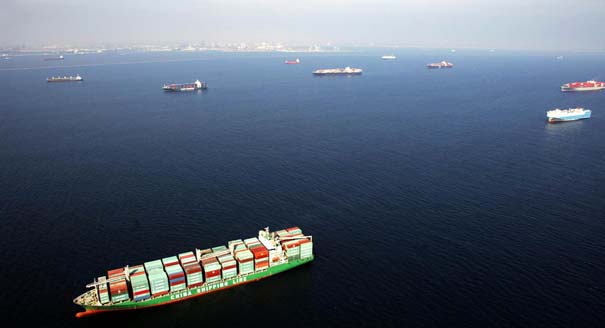
Source: Getty
China is giving more consideration to the possibility of joining the Trans-Pacific Partnership.
Source: Channel News Asia
The process of reforming and opening up the Chinese economy has accelerated under the new leadership, said Carnegie's Yukon Huang, speaking on Channel NewsAsia. The reappointment of Zhou Xiaochuan as central bank director sends a positive signal in this regard, and specific policies to liberalize interest rates, encourage more capital inflows, and open entry to foreign banks have already been introduced.
With respect to trade liberalization, Huang said that perspectives on the Trans-Pacific Partnership deal are shifting in China. Beijing realizes that of the three major trade agreements under negotiation (the TPP, the ASEAN-led Regional Comprehensive Economic Parternship, and the U.S.-EU Transatlantic Trade and Investment Partnership), the TPP discussions are most advanced and have potentially important impacts on international trade norms. Several sensitive issues that are of interest to China are being negotiated in the TPP, including treatment of state-owned enterprises, government procurement policy, and labor and environmental standards.
It was previously thought that China was not ready to move on these issues, Huang said, but leaders in Beijing increasingly realize that every country has sensitive trade issues. He cited the example of protected agricultural sectors in Canada, the United States, and Japan, all members of the TPP negotiations. Developing countries are much more inclined to support open trade regimes than they were a decade ago, Huang added. This gives China more confidence to enter the TPP, as its policies are no more restrictive than others and it is even more keen on open trade.

Senior Fellow, Asia Program
Huang is a senior fellow in the Carnegie Asia Program where his research focuses on China’s economy and its regional and global impact.
Recent Work

Yukon Huang, Isaac B. Kardon, Matt Sheehan
Yukon Huang, Genevieve Slosberg

Canadian Prime Minister Mark Carney has twice inspired praise for standing up to U.S. President Donald Trump: at the 2026 World Economic Forum in Davos and on Canada-U.S. trade negotiations. Is Carney showing a third way better than the EU has in dealing with the Trump administration?

Rym Momtaz, ed.

The hybrid warfare landscape is evolving rapidly, leaving policymakers without clear strategies. To better inform their work in addressing emerging challenges, governments must dig deeper into the underlying dynamics at play.


Raluca Csernatoni, Alicia Wanless
Europe’s industrial supply chains leave it vulnerable to global shocks. The EU needs a pragmatic green industrial strategy that balances durable partnerships and bolsters homegrown clean tech without sacrificing low-carbon ambition.


Milo McBride, Pauline Gerard

As geopolitical rivalry weaponizes global supply chains, the EU’s true vulnerability lies in emerging-risk imports. For these goods, suppliers are growing more concentrated, substitution more difficult, and political risk is looming.

Sinan Ülgen

The EU is putting together a new security strategy to meet today’s myriad challenges. But for any proposal to be effective, the union needs to grapple with its identity and ambitions.

Pierre Vimont