

Commentary
Before the next wave of EU enlargement takes place, the union needs to grapple with thorny questions of how power is distributed among its members.
Emil Sondaj Hansen, Ditte Brasso Sørensen
{
  "authors": [
    "Maria Lipman",
    "Sergey Frolov",
    "Innokenty Grekov"
  ],
  "type": "legacyinthemedia",
  "centerAffiliationAll": "dc",
  "centers": [
    "Carnegie Endowment for International Peace",
    "Carnegie Russia Eurasia Center"
  ],
  "collections": [],
  "englishNewsletterAll": "ctw",
  "nonEnglishNewsletterAll": "",
  "primaryCenter": "Carnegie Russia Eurasia Center",
  "programAffiliation": "russia",
  "programs": [
    "Russia and Eurasia"
  ],
  "projects": [],
  "regions": [
    "Russia"
  ],
  "topics": [
    "Political Reform",
    "Civil Society"
  ]
}
Source: Getty
The influx of labor migrants is an economic necessity for Russia, which does not have enough native workforce. But the newness of this migration, coupled with a social distrust of authority, is causing problems.
Source: Al Jazeera’s Inside Story
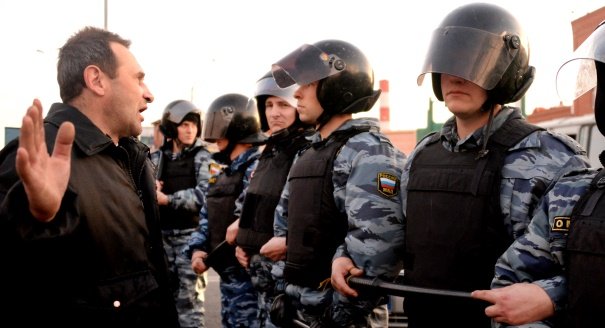
The murder of three people in Moscow has brought to the surface the increasing hatred felt towards immigrants in Russia. Chanting "Russia for Russians," several thousand people began rioting in Moscow after an ethnic Russian was murdered in front of his girlfriend. The killing, blamed on a man from Azerbaijan, caused some of the worst race riots in years. Police arrested more than 1,000 people—mostly migrants. Since then, two men, one Azeri and one Uzbek, have also been murdered.
In a recent survey, almost nine out of ten Russians said they want to limit immigration.Carnegie Moscow Center’s Maria Lipman discussed this issue on Al Jazeera’s Inside Story, with presenter Jane Dutton. She was joined by Sergey Frolov, the deputy editor-in-chief of Trud newspaper, and Innokenty Grekov, a programme associate on hate crimes at Human Rights First.
Lipman said that the influx of labor migrants is an economic necessity because Russia does not have enough native workforce. The Russian government provides a number of goods and services to the people, their incomes have been growing over the years, and Russian residents do not seem willing to take manual hard labor. In Moscow there is 0 percent unemployment, which demonstrates the economic necessity of this influx of migrants, Lipman stressed.
She added that it is not the migration itself, but its circumstances, that cause problems. Its newness for Russia and the society’s low trust in authorities have both elevated fears of migrants. The populist and short sided policies of Putin are leading to diverse challenges; besides the existing political risks, socioeconomic protests and ethnic tensions are on a rise, Lipman concluded.
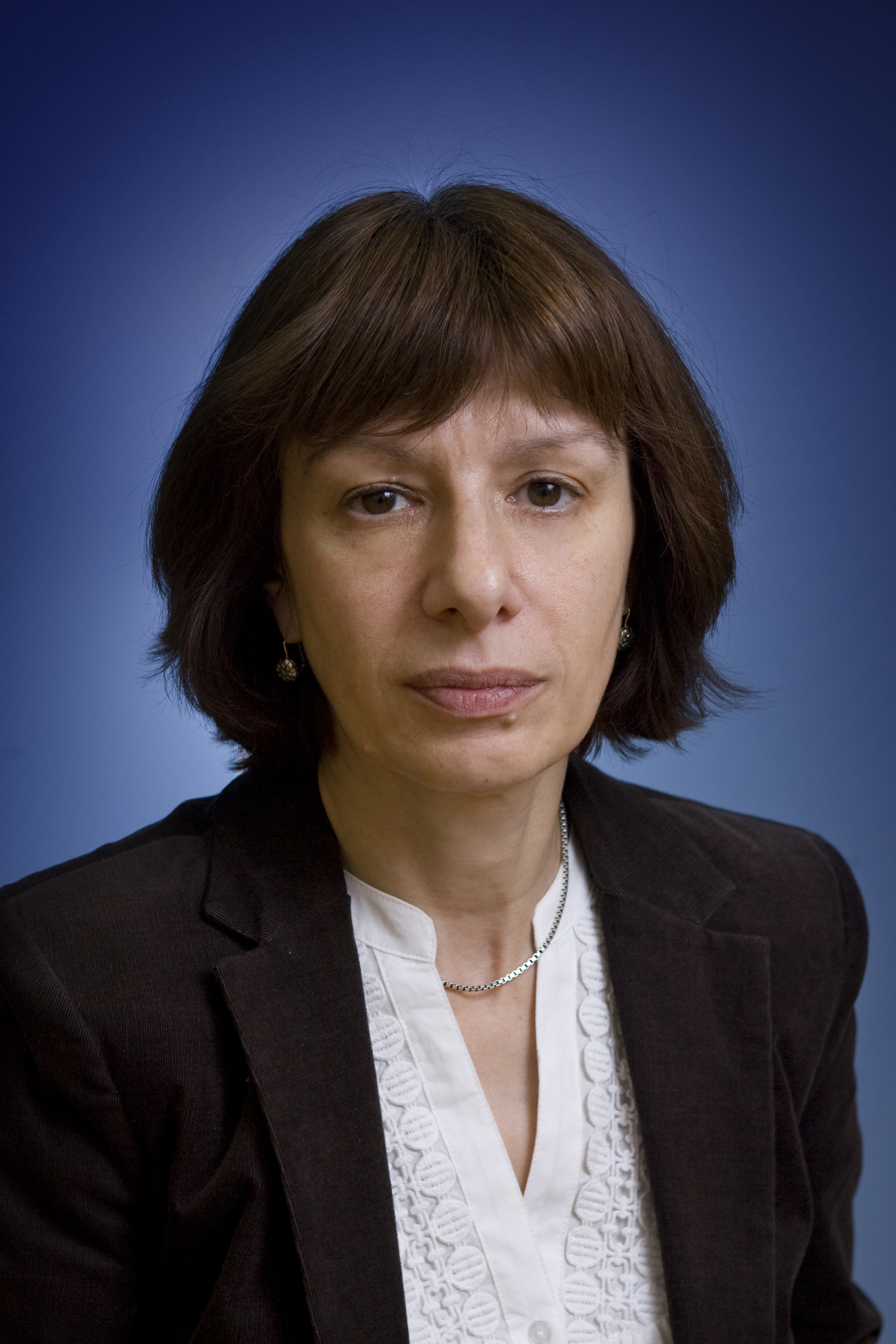
Former Scholar in Residence, Society and Regions Program, Editor in Chief, Pro et Contra, Moscow Center
Lipman was the editor in chief of the Pro et Contra journal, published by the Carnegie Moscow Center. She was also the expert of the Carnegie Moscow Center’s Society and Regions Program.
Sergey Frolov
Innokenty Grekov
Carnegie does not take institutional positions on public policy issues; the views represented herein are those of the author(s) and do not necessarily reflect the views of Carnegie, its staff, or its trustees.

Before the next wave of EU enlargement takes place, the union needs to grapple with thorny questions of how power is distributed among its members.


Emil Sondaj Hansen, Ditte Brasso Sørensen

A summer of escalation in the Black Sea has hurt Ukraine economically and is exacerbating world food security. A truce is needed—as is a broader reframing of Europe’s Ukraine strategy.

Thomas de Waal

European Commission President Ursula von der Leyen is about to give her annual address on the state of the EU. Here’s what she won’t—but should—say.

Rym Momtaz

Radical-right parties are expected to do well in upcoming elections in four of the EU's biggest member states. If successful, they could prevent the union from addressing key challenges ahead.

Stefan Lehne

The EU’s responses to two recent incidents expose the gulf between European perceptions and capabilities. Unless the union can bridge that gap, it will never become a real geostrategic power.
Rym Momtaz