

Research
- +6
Yasmine Farouk, Nathan J. Brown, Maysaa Shuja Al-Deen, …
{
  "authors": [
    "Michele Dunne"
  ],
  "type": "legacyinthemedia",
  "centerAffiliationAll": "dc",
  "centers": [
    "Carnegie Endowment for International Peace"
  ],
  "collections": [
    "Arab Awakening"
  ],
  "englishNewsletterAll": "menaTransitions",
  "nonEnglishNewsletterAll": "",
  "primaryCenter": "Carnegie Endowment for International Peace",
  "programAffiliation": "MEP",
  "programs": [
    "Middle East"
  ],
  "projects": [],
  "regions": [
    "North Africa",
    "Egypt"
  ],
  "topics": [
    "Political Reform",
    "Economy"
  ]
}
Source: Getty
Restoring the kind of stability that would allow the Egyptian government to make clear economic decisions is going to require not just a government in control, but also a government that has a lot more consensus.
Source: Council on Foreign Relations
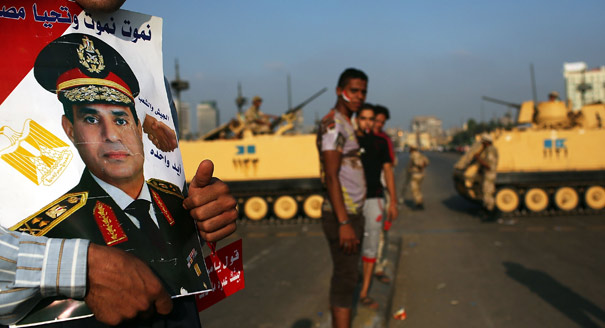
“Egypt is in, I believe, a very prolonged process of change and we really don’t know how things are going to come out,” said Carnegie’s Michele Dunne at the Council on Foreign Relations’ roundtable discussion on Egypt’s transition. Restoring the kind of stability that would allow the government to make clear economic decisions, Dunne argued, is going to require not just a government in control, but also a government that has a lot more consensus. In order to revive the economy more broadly and bring back investment, Dunne said Egypt will need greater stability.
Egypt’s security services were never reformed since Mubarak left, Dunne added, and have been reinvigorated and re-empowered in carrying out significant abuses without much control. She contended that the policy that Abdel Fattah el-Sisi and the current government are pursuing will not lead to stabilization, noting that the current crackdown will engender more violence and demonstrations, as the country lurches from crisis to crisis, economic and political.
This discussion was originally published at the Council on Foreign Relations.

Former Nonresident Scholar, Middle East Program
Michele Dunne was a nonresident scholar in Carnegie’s Middle East Program, where her research focuses on political and economic change in Arab countries, particularly Egypt, as well as U.S. policy in the Middle East.
Recent Work


Yasmine Farouk, Nathan J. Brown, Maysaa Shuja Al-Deen, …
Robert Springborg, Emile Hokayem, Becca Wasser, …
Carnegie does not take institutional positions on public policy issues; the views represented herein are those of the author(s) and do not necessarily reflect the views of Carnegie, its staff, or its trustees.

As geopolitical rivalry weaponizes global supply chains, the EU’s true vulnerability lies in emerging-risk imports. For these goods, suppliers are growing more concentrated, substitution more difficult, and political risk is looming.

Sinan Ülgen

The EU is putting together a new security strategy to meet today’s myriad challenges. But for any proposal to be effective, the union needs to grapple with its identity and ambitions.

Pierre Vimont

The EU’s new migration policy is not suited to today’s realities. With climate change increasingly becoming a driver of displacement, Europe needs to rethink its deterrence-focused approach.

Shana Tabak
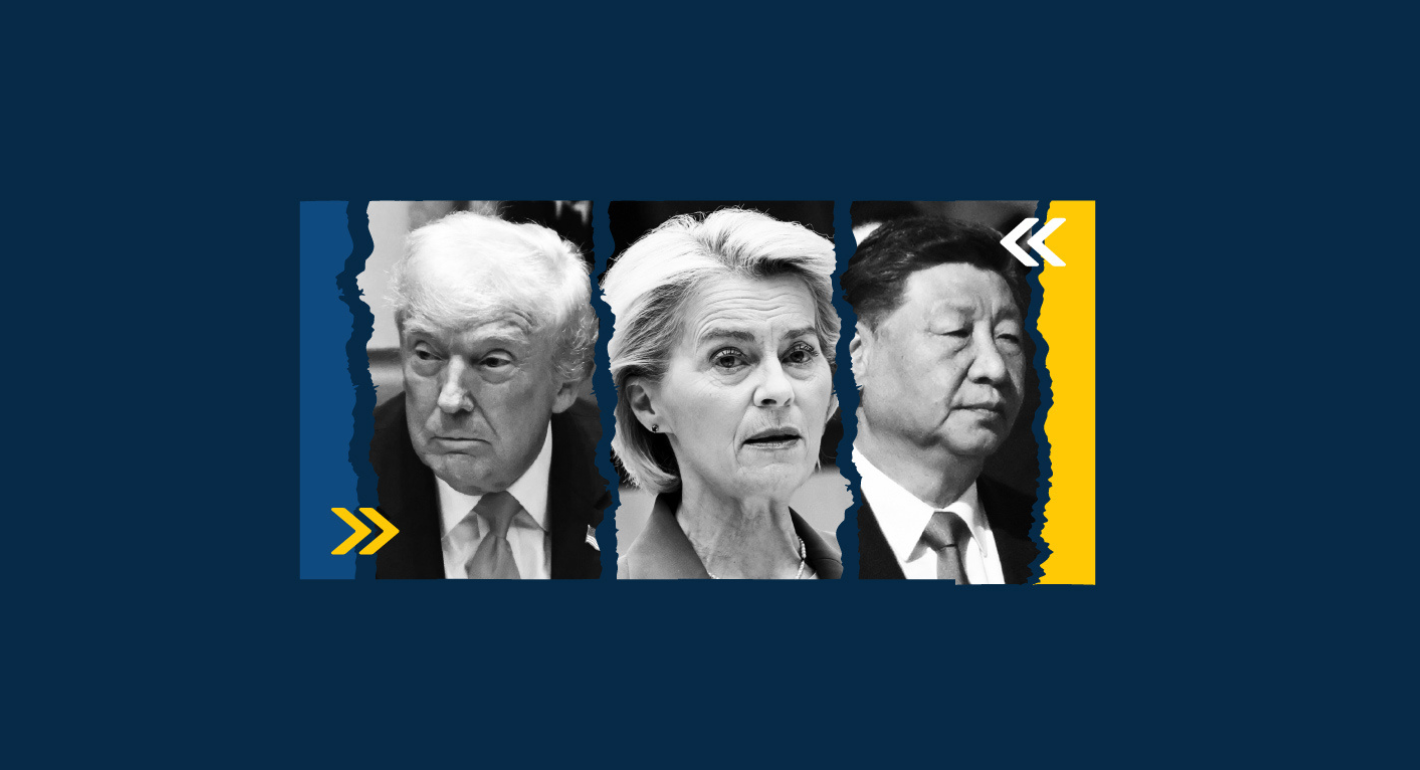
Between the United States’ market-driven approach and China's state-led industrial strategy, Europe is reckoning with how it can remain competitive in the global economy. But is Europe in danger of becoming a U.S. or China colony?
Noah Barkin, Anu Bradford
Preparing candidate countries for EU membership is no longer enough. As the enlargement process becomes a reality, the union must also prepare its own societies.

Iliriana Gjoni