

Commentary
The EU’s responses to two recent incidents expose the gulf between European perceptions and capabilities. Unless the union can bridge that gap, it will never become a real geostrategic power.
Rym Momtaz
{
  "authors": [
    "Akio Kawato"
  ],
  "type": "commentary",
  "centerAffiliationAll": "",
  "centers": [
    "Carnegie Endowment for International Peace",
    "Carnegie Russia Eurasia Center"
  ],
  "collections": [],
  "englishNewsletterAll": "",
  "nonEnglishNewsletterAll": "",
  "primaryCenter": "Carnegie Russia Eurasia Center",
  "programAffiliation": "",
  "programs": [],
  "projects": [],
  "regions": [
    "Russia"
  ],
  "topics": [
    "Economy",
    "Climate Change"
  ]
}
Source: Getty
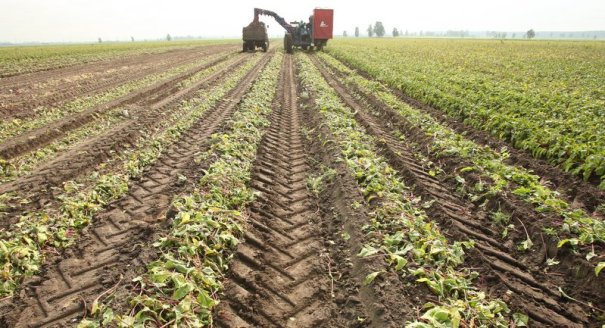
Despite the diplomatic victories of Vladimir Putin, the economic stagnation in Russia is a far deeper and long-term factor.
For any country economy is the decisive factor. In 2013, we witnessed the “diplomatic victories” of President Vladimir Putin, but methinks the economic stagnation (with inflation, it is “stagflation”) is a far deeper and long-term factor. True, Russia now occupies the fifth place by the purchasing power of its GDP, but in nominal figures Russia’s place is the eighth, and its “purchasing power” mainly benefits foreign producers.
The performance for the past ten years has been remarkable. Boris Yeltsin had never succeeded to put Russia’s economy on sound feet. After the reckless debt bubble shoved Russia into a default in 1998, the economy only slowly recovered, with wide-spread salary arrears and barter trade. Living in Moscow at that time, I calculated that Russia would need oil prices higher than one hundred dollars per barrel in order to secure sound income levels for the people, and I thought that this would never happen.
But a miracle broke out; the oil prices skyrocketed (largely thanks to the overly inflated flow of the U.S. dollars) from $23 in 2001 to $97 in 2008 (average import prices for Germany). As the oil prices soared by more than four times, so did the Russian GDP; it increased by whopping 5.3 times. Meanwhile, President Putin intently concentrated the oil and gas revenue in the hands of the government, which was the realization of the idea stipulated in his own (I assume) Ph.D. dissertation paper.
Thanks to the wise savings (“stabilization funds”), Russia managed to survive the Lehman financial crisis, but this year the Russian economy has fallen into a stagflation without any shock from the outside. Several reasons are indicated, but I would name a “post-election effect.” To assure victories in the elections of 2011 and 2012, generous expenditures were promised: the salaries of the government officials and the military were to be substantially raised, and official investments on infrastructure construction were increased. By this year, all these factors have exhausted their effect, leaving only the negative side, inflation.
The stagnation is revealing the fundamental woe of the Russian economy, the lack of structural reforms. The economy is only partially “marketized” (mainly in the distribution sector), and the supply side largely remains state-owned, which tends to eternally reproduce ego-centric managers and unmotivated workers. The oil-fed growth has pushed the wage level so high that Russia cannot resort to the export-oriented Chinese growth model. So, although the outline of the necessary reforms is clear (privatization et. al), no leaders are able to implement it because of the heavy social inertia as stated above.
Nevertheless, Putin has to expand his ideas from his dissertation, utilizing even meager clues which are at hands. AvtoVAZ has been effectively privatized by Renault-Nissan (Nissan people are worried, though), many other foreign car makers have built their factories in Russia, Russia has now technological advantage in producing new-type nuclear reactor, titanium smelting may soon become a huge industry, younger imaginative generations could develop Internet-related businesses, etc.
All this needs farther deregulation and drastic reduction of bureaucratic paperwork. The personnel (“nomenclatura”) for the government and the business should be separated so as to bring up professional managers for the enterprises.
One may say that the Russians would need to fundamentally alter their way of thinking and behavior for building a modern economy. But the mentality alone cannot change of its own accord. In Western Europe the economic growth gradually bred the civic norms, and not vice versa. First we will hatch the egg, that is the economy.
Akio Kawato
Writer
Akio Kawato is a former Japanese diplomat and blogger.
Carnegie does not take institutional positions on public policy issues; the views represented herein are those of the author(s) and do not necessarily reflect the views of Carnegie, its staff, or its trustees.

The EU’s responses to two recent incidents expose the gulf between European perceptions and capabilities. Unless the union can bridge that gap, it will never become a real geostrategic power.

Rym Momtaz

European states control several Overseas Countries and Territories around the world that carry strategic, economic, and environmental weight. As great powers challenge the rules-based order, defending them is a geopolitical imperative for Europe.

Marc Pierini
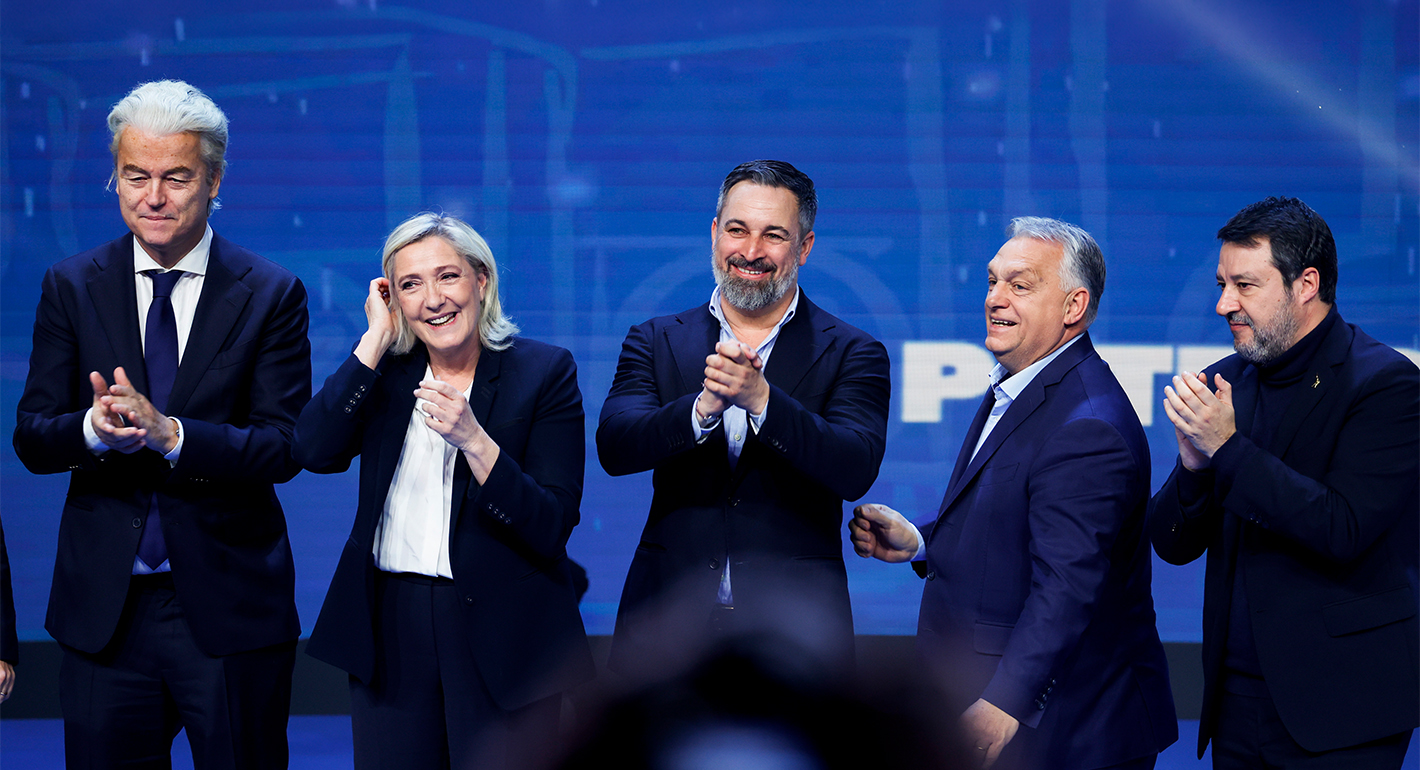
In supporting Europe’s far-right, MAGA and Russia both want the same thing: a weaker EU. Europe must defend itself without abandoning the openness these forces exploit.

Armida van Rij

As we close out another season of Strategic Europe, it is worth taking stock of the deep shifts underway.
Rym Momtaz

The hybrid warfare landscape is evolving rapidly, leaving policymakers without clear strategies. To better inform their work in addressing emerging challenges, governments must dig deeper into the underlying dynamics at play.


Raluca Csernatoni, Alicia Wanless