

In The Media
Lina Khatib
{
  "authors": [
    "Lina Khatib"
  ],
  "type": "legacyinthemedia",
  "centerAffiliationAll": "dc",
  "centers": [
    "Carnegie Endowment for International Peace",
    "Malcolm H. Kerr Carnegie Middle East Center"
  ],
  "collections": [],
  "englishNewsletterAll": "menaTransitions",
  "nonEnglishNewsletterAll": "",
  "primaryCenter": "Malcolm H. Kerr Carnegie Middle East Center",
  "programAffiliation": "MEP",
  "programs": [
    "Middle East"
  ],
  "projects": [],
  "regions": [
    "Levant",
    "Lebanon",
    "Syria",
    "Middle East"
  ],
  "topics": [
    "Political Reform",
    "Democracy",
    "Global Governance"
  ]
}
Source: Getty
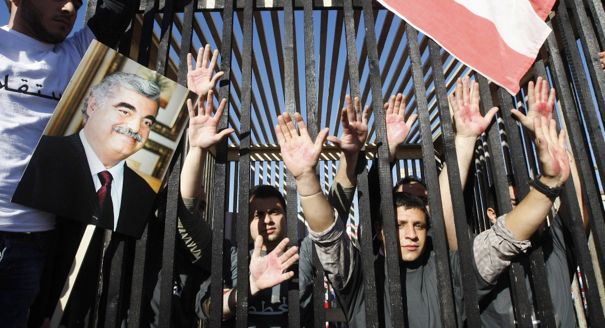
The first hearing of the Special Tribunal for Lebanon has been hotly anticipated by many. But the likelihood of the hearing’s having a significant impact on Lebanese political dynamics is low.
Source: Al Arabiya
The first hearing of the Special Tribunal for Lebanon (STL) on January 16 has been hotly anticipated by many, not least the Lebanese March 14 coalition that has lobbied for the creation of the tribunal. But the likelihood of the hearing’s having a significant impact on Lebanese political dynamics is low.
Nine years after the assassination of former Prime Minister Rafiq Hariri, the hearing has been overshadowed by three issues: the political vacuum resulting from the absence of a cabinet since March 2013; heightened security concerns; and build up to the Geneva II conference scheduled for January 22.
To Hezbollah’s rivals, direct Syrian control over Lebanese affairs has been replaced with indirect control, as the Syrian regime’s ally Hezbollah has asserted itself both militarily and politically through its engagement in Syria. To Hezbollah and its allies, involvement in the Syrian conflict is inevitable and can translate into political gains within Lebanon.
This deep polarization has left Lebanon without a government for the second time since the assassination of Hariri. The fall of then-prime minster Saad Hariri’s government in 2011 due to the resignation of March 8 ministers and its replacement with a March 8-dominated cabinet—that in turn resigned in 2013—illustrate the growing disparity between rival political groups. It also underlines the fragility of internationally-brokered agreements meant to resolve intra-Lebanese crises, like the Doha Accord of 2008.
The Accord was at the time regarded as a way out of an acute political crisis that saw the use of Hezbollah weapons against other Lebanese in May 2008 in an attempt at influencing government policy. That Lebanon has since spiraled back into polarization is not surprising as the Accord succeeded in bringing political rivals together momentarily but did not present a sustainable long-term vision that could positively impact the Lebanese political landscape.
Current talks among Lebanese politicians to try to reach an agreement on forming a new government are a reminder of the cyclical nature of Lebanese political developments: in 2008, weapons were used as a public scare tactic to impose a political decision.
The talks that followed in Doha came as a welcome relief to a tired public. Today, bombs and assassinations are serving the same purpose as the country has witnessed a series of violent attacks in the last year that are intimately linked with political rivalries. The result of the new talks is likely to be the formation of a government that would placate the country for a period of time, but with no prospects for future sustainability.
Just like in 2008, sustainability is not the top priority for Lebanese citizens today. The assassination of former minister Mohamad Chatah on Dec. 27 and the car bomb in Beirut’s southern suburb on January 2—coming after a series of violent clashes in Tripoli, the Beqaa Valley, and Sidon—have created a state of paranoia among the population. Heightened fears and pressing concerns about security and stability—especially in the absence of a government—have overshadowed debates about political preferences. Whatever form the new government takes can only come as a relief.
The challenges of the internal Lebanese political landscape and its link with regional actors have consumed public attention, turning it away from the STL hearing. The assassination of Chatah in the run up to the hearing has also come as a bitter reminder of the continuation of the crisis that began in 2005, through which March 14 leaders have been rendered vulnerable.
That those indicted for Hariri’s assassination by the STL have not been arrested has also caused many supporters of the tribunal to start to lose faith. Meanwhile, as Lebanon’s political crisis is tightly linked to that of the Syrian conflict, the looming date of the Geneva II conference—and with it, speculation about the direction of the Saudi-Iranian rivalry and its likely impact on their Lebanese allies—has also overtaken the date of the STL hearing in the public agenda.
The crowds that drove the “Independence Intifada” in 2005 have seen their hopes shattered over the past nine years. STL proceedings are moving at a snail’s pace with no conclusive results thus far. Lebanese sovereignty as called for by the “Intifada” is threatened by Lebanon’s deep implication in the Syrian crisis. And the cycle of the use of violence as a political tool has been repeated. Despite what evidence the STL hearing on Jan. 16 might unearth, the hearing has been dwarfed by Lebanon’s more immediate crises.
Former Director, Middle East Center
Khatib was director of the Carnegie Middle East Center in Beirut. Previously, she was the co-founding head of the Program on Arab Reform and Democracy at Stanford University’s Center on Democracy, Development, and the Rule of Law.
Recent Work
Lina Khatib
Lina Khatib
Carnegie does not take institutional positions on public policy issues; the views represented herein are those of the author(s) and do not necessarily reflect the views of Carnegie, its staff, or its trustees.

As the EU confronts profound challenges, several leaders have called for fundamental reform to the union’s model—but only modest, superficial changes have resulted. What if Europe really could be reimagined from zero today: What should such a redesigned European order look like?

Richard Youngs, ed.
Far-right leader Marine Le Pen can—and will—run in France’s next presidential election. What does the outcome of her appeal against a 2025 embezzlement conviction mean for the country’s political future?
Catherine Fieschi
While Russia is not ready to sue for peace on Europe’s terms, it could still either seek a ceasefire in Ukraine or try escalation. Brussels needs to prepare for both and prioritize that preparation over normative discussions.
Kadri Liik
When Giorgia Meloni very publicly rebuked Donald Trump’s disparaging remarks about her, it surprised many who saw her as a European extension of Trumpism. Is the spat a sign of trouble in the radical right’s transatlantic axis?

Rym Momtaz, ed.
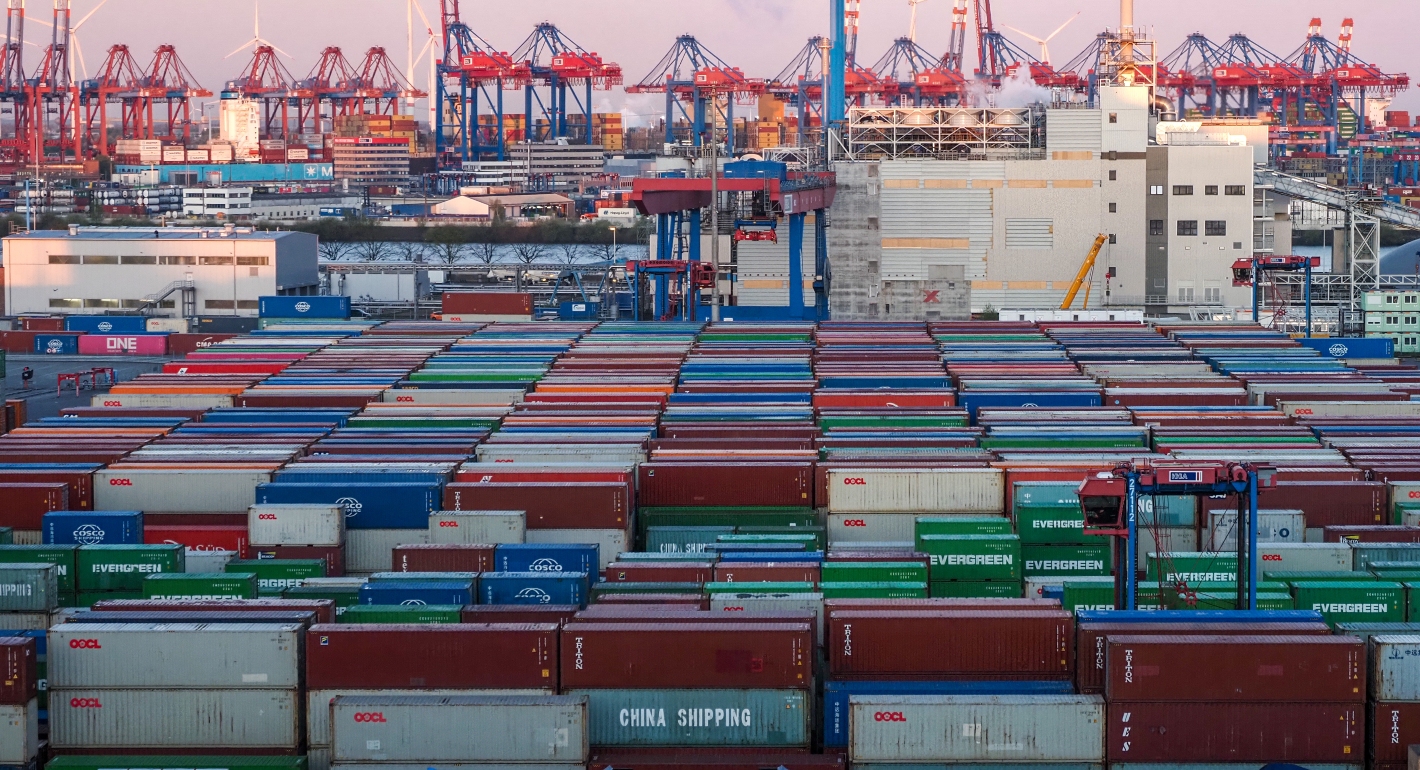
As geopolitical rivalry weaponizes global supply chains, the EU’s true vulnerability lies in emerging-risk imports. For these goods, suppliers are growing more concentrated, substitution more difficult, and political risk is looming.

Sinan Ülgen