

Commentary
Dmitri Trenin
{
  "authors": [
    "Dmitri Trenin"
  ],
  "type": "legacyinthemedia",
  "centerAffiliationAll": "",
  "centers": [
    "Carnegie Endowment for International Peace",
    "Carnegie Russia Eurasia Center"
  ],
  "collections": [],
  "englishNewsletterAll": "",
  "nonEnglishNewsletterAll": "",
  "primaryCenter": "Carnegie Russia Eurasia Center",
  "programAffiliation": "",
  "programs": [],
  "projects": [],
  "regions": [
    "Russia"
  ],
  "topics": [
    "Foreign Policy"
  ]
}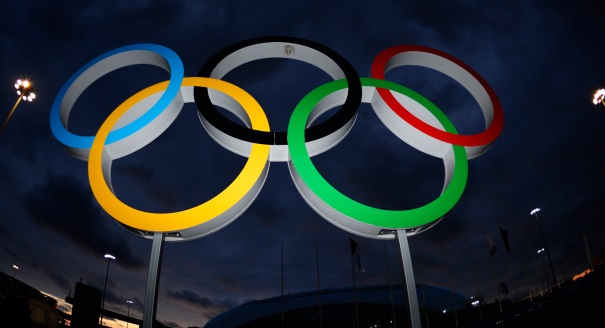
Source: Getty
The absence of several Western leaders and the presence of Asian luminaries at the opening ceremony of the Sochi Olympics highlights the rebalancing of Moscow’s foreign policy toward Asia-Pacific.
Source: China Daily
Modern Olympic Games are never entirely free from politics, but their level of politicization varies. Awarding the games to Rome in 1960, Tokyo in 1964, and Munich in 1972 was meant to symbolize the post-World War II rehabilitation of the three former Axis powers. The 1988 Games were awarded to Seoul to highlight South Korea's spectacular economic success and encourage its moves toward political democratization. But spikes in tension during the Cold War led to the boycott of the 1980 Moscow Games by the United States and several other countries and to the reciprocal decision by the Soviet Union and its allies to stay away from the 1984 Olympics in Los Angeles.
After the end of the Cold War, there have been no boycotts, but tensions have been palpable. Giving the 2008 Games to Beijing was recognition of China's rise, which has lifted hundreds of millions of people out of poverty and ushered in a global economic power. There was criticism in the West at the time over the state of human rights in China, and the Chinese government's policies in the Tibet and Xinjiang Uygur autonomous regions. However, world leaders, including then US president George W. Bush, came for the opening ceremony. China's importance to the world was so great that few politicians thought they could afford to ignore, never mind snub, Beijing.
The current controversy over the Sochi Olympics reflects the problems Russia is now facing in its relations with the United States and Europe. Vladimir Putin's return to the Kremlin in 2012 came as a big disappointment to those in the West who had hoped Russia would gradually liberalize and modernize as it was becoming a de facto associate of the European Union and a junior partner of the US. To their dismay, the mass protests in Moscow in 2011 and 2012 did not lead to major political changes in Russia, but rather to a reconsolidation of Putin's governance. Putin's policy of eliminating any sources of foreign influence on Russian domestic politics; terminating or renegotiating agreements between Russia and the US - which had the US as a donor and Russia as aid recipient - and a self-conscious shift toward conservatism in the Kremlin did nothing to gain Russia more sympathy in the West.In today's world, political parties and various interest groups can weigh in heavily on governments' policies. Not only did Russia and the West strongly disagree over Syria. The Magnitsky Law, passed by US Congress, sanctioned several Russian officials; the former US National Security Agency contractor Edward Snowden, who first escaped to Hong Kong, and then wound up in Moscow, ruined the US-Russian summit in Moscow; the jailing of members of the Pussy Riot group (now released) for a "blasphemous" performance in Moscow's main cathedral incensed European liberals and human rights campaigners; and the adoption by the Russian State Duma of new legislation banning gay propaganda to minors turned the LGBT community into implacable foes of the Russian government. For the Western media, Vladimir Putin remains the bte noire.
It is only recently that world leaders adopted the habit of visiting the Olympic Games opening ceremonies. Beijing in 2008 saw the first impressive line-up. Politicians, of course, are not essential at sports events, sportsmen and sportswomen are. The 1980 and 1984 boycotts were about entire sports delegations staying at home, not about politicians canceling trips. Yet, in 2014 there is a word of boycotting the Sochi Olympics. US President Barack Obama, German Chancellor Angela Merkel, French President Francois Hollande, UK Prime Minister David Cameron and several other important leaders have all announced they will not come. Putin did not like their gestures, but as the head of the host country, he will be welcoming dozens of other important figures.
China's President Xi Jinping will take part in the opening ceremony, in return for Putin's visit to the 2008 Beijing Olympics. This third trip by Xi to Russia after becoming President last March is meant to be a strong gesture in support of the evolving strategic partnership between China and Russia. This partnership stands on its own feet, but pressure on Putin from the West makes him lean more on the East. For all the differences inherent in their relations, Moscow and Beijing need each other to defend and promote their interests, vis-a-vis the West.
Japan's Prime Minister Shinzo Abe will attend the opening ceremony of the Games. He will meet with Putin, who will be going on a rare official visit to Japan later this year. The absence of several Western leaders and the presence of Asian luminaries highlights the rebalancing of Moscow's foreign policy toward Asia and the Pacific. Not all Europeans will stay at home, however. The Netherlands, an important trading partner of Russia in the European Union, will be represented by the king, the queen and the prime minister. As for those who have chosen not to attend this time, they will not be able to escape a visit to Sochi-four months after the Games, Putin will be back in Sochi, hosting the G8 summit.
Former Director, Carnegie Moscow Center
Trenin was director of the Carnegie Moscow Center from 2008 to early 2022.
Recent Work
Dmitri Trenin
Dmitri Trenin
Carnegie does not take institutional positions on public policy issues; the views represented herein are those of the author(s) and do not necessarily reflect the views of Carnegie, its staff, or its trustees.
The war in Iran proves the United States is now a destabilizing actor for Europe and the Arab Gulf. From protect their economies and energy supplies to safeguarding their territorial integrity, both regions have much to gain from forming a new kind of partnership together.

Rym Momtaz
French President Emmanuel Macron has unveiled his country’s new nuclear doctrine. Are the changes he has made enough to reassure France’s European partners in the current geopolitical context?
Rym Momtaz, ed.
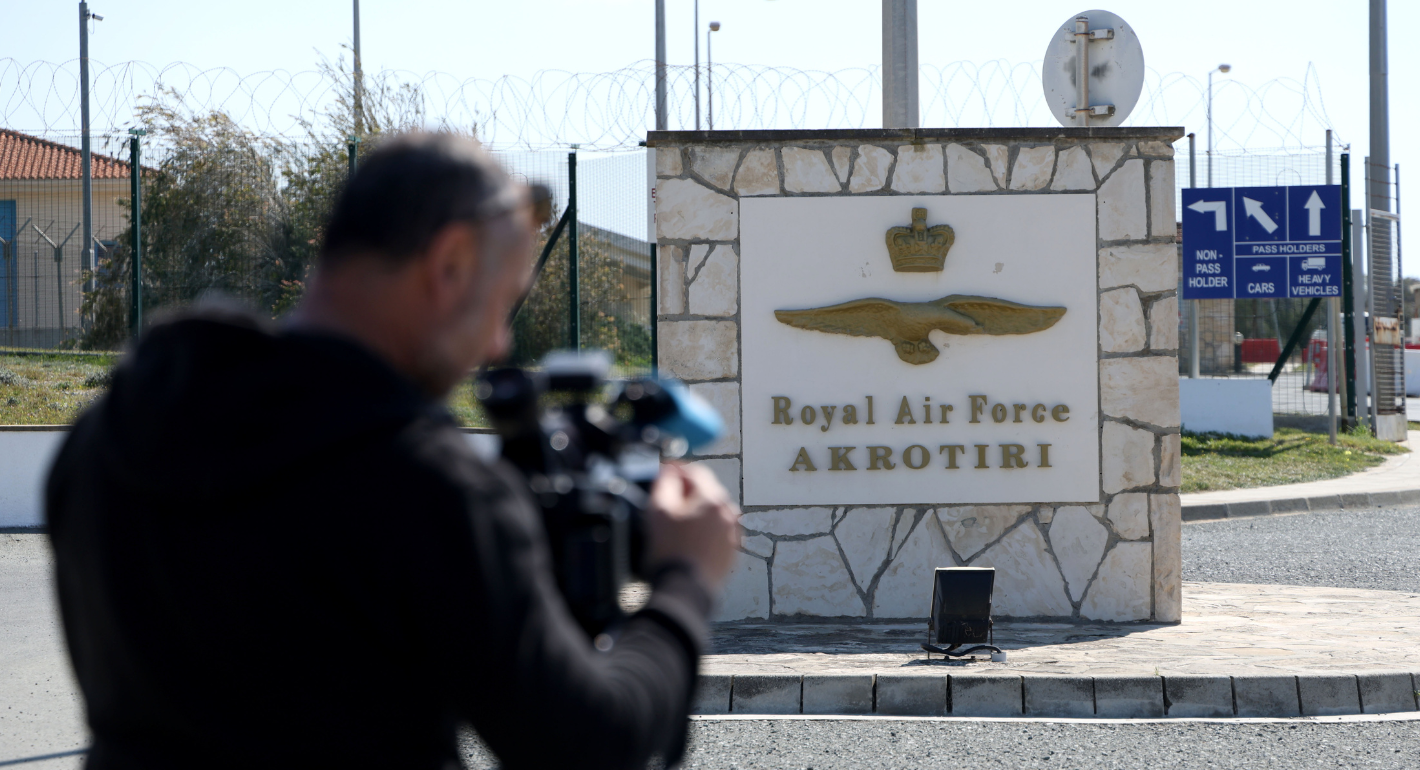
The drone strike on the British air base in Akrotiri brings Europe’s proximity to the conflict in Iran into sharp relief. In the fog of war, old tensions in the Eastern Mediterranean risk being reignited, and regional stakeholders must avoid escalation.

Marc Pierini
For years, the United States anchored global cyber diplomacy. As Washington rethinks its leadership role, the launch of the UN’s Cyber Global Mechanism may test how allies adjust their engagement.
Patryk Pawlak, Chris Painter
Europe isn’t as weak in the new geopolitics of power as many would believe. But to leverage its assets and claim a sphere of influence, Brussels must stop undercutting itself.

Dimitar Bechev