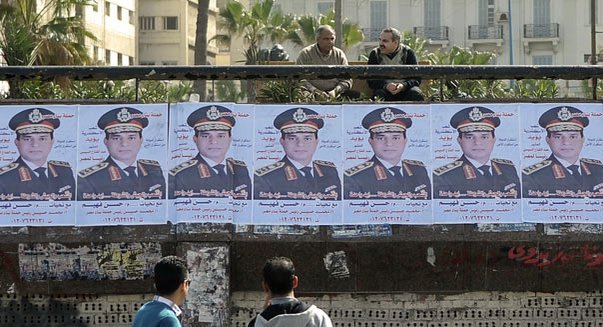
In an online plan released shortly before his election to the Egyptian presidency in late May 2014, Abdel Fattah el-Sisi laid out his vision for Egypt’s future. That vision is framed around three primary goals: improving the quality of political, economic, and social life for all Egyptians; establishing a modern state for Egypt’s next generations; and returning Egypt to its lofty regional and international position. Though extensive, it lacks detailed proposals and will prove difficult for the new president to implement.
The plan includes a laundry list of ambitious proposals for the economy that are generally short on details and long on aspirations. Adjustments to taxes and subsidies, the establishment of new government institutions, and the building of roads, schools, and hospitals as well as other infrastructure projects are staples of the economic proposals. To fight unemployment, the plan suggests industry-specific goals such as modernizing irrigation systems across the country, reclaiming agricultural land for farmers, establishing new tourism centers, and implementing unprecedented urban development projects.
The tourism industry will be revamped to draw 30 million tourists per year. Education will be improved by modernizing and diversifying curricula and retraining teachers, among other ideas. Transportation problems will be solved by building new roads, repairing old roads, and enforcing traffic laws. Small and medium enterprises, which the plan acknowledges as important but often ignored, will be strengthened through a long list of proposals including new access to finances, incentivized cooperation with larger corporations, and technical support.
The portion of Sisi’s program that received the most emphasis during the campaign is a plan to redraw the map of Egypt to promote development, improve land usage, and attract investment to different areas of the country. A series of online maps shows how the new governorates will be developed. The proposal includes the construction of dozens of new cities, tourism centers, airports, and industrial areas. According to Reuters, the plan is in fact based on a proposal presented to former president Hosni Mubarak in 1985. That scheme was shelved and then rejected in 2005 by a ministerial committee due to its high cost of implementation. Sisi estimates that the cost of the current plan will be $140 billion.
Beyond the economy, Sisi’s vision also addresses a diverse array of topics such as the development of the police and security forces, the improvement of access to sporting facilities, the rehabilitation of street children, the development of religious discourse, and the strengthening of women’s rights.
On foreign policy, the plan speaks of Egypt reclaiming its regional role and cooperating with its African, Mediterranean, and Islamic partners. Strategic relations with the United States are described as not standing in the way of developing ties with other world powers (including Russia, China, and the European Union), though none of these relationships should be seen as an alternative to another. Egypt is also described as a country committed to its treaties and to a peaceful resolution to the Israeli-Palestinian conflict.
One month after his election, it is too early to tell how, or whether, Sisi has begun to act on his proposed vision for Egypt. On June 16, 2014, Sisi issued a decree establishing a Supreme Committee for Legislative Reform, which will begin to propose draft laws—possibly related to Sisi’s policies—for the president and future parliament to implement. Regardless of his ambitions, however, the political and economic constraints facing Sisi, including significant fiscal problems and a sprawling bureaucracy, suggest that Egypt’s new president will struggle to make his campaign’s vision a reality.