

Q&A
Dara Massicot, Aaron David Miller, Andrew S. Weiss
{
  "authors": [
    "Andrew S. Weiss"
  ],
  "type": "commentary",
  "centerAffiliationAll": "",
  "centers": [
    "Carnegie Endowment for International Peace",
    "Carnegie Russia Eurasia Center"
  ],
  "collections": [],
  "englishNewsletterAll": "",
  "nonEnglishNewsletterAll": "",
  "primaryCenter": "Carnegie Endowment for International Peace",
  "programAffiliation": "",
  "programs": [],
  "projects": [],
  "regions": [
    "Eastern Europe",
    "Ukraine"
  ],
  "topics": [
    "Political Reform"
  ]
}
Source: Getty
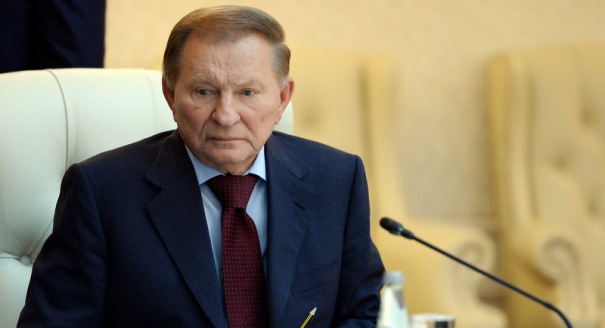
Leonid Kuchma deserves credit for stepping forward at a moment of national peril. A realist and truth-teller of Kuchma’s calibre is a strikingly rare commodity in Kyiv and the West these days.
Not surprisingly, recent Ukrainian-Russian negotiations under OSCE auspices in Minsk have touched off a political firestorm in Kyiv. Petro Poroshenko will presumably spend much of his time on the campaign trail on the defensive, explaining why the September 5 cease-fire agreement and other steps that conceivably could lead to a frozen conflict in parts of Donetsk and Luhansk were the best deal that Kyiv could get after a series of dramatic setbacks on the battlefield. And like any properly messy Ukrainian compromise, this one involved a little funny business—specifically, a scandalous secret vote in the Rada last week on the granting of special status to Donetsk and Luhansk that relied on well-established techniques of backroom politicking and anti-democratic manipulations of parliamentary procedures.
Poroshenko’s lead negotiator at the talks, former President Leonid Kuchma, must feel right at home. Kuchma has engineered a remarkable comeback during the crisis. He has reinvented himself as a statesman capable of standing above day-to-day politics and cutting unpalatable deals with the Kremlin on Poroshenko’s behalf. The two agreements signed by Kuchma in Minsk undoubtedly will provide plenty of ammunition to Poroshenko’s (and Kuchma’s) critics.
Still, Kuchma deserves credit for stepping forward at a moment of national peril. His public statements about the crisis have been generally constructive and thoughtful. At the Yalta European Strategy annual meeting in mid-September, Kuchma called for a UN force to monitor the Ukrainian-Russian border, which makes eminent sense given the lack of OSCE capabilities. It must be exceedingly frustrating for Kuchma and other Ukrainian officials to see key Western governments pushing the beleaguered and ineffectual OSCE as the main mechanism for implementing the cease-fire. As we know from the Balkans and other conflict zones, peacekeeping on the cheap is usually a formula for resumed bloodshed and avoidable civilian suffering.
As his scandal-laden reputation attests, Kuchma may be many things, but he is no fool. In a candid interview with RFE/RL in mid-April, Kuchma wisely warned not to expect the West to make big sacrifices on Ukraine’s behalf in the face of Russian aggression. According to Kuchma, “there are dozens of examples in the world in which, at the beginning, everyone makes noise about but then Americans don't want to get involved and most importantly they don't want to waste their money.”
Kuchma surely knows what he’s talking about. After all, he was the Ukrainian signatory of the 1994 Budapest memorandum and witnessed the limitations of the security assurances first-hand. In his memoirs, After the Maidan: the President’s Writings, Kuchma described how Western powers overruled his request to invoke the agreement’s consultative mechanism after Ukraine’s security was threatened during a 2003 Russian-Ukrainian territorial dispute over Tuzla Island.
A realist and truth-teller of Kuchma’s calibre is a strikingly rare commodity in Kyiv and the West these days.
James Family Chair, Vice President for Studies
Andrew S. Weiss is the James Family Chair and vice president for studies at the Carnegie Endowment for International Peace, where he oversees research on Russia, Ukraine, and Eurasia. His graphic novel biography of Vladimir Putin, Accidental Czar: the Life and Lies of Vladimir Putin, was published by First Second/Macmillan in 2022.
Recent Work

Dara Massicot, Aaron David Miller, Andrew S. Weiss

Frances Z. Brown, Nate Reynolds, Priyal Singh, …
Carnegie does not take institutional positions on public policy issues; the views represented herein are those of the author(s) and do not necessarily reflect the views of Carnegie, its staff, or its trustees.

A summer of escalation in the Black Sea has hurt Ukraine economically and is exacerbating world food security. A truce is needed—as is a broader reframing of Europe’s Ukraine strategy.

Thomas de Waal

European Commission President Ursula von der Leyen is about to give her annual address on the state of the EU. Here’s what she won’t—but should—say.

Rym Momtaz

As we close out another season of Strategic Europe, it is worth taking stock of the deep shifts underway.
Rym Momtaz
The EU had to compromise to adopt a twenty-first sanctions package against Russia, exposing growing cracks in the union’s resolve. Is this latest, weaker round worth it to keep pressure on Moscow?
Rym Momtaz, ed.

Trump is distracted and Ukraine wants Europe to step up. The continent’s leaders must find their voice and assert it in talks with Russia.

Alissa de Carbonnel