

Commentary
The aftermath of the Ceuta crisis shows Europe has drawn the wrong lessons. Rather than doubling down on failed migration policies, the EU needs to address the underlying roots of such episodes.
Richard Youngs
{
  "authors": [
    "Intissar Fakir",
    "Maâti Monjib"
  ],
  "type": "legacyinthemedia",
  "centerAffiliationAll": "dc",
  "centers": [
    "Carnegie Endowment for International Peace",
    "Malcolm H. Kerr Carnegie Middle East Center"
  ],
  "collections": [
    "Arab Awakening"
  ],
  "englishNewsletterAll": "menaTransitions",
  "nonEnglishNewsletterAll": "",
  "primaryCenter": "Carnegie Endowment for International Peace",
  "programAffiliation": "MEP",
  "programs": [
    "Middle East"
  ],
  "projects": [],
  "regions": [
    "North Africa",
    "Morocco",
    "Maghreb"
  ],
  "topics": [
    "Political Reform"
  ]
}
Source: Getty
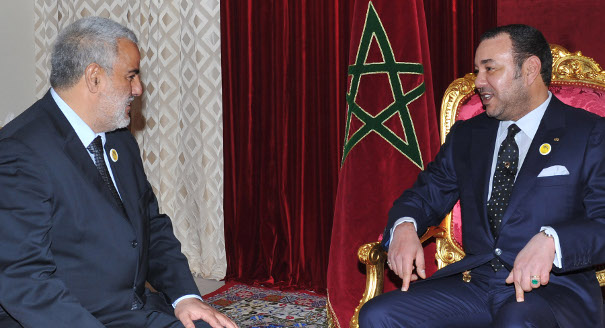
The Arab Spring–driven 2011 constitutional reforms may be changing Morocco’s political system more than anticipated. Namely, it has allowed Morocco’s governing Islamist party to increase the palace’s political accountability.
Source: Foreign Affairs
Morocco’s king has always had it good. He governs the country in practice but has been able to shield himself from criticism by presenting himself as being above politics. The palace has been able to maintain this balance by retaining the right to appoint a prime minister to ensure that a loyal government carries out the crown’s preferred policies. But the Arab Spring¬–driven 2011 constitutional reforms, which mandated that the king would appoint a prime minister from among the members of the largest political party in Parliament—a royal concession that seemed so minimal at the time—may be changing Morocco’s political system more than anticipated. Namely, it has allowed Morocco’s governing Islamist party, the Justice and Development Party (PJD), to increase the palace’s political accountability.
As the first Moroccan prime minister to come to power on the basis of his party’s electoral strength, Abdelilah Benkirane has been unwilling to accept the traditional role of palace scapegoat. In the past, he has admitted his fraught relationship with the palace. He has also been candid with the public about the king’s overriding power and the limits of his own ability to pursue reform. Benkirane has mentioned countless times that he cannot be held responsible for what is happening in the country, since it is the king who governs. And in a 2013 interview with Le Monde, Benkirane declared that “if it doesn’t work with the king, I will simply leave.” Although that may not seem especially provocative, traditionally a minister or employee of the king never threatens to resign, as it is considered pressure on the king.
As a result, a new narrative is taking hold among the Moroccan public. It still avoids explicitly criticizing the king, but it makes clear where the blame lies for the country’s shortcomings. An example came in the form of a recent televised debate between members of the PJD-led government and opposition leaders. At one point, one of them was criticizing the government when one PJD member chimed in to remind the audience that the government is His Majesty’s government. An opposition leader responded that the opposition, too, is His Majesty’s. The king, in other words, controls the government and the opposition. That is not the sort of thing that is usually said in public, much less on television. In effect, through his new approach, Benkirane has ensured that the king is publicly and explicitly perceived as a political player—and the monarchy, likewise, as a political institution—something the palace is almost certainly not comfortable with.
Benkirane’s strategy arose as a response to two truths. First, he and the PJD realized early on that although the constitutional changes from 2011 would not necessarily give the government much direct power, it did give him and his allies some space to engage in politics. They were bolstered by several new trends. First, in the wake of the 2011 protests and reforms, average Moroccans were starting to get interested in politics. Second, as a result of greater engagement, there has been more popular demand for accountability from those who rule. And finally, the fact that the prime minister came from the largest party meant that the palace was suddenly more beholden to the public, so it was more willing to tolerate some of Benkirane’s behavior. Benkirane is capitalizing on these trends but then simultaneously making it clear that he does not rule the country and that any claim to the contrary is a pretense.Benkirane’s goal, in the end, is not necessarily to win full control. Rather, it is to force accountability on the player that actually runs the state—the king.
The PJD also understands that if the monarchy remains above politics and the people don’t understand why the party cannot implement its agenda, the public will likely turn its back. But if the palace can be brought into the political fray, the PJD could have an advantage.
For one, Benkirane and the PJD are effective politicians. Further, the PJD’s agenda is broadly popular among Moroccans. For the palace, among the most worrying items on the PJD’s agenda are plans to reform the subsidies fund (Caisse de Compensation). The PJD’s goal is to gradually reduce the current subsidies; although officially aimed at lowering the cost of living for the entire population, they benefit the middle and upper classes most because the poor cannot take advantage of the largest part of the subsidies, which covers hydrocarbons. Several companies owned by palace loyalists have been taking advantage of the generous fund, which, in 2013, had a budget of about $6 billion. The PJD wants to replace these subsidies with direct monetary aid to the poorest families. If successful, the PJD could come to be seen as a champion of the poor, undermining a pillar of the monarchy’s legitimacy.
All of this puts the monarchy in a difficult position, and thus far, it has yet to devise an effective response. Through its allies in Parliament and in the government, the palace has tried to stymie the PJD and attempted to marginalize Benkirane by holding up legislation and sowing discord among members of the PJD’s governing coalition. But this approach, which lends credence to Benkirane’s claims that the monarchy is partisan, has arguably worsened the crown’s position.
The monarchy has also tried to reestablish palace control over key state institutions that started to drift away after the constitutional reforms. An example is the Ministry of Interior—the country’s most powerful ministry, which has always been headed and staffed by palace loyalists. For a brief moment, the ministry seemed to go rogue when former Interior Minister Mohand Laenser refused to take responsibility for the repression of street protests that followed the controversial royal pardon in July 2013 of Spanish criminal and child molester Daniel Galván. Once the situation calmed, the palace placed an unwavering loyalist at the helm of the ministry. But as the Ministry of Interior attempts to regain control of that narrow space that opened up post-2011, criticism is mounting. The PJD has been outspoken about this “regression” and the ministry’s attempts to clamp down on civil society groups.
Simultaneously, the palace has gone back to intimidation to solidify its position. Recently, for example, it launched crackdowns on individuals who criticize the monarchy. That includes the journalist Ali Anouzla, who has gone to great lengths to point out that the monarchy’s wealth is increasing at a time when Morocco’s population still faces severe poverty and high unemployment rates. With the public now more aware of politics and more interested in participating, this is a problem for the government.
In post-2011 Morocco, the palace’s responses could easily backfire. And that is because the PJD and Benkirane have played their hand well. They took advantage of a small opening to shake the monarchy’s careful balance. Benkirane’s goal, in the end, is not necessarily to win full control. Rather, it is to force accountability on the player that actually runs the state—the king. And it is this political transformation that is shaping up to be the PJD’s most significant contribution to Moroccan politics.
Former Fellow, Middle East Program, Editor in Chief, Sada
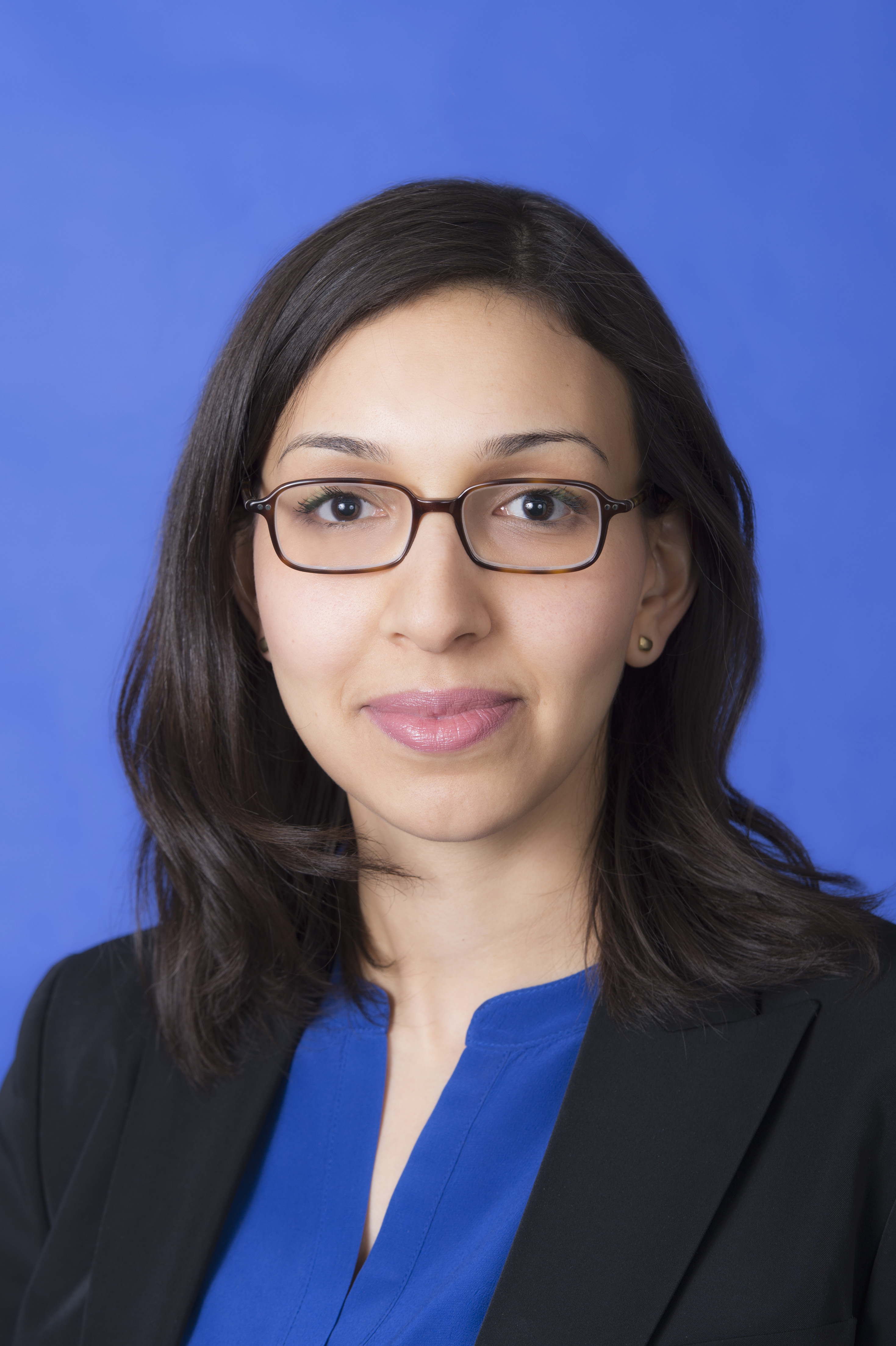
Intissar Fakir was a fellow and editor in chief of Sada in Carnegie’s Middle East Program.
Maâti Monjib
Maâti Monjib is a political analyst, human rights activist, and historian at the University of Mohammed V-Rabat.
Carnegie does not take institutional positions on public policy issues; the views represented herein are those of the author(s) and do not necessarily reflect the views of Carnegie, its staff, or its trustees.

The aftermath of the Ceuta crisis shows Europe has drawn the wrong lessons. Rather than doubling down on failed migration policies, the EU needs to address the underlying roots of such episodes.

Richard Youngs

As the EU confronts profound challenges, several leaders have called for fundamental reform to the union’s model—but only modest, superficial changes have resulted. What if Europe really could be reimagined from zero today: What should such a redesigned European order look like?
Richard Youngs, ed.

The EU’s new migration policy is not suited to today’s realities. With climate change increasingly becoming a driver of displacement, Europe needs to rethink its deterrence-focused approach.

Shana Tabak
Preparing candidate countries for EU membership is no longer enough. As the enlargement process becomes a reality, the union must also prepare its own societies.

Iliriana Gjoni
Countries face several hurdles in joining the EU, including the final stage of ratifying their accession treaties. Procedural reforms and substantive adjustments could help move the process forward.

Stefan Lehne