

Commentary
Russia is testing the waters of NATO’s mutual defense clause. What do strikes in Romanian territorial waters mean for the alliance’s posture toward Moscow?
Dimitar Bechev
{
  "authors": [
    "Alexander Baunov",
    "Balázs Jarábik",
    "Alexander Golubov"
  ],
  "type": "commentary",
  "centerAffiliationAll": "",
  "centers": [
    "Carnegie Endowment for International Peace",
    "Carnegie Russia Eurasia Center"
  ],
  "collections": [],
  "englishNewsletterAll": "",
  "nonEnglishNewsletterAll": "",
  "primaryCenter": "Carnegie Endowment for International Peace",
  "programAffiliation": "",
  "programs": [],
  "projects": [],
  "regions": [
    "Eastern Europe",
    "Ukraine"
  ],
  "topics": [
    "Political Reform",
    "Civil Society"
  ]
}
Source: Getty
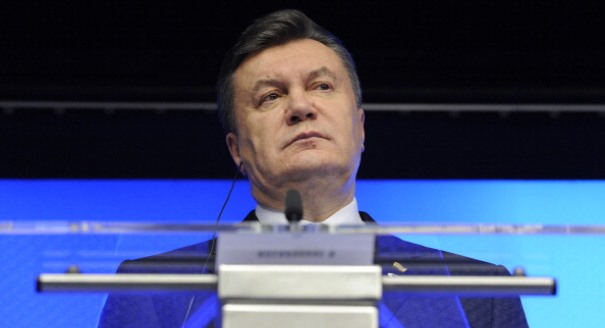
February 22, 2014, Ukraine’s then president Viktor Yanukovych surprised the world by fleeing Kyiv, just after an agreement had been reached with the country's opposition. One eventful year later, Eurasia Outlook asked several experts why they think Yanukovych fled when he did.
On February 22, 2014, Ukraine’s then president Viktor Yanukovych surprised the world by fleeing Kyiv, just after an agreement had been reached with the country’s opposition to put an end to several months of political crisis and protest. One eventful (and often tragic) year later, we asked several experts why they think Yanukovych fled when he did.
Here is how this event will probably be reflected in Ukrainian historical mythology: Viktor Yanukovych was scared away by the people’s wrath. When Maidan didn’t accept the European-approved compromise brought to the square by the opposition leaders; people started to drive Arseniy Yatsenyuk offstage; then, a sotnik (“hundred,” or Maidan representative) came out, and the rest of the events unfolded. There is another, more violent explanation. According to a recently published BBC investigation, some Maidan protestors were armed, and they in fact started shooting at the police first on the day of the mass killing on Institutskaya Street. Government forces were being pulled from the center of Kyiv to comply with the agreement, so Yanukovych might have felt defenseless and convinced himself that he is worth more alive outside of Kyiv than dead in the city proper. Quite possibly, presidents are people too. Vladimir Lukin, whom Putin sent to Ukraine to sign on the agreement, recently told Der Spiegel that panic reigned in Yanukovych’s residence that day.
Here I can venture a guess as to what happened that day (when, after all, none of us were privy to Yanukovych’s thought processes). He might have decided to flee right at that time because the Russian representative failed to put his signature next to the European ones. He may have interpreted Russia’s failure to sign the agreement as a signal that Russia didn’t believe the agreement would work out (which is exactly how Lukin and other Russian diplomats later explained their failure to sign the agreement). He thought that Russia no longer supported him in the Kyiv standoff, that Moscow had sold him out and now had its own plans unrelated to extending his presidential powers. Having lost his only external ally, Yanukovych caved in and fled.
There were a number of factors that contributed to this development of events. First, Maidan was already radicalized after January 16’s “dictatorship laws” (so-called in Kyiv) which were pushed through by the Yanukovych administration. Second, support from his oligarch supporters, political allies, as well as law enforcement agencies was fading. And third, the spectacular failure of the EU-brokered agreement, refused by Maidan mere hours after being signed by all the participants except Russia’s representative Vladimir Lukin. In public accounts of Yanukovych’s exit, the role of oligarchs are particularly overlooked (due to the logical lack of available evidence), yet this a key factor in Ukraine’s governance.
This is not to reduce the importance of Viktor Yanukovych’s own contribution to the Ukraine crisis. His every step following the decision against signing the EU association agreement helped to radicalize the situation further. His consideration was also based on the value of (not only) political agreements in Ukraine—the only guarantee accepted is pre-payment. Yanukovych knew that even in the case of peaceful government transition he would became vulnerable to revenge from the opposition, and be treated no better than he treated Yulia Tymoshenko. Within this context, even though there is evidence that he started to pack earlier, in the post-shooting atmosphere in the Maidan, his decision to flee was likely taken to save his life.
It is actually better to ask why Viktor Yanukovych was preparing to flee from Mezhigorie even before the agreement was signed. Camera records from the residence of the runaway president confirm that Yanukovych had already begun preparations for the evacuation of valuable property on February 21. It was a day before the shooting of Maidan protesters and three days before the agreement’s signing and the sensational speech of centurion (sotnik) Parasyuk urging the storming of Mezhigorie.
Needless to say, it is impossible to talk about the reasons for such precaution; there is too little reliable open source data about events during those days. The reason for this, for example, could have been that Yanukovych doubted the loyalty of his security forces, which once again were not able or willing to smooth out Maidan.
However, it seems more as though the runaway president knew about the destabilization that was soon to come and prepared to live it out in a safer place. If this assumption is true, then the provocation of a bloody conflict at Maidan could lead to destabilization across the whole country and actual civil war. This, theoretically, could will Yanukovych to turn to Russia for help—“to establish constitutional order.” After that, Kyiv would irrevocably return to the Moscow political orbit, whereas the ex-president would once and for all solve the problem of legitimating his power; and Russian bayonets, not falsified elections, would be its guarantors.

Senior Fellow, Editor-in-Chief, Carnegie Russia Eurasia Center
Baunov is a senior fellow and editor-in-chief at the Carnegie Russia Eurasia Center.

Political analyst, former Slovak diplomat, and consultant specializing in Eastern Europe
Alexander Golubov
Carnegie does not take institutional positions on public policy issues; the views represented herein are those of the author(s) and do not necessarily reflect the views of Carnegie, its staff, or its trustees.

Russia is testing the waters of NATO’s mutual defense clause. What do strikes in Romanian territorial waters mean for the alliance’s posture toward Moscow?

Dimitar Bechev

Ahead of a tough winter for Ukraine, Donald Trump’s swing back toward Russia bodes ill. But instead of panicking, Kyiv’s European allies are focusing on action.

Rym Momtaz

Funding Ukraine remains a priority for European leaders. As Russia’s war of aggression heads into another winter, two feasible options to mobilize support for Kyiv should be fast-tracked.


Vladyslav Rashkovan, Gregory P. Wilson

A notable degree of participative democracy has firmly arrived in Europe. But to have more far-reaching impact, democratic deliberation needs to move into a radically new phase.

Richard Youngs

Much has been said of the changes Brussels is trying to make to the EU enlargement process. Here’s why gradual integration might—or might not—be the answer.
Dimitar Bechev