

Commentary
Uri Dadush
{
  "authors": [
    "Uri Dadush"
  ],
  "type": "legacyinthemedia",
  "centerAffiliationAll": "",
  "centers": [
    "Carnegie Endowment for International Peace"
  ],
  "collections": [],
  "englishNewsletterAll": "",
  "nonEnglishNewsletterAll": "",
  "primaryCenter": "Carnegie Endowment for International Peace",
  "programAffiliation": "",
  "programs": [],
  "projects": [],
  "regions": [
    "East Asia",
    "China",
    "North America"
  ],
  "topics": [
    "Economy",
    "Trade"
  ]
}
Source: Getty
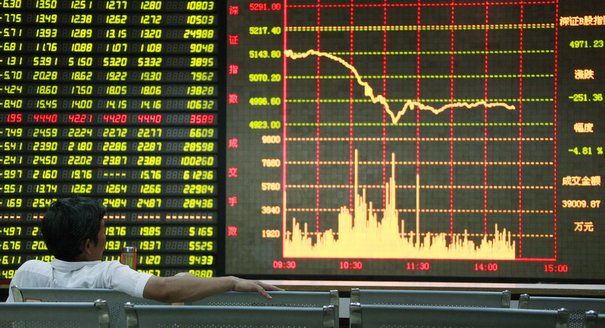
The short-term China risk must be watched,but the likelihood of a major economic crisis in China spilling over onto the rest of the world and derailing the global recovery is low.
Source: Hill
China faces a protracted period of slower growth as its economy adjusts to huge imbalances. The short-term China risk must be watched, as it could coincide with crises elsewhere, such as a Greek exit from the euro or a collapse of confidence in Brazil or Turkey. However, the likelihood of a Lehman-like crisis in China spilling over onto the rest of the world and derailing the global recovery is low.
The Chinese economy has decelerated from the extraordinary 10-percent pace it achieved over the 30 years prior to 2008, to around the government's new 7-percent target this year. It is true that anywhere else in the world, such a growth rate would be a cause of delight, not despondency. Nevertheless, the dashing of growth expectations built over decades matters a lot, and it explains the massive overcapacity in steel and chemicals production, the empty new apartment buildings, and the little-used modern roads and bridges in parts of the country. China's slowdown was coming anyway, but the shock was made much worse by the effect of the Great Recession. This one-two punch prompted the Communist Party to respond in ways unprecedented in peacetime — by ordering the Central Bank to boost liquidity, state-owned banks to lend, local authorities to borrow and to spend on infrastructure, and state-owned enterprises, which still account for about half of China's gross domestic product (GDP), to invest. China's stimulus package in 2009 and 2010 may have amounted to 8 percent of GDP, about four times the size of the United States' fiscal expansion over the relevant period.
The result of the package and subsequent pump-priming has been to sustain China's growth but also to make it even more lopsided. Before the crisis, growth was driven disproportionately by exports and private and public investment. Today, it is based predominantly on investment spurred on by credit creation and by various levels of public intervention, much of it in real estate and infrastructure. The stated policy objective is to shift demand toward private consumption, but that is proving tough to achieve. After all, consumers cannot be ordered to consume. To boost consumption, wages are being allowed to rise. However, there are limits to this strategy imposed by declining profitability and by a strong yuan that has largely kept pace with the soaring U.S. dollar.Resolving such deep-seated problems in an economy of 1.4 billion people will take years, and meanwhile, exporters to China of metals, specialized chemicals, oil and industrial components will take a big hit, as will commodity-dependent countries from Peru to Australia. Given China's dynamism and large weight in the world economy (around 13 percent at market exchange rates), the confidence of financial markets and of global investors is dampened. Still, it is possible to exaggerate the effect of China on demand in the advanced countries and on the rest of the world. Only about 4 percent of the rest of the world's GDP is exported to China, so even if the country's growth rate were to halve from this year's projected 7 percent to 3.5 percent, the impact on demand in the rest of the world would be small: 0.1 percent to 0.2 percent of the rest of the world's GDP depending on assumptions about induced effects. Some countries, such as France and Italy, may see even smaller effects because they export relatively little to China and would benefit from lower oil prices induced by its slowdown.
Similarly, it is difficult to see how a crisis in China, originating for example in its housing sector, would result in a currency or banking crisis that threatens the world's financial system. Despite its problems, China still has relatively low levels of public and foreign debt, enormous currency reserves and the world's highest savings rates. Wall Street and the City are relatively insulated from China by the prevalence of its state-owned banks operating under tight capital controls.
The most damaging outcome of a crisis in China is unlikely to be a global downturn this year or next. Instead, the result would be an even more unbalanced government-supported growth path, setting the stage for greater problems down the road.

Former Senior Associate, International Economics Program
Dadush was a senior associate at the Carnegie Endowment for International Peace. He focuses on trends in the global economy and is currently tracking developments in the eurozone crisis.
Recent Work
Uri Dadush
Uri Dadush
Carnegie does not take institutional positions on public policy issues; the views represented herein are those of the author(s) and do not necessarily reflect the views of Carnegie, its staff, or its trustees.

The hybrid warfare landscape is evolving rapidly, leaving policymakers without clear strategies. To better inform their work in addressing emerging challenges, governments must dig deeper into the underlying dynamics at play.


Raluca Csernatoni, Alicia Wanless
Europe’s industrial supply chains leave it vulnerable to global shocks. The EU needs a pragmatic green industrial strategy that balances durable partnerships and bolsters homegrown clean tech without sacrificing low-carbon ambition.


Milo McBride, Pauline Gerard

As geopolitical rivalry weaponizes global supply chains, the EU’s true vulnerability lies in emerging-risk imports. For these goods, suppliers are growing more concentrated, substitution more difficult, and political risk is looming.

Sinan Ülgen
The EU is putting together a new security strategy to meet today’s myriad challenges. But for any proposal to be effective, the union needs to grapple with its identity and ambitions.

Pierre Vimont

Amid uncertainty caused by the Iran war, the global drive for nonproliferation has stalled. With Europe diplomatically marginalized and countries reassessing their nuclear options, efforts to curb the spread of nuclear weapons risk becoming irrelevant.

Jane Darby Menton