

In The Media
Lina Khatib
{
  "authors": [
    "Lina Khatib"
  ],
  "type": "legacyinthemedia",
  "centerAffiliationAll": "",
  "centers": [
    "Carnegie Endowment for International Peace",
    "Malcolm H. Kerr Carnegie Middle East Center",
    "Carnegie Europe"
  ],
  "collections": [],
  "englishNewsletterAll": "",
  "nonEnglishNewsletterAll": "",
  "primaryCenter": "Malcolm H. Kerr Carnegie Middle East Center",
  "programAffiliation": "",
  "programs": [],
  "projects": [],
  "regions": [],
  "topics": [
    "Political Reform"
  ]
}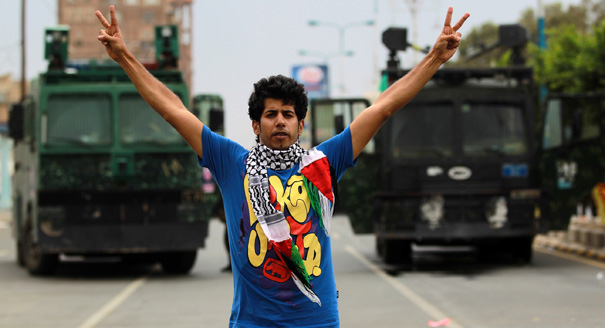
Source: Getty
The Carnegie Middle East Center celebrates its tenth year anniversary.
Source: L'Orient-Le Jour
The Carnegie Middle East Center celebrated its tenth year anniversary yesterday. It was an opportunity for the center to host a conference with a large number of policy experts from various backgrounds. A look back on a decade’s achievements with the center’s director, Lina Khatib.
I am very proud that the center has a new generation of scholars, from the Levant and North Africa, with diverse backgrounds. We work together on issues that intersect our specific areas of expertise. Since the region is very complex and the problems of Arab countries are deeply entangled, the traditional mode of analysis is no longer appropriate today. We need new ways of thinking. For example, we cannot isolate politics from the economy or security from politics. I am proud to say that our scholars are able to work together as a team to analyze the existing synergies between all these different topics.
Yes, actually there is. I would define it as a mix of political field research with analysis. Often in the Arab world, the think tanks approach is rather historical, and that of academic research centers rather conceptual. Both are important, of course, but what distinguishes our work is that we observe the field and remain in direct contact with political actors as we draw our conclusions. We organize events which aim to inform as well as analyze at the same time, without advancing any agenda on behalf of political stakeholders.
We are not activists. We are not involved in lobbying nor do we defend any political entity or government. We are 100 percent independent. However, we are actors in the sense that we offer concrete policy tracks that we recommend to politicians, both Western and Arab, to follow. However, this does not rise to the level of lobbying. We simply present our analyses, which are always individual. The scholars have their own theories and opinions which might at times be at odds with each other’s. The institution, itself, has no single line of thought.
In order for a think tank like ours to endure, we need to support a new generation of scholars. This is what we are striving to cultivate in the center, ever since I was appointed at its head. Most scholars are in their thirties or younger. These people will still be here in the next ten years, in Carnegie or elsewhere, and they will strengthen our action. This is how we promote research culture in the Middle East, by bringing in young and fresh minds. We involve young people, rather than marginalize them on the basis that they have yet to prove themselves.
In late 2005, the Carnegie Middle East Center was inaugurated at a time when Lebanon was in full political upheaval. But it was also a time of hope because Beirut was perceived as the most open Arab capital. Of course, things changed locally in 2006, but the rest of the Arab world, except for Egypt, was very stable. But it was false stability, and the seeds of the Arab Spring had already been sown and only waiting for the right time to bear their fruit. Carnegie focused on political reforms and political Islam which, at the time, were not considered hot topics because the area seemed peaceful. But this is what made the reputation of the Carnegie Middle East Center, because it shed the light, quite rightfully, on issues which were to become highly problematic in the region.
The conflicts in which many countries in the region are mired will worsen in the short run. However, this is an inevitable step because we are going through a major political transition. Transitions never follow a linear path nor are they achieved without damage. The regional political situation will become even more complex and, unfortunately, more violent.
This article was originally published in French by L’Orient-Le Jour.
Former Director, Middle East Center
Khatib was director of the Carnegie Middle East Center in Beirut. Previously, she was the co-founding head of the Program on Arab Reform and Democracy at Stanford University’s Center on Democracy, Development, and the Rule of Law.
Recent Work
Lina Khatib
Lina Khatib
Carnegie does not take institutional positions on public policy issues; the views represented herein are those of the author(s) and do not necessarily reflect the views of Carnegie, its staff, or its trustees.

A notable degree of participative democracy has firmly arrived in Europe. But to have more far-reaching impact, democratic deliberation needs to move into a radically new phase.

Richard Youngs

Before the next wave of EU enlargement takes place, the union needs to grapple with thorny questions of how power is distributed among its members.


Emil Sondaj Hansen, Ditte Brasso Sørensen

As the EU confronts profound challenges, several leaders have called for fundamental reform to the union’s model—but only modest, superficial changes have resulted. What if Europe really could be reimagined from zero today: What should such a redesigned European order look like?
Richard Youngs, ed.
Preparing candidate countries for EU membership is no longer enough. As the enlargement process becomes a reality, the union must also prepare its own societies.

Iliriana Gjoni
Countries face several hurdles in joining the EU, including the final stage of ratifying their accession treaties. Procedural reforms and substantive adjustments could help move the process forward.

Stefan Lehne