
French President Emmanuel Macron has unveiled his country’s new nuclear doctrine. Are the changes he has made enough to reassure France’s European partners in the current geopolitical context?
Rym Momtaz, ed.
{
"authors": [
"Lina Khatib",
"Ahmed Gaaloul",
"Aymenn Jawad Al-Tamimi"
],
"type": "legacyinthemedia",
"centerAffiliationAll": "dc",
"centers": [
"Carnegie Endowment for International Peace",
"Malcolm H. Kerr Carnegie Middle East Center"
],
"collections": [],
"englishNewsletterAll": "menaTransitions",
"nonEnglishNewsletterAll": "",
"primaryCenter": "Malcolm H. Kerr Carnegie Middle East Center",
"programAffiliation": "MEP",
"programs": [
"Middle East"
],
"projects": [],
"regions": [
"Gulf",
"Levant",
"Maghreb",
"Syria",
"Iraq",
"Tunisia",
"Middle East",
"North Africa"
],
"topics": [
"Security"
]
}Source: Getty
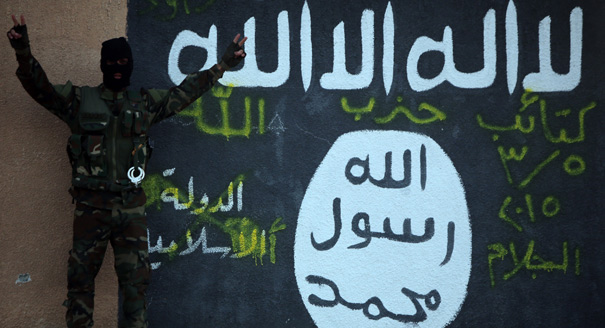
A year after declaring a “caliphate,” self-proclaimed Islamic State fighters are claiming attacks in Kuwait and Tunisia.
Source: Al Jazeera Inside Story
More than 60 people were killed on Friday in two attacks.
The first was a suicide bomb explosion at a mosque for Shia Muslims in Kuwait City—the first such attack in relatively stable Kuwait.
Then in Tunisia, European tourists were targeted in their resort. A gunman randomly opening fire among the beach umbrellas and continuing in a hotel.
The message, for many, is clear: ISIL is expanding its activities beyond areas already seized in Iraq and Syria.
But what are the limits of the group’s expansion?
This interview was originally broadcast on Al Jazeera’s Inside Story.
Former Director, Middle East Center
Khatib was director of the Carnegie Middle East Center in Beirut. Previously, she was the co-founding head of the Program on Arab Reform and Democracy at Stanford University’s Center on Democracy, Development, and the Rule of Law.
Ahmed Gaaloul
Aymenn Jawad Al-Tamimi
Carnegie does not take institutional positions on public policy issues; the views represented herein are those of the author(s) and do not necessarily reflect the views of Carnegie, its staff, or its trustees.
French President Emmanuel Macron has unveiled his country’s new nuclear doctrine. Are the changes he has made enough to reassure France’s European partners in the current geopolitical context?
Rym Momtaz, ed.
The drone strike on the British air base in Akrotiri brings Europe’s proximity to the conflict in Iran into sharp relief. In the fog of war, old tensions in the Eastern Mediterranean risk being reignited, and regional stakeholders must avoid escalation.
Marc Pierini
Europe’s reaction to the war in Iran has been disunited and meek, a far cry from its previously leading role in diplomacy with Tehran. To avoid being condemned to the sidelines while escalation continues, Brussels needs to stand up for international law.
Pierre Vimont
France has stopped clinging to notions of being a great power and is embracing the middle power moment. But Emmanuel Macron has his work cut out if he is to secure his country’s global standing before his term in office ends.
Rym Momtaz
Despite offering security benefits to candidates and the EU alike, the enlargement agenda appears stalled. Why is progress not being made, and is it time for Europe to rethink its approach?
Sylvie Goulard, Gerald Knaus