

Research
- +8
William J. Burns, Michael Chertoff, Catherine Ashton, …
{
  "authors": [
    "William J. Burns"
  ],
  "type": "legacyinthemedia",
  "centerAffiliationAll": "",
  "centers": [
    "Carnegie Endowment for International Peace",
    "Malcolm H. Kerr Carnegie Middle East Center"
  ],
  "collections": [
    "Iranian Proliferation"
  ],
  "englishNewsletterAll": "",
  "nonEnglishNewsletterAll": "",
  "primaryCenter": "Carnegie Endowment for International Peace",
  "programAffiliation": "",
  "programs": [],
  "projects": [],
  "regions": [
    "North America",
    "United States",
    "Middle East",
    "Iran"
  ],
  "topics": [
    "Political Reform",
    "Foreign Policy",
    "Nuclear Policy"
  ]
}
Source: Getty
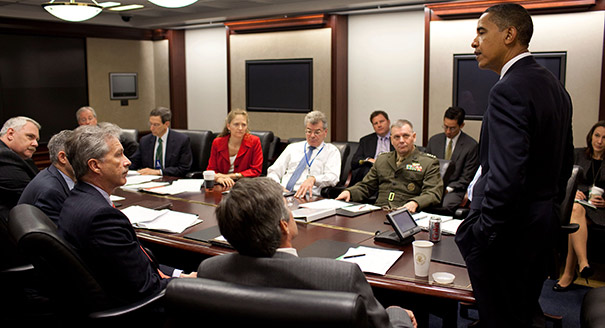
Secret talks initiated by the United States paved the way for the negotiations that, in turn, led to the breakthrough nuclear deal with Iran.
Source: NPR’s Morning Edition
RENEE MONTAGNE, HOST:
In the many months that Iran, the U.S., and five other world powers met to negotiate a nuclear deal, ministers and diplomats were filmed and photographed at the negotiating table, sightseeing, waving from hotel balconies.
STEVE INSKEEP, HOST:
That was the public face of the talks. Well away from the spotlight, and just as key, was the work of Ambassador William Burns. He's one of America's most senior and respected diplomats and was first dispatched to a meeting with Iranians and five world powers in 2008, under then President George W. Bush.
MONTAGNE: That brief encounter produced nothing. But five years later, in 2013, Bill Burns led high-stakes secret nuclear talks, bringing Iranian and American negotiators face-to-face. He traveled in unmarked government planes, used back entrances and kept his true whereabouts off the State Department's public schedules. Now Ambassador Burns is credited for quietly creating the foundation for the greatest diplomatic breakthrough with Iran in 35 years. He joined us to talk about those early negotiations and the challenges ahead. Welcome to the program.
WILLIAM BURNS: Thanks, very nice to be with you.MONTAGNE: Take us back to March of 2013, when you flew in, on a secret mission really, to talk face-to-face to Iranians about a possible deal.
BURNS: Well, I mean, the backdrop is obviously shaped by 35 years in which the United States and Iran had not had sustained diplomatic contact. There was an awful lot of political baggage on both sides and a great deal of mistrust, much of which continues to this day. And so, I think we were certainly convinced of the importance of that direct engagement, convinced that it was important to do it quietly because I think it would've been very difficult to get any traction in the glare of publicity. But it was really unknown territory. And, you know, I was skeptical that we could make much progress. And I think it's fair to say that our Iranian counterparts were also skeptical given the history of this issue. But I was certainly determined to test the proposition that we could make progress through serious negotiations.
MONTAGNE: Well, when you first arrived, though, to begin this process, the person at the head of the government was Mahmoud Ahmadinejad, who was not only hard-line, but also very outspoken to American eyes - mercurial. So what did you think you were doing right at that moment, versus any other moment - versus three years before, or wait a couple more years?
BURNS: Well, we had built up, by the beginning of 2013, a fair amount of international economic pressure against Iran. You have to remember that its oil exports have dropped by 50 percent. It's the value of its currency, it also dropped by 50 percent. So there were lots of reasons to be skeptical. But that began to change after the election of Rouhani, Foreign Minister Zarif coming into office, and, you know, we were able to begin to make progress toward what became the interim agreement. And in that agreement, we were able to introduce some very important intrusive inspection procedures, and all in return for a very modest sanctions relief.
MONTAGNE: Give us an example of the sort of way inspections worked during the interim agreement, which is a bit of a model for this comprehensive final agreement. What would've happened - as an example?
BURNS: Well, I mean, one example that was very important to us in the negotiations, and was quite hard-fought, was the whole issue of having daily access to the declared Iranian nuclear facilities. In other words, in Natanz and in Fordow as well as in Iraq, the heavy water reactor, and then also having continuous access to the whole chain of activities that runs from uranium mines and mills through centrifuge production to centrifuge storage. And that, I think, created an important precedent for the comprehensive agreement, in the sense that, you know, by having that kind of eyes-on, the whole extent of the Iranian program, you're much better able to detect an effort to do something covertly. And by monitoring that whole nuclear supply chain, you're able to detect efforts to divert material into a covert program, in a much more effective way than we would've been without that provision.
MONTAGNE: And, Ambassador Burns, one of the criticisms that's been raised from Republican critics, to Israel's Netanyahu, to a moderate rebel that we spoke to in Syria, is that when these sanctions are lifted - or partly-lifted, some of them - Iran will be able to use a flow of billions of dollars to prop up the Assad regime in Syria, Hezbollah in Lebanon, and other sorts of activities that are negative. As far as the West is concerned, why wouldn't Iran do that?
BURNS: I've taken a pragmatic view of this over a number of years. I do not expect, as a result of a nuclear agreement, that you're going to see an overnight transformation of Iranian behavior. I think Iran's actions in Lebanon, in Syria, in Yemen are likely to threaten our interests and the interests of our friends for some time to come. But I think those actions would be much more threatening if Iran were nuclear armed, or if its nuclear program were unconstrained and uninspected. So, you know, in a perfect world, the outcome here would've been no enrichment, dismantling of Iran's existing enrichment facilities, but we don't live in a perfect world. And perfect hasn't really been on the venue for us. But I do believe that two challenges are going to be extraordinarily important as we move ahead. And the first is to execute this agreement rigorously, which is not a small challenge, and it's not something that, you know, the United States has always been great at in the past. And it's going to require a lot of day-to-day attention to make sure that Iran as well as everyone else involved in this agreement live up to their obligations. And then second and just as importantly, it's going to be critically important to embed the nuclear agreement in a wider regional strategy that looks, in a clear-eyed way, at what's going to be threatening Iranian behavior in a lot of other areas to reassure our friends - in the Gulf, and in Israel, and elsewhere - that pushes back against that Iranian behavior. And, you know, I think it's only in that way that over time, you know, you may begin to see shifts in Iranian behavior. You know, the shift - Iran becoming, as Henry Kissinger once put it, you know, not just a revolution or a cause, but a nation, another big, ambitious regional power.
MONTAGNE: Ambassador William Burns was a longtime U.S. diplomat. He's now the president of the Carnegie Endowment for International Peace.
Thank you for joining us.
BURNS: Thank you very much, Renee.
This interview was originally aired on NPR’s Morning Edition.
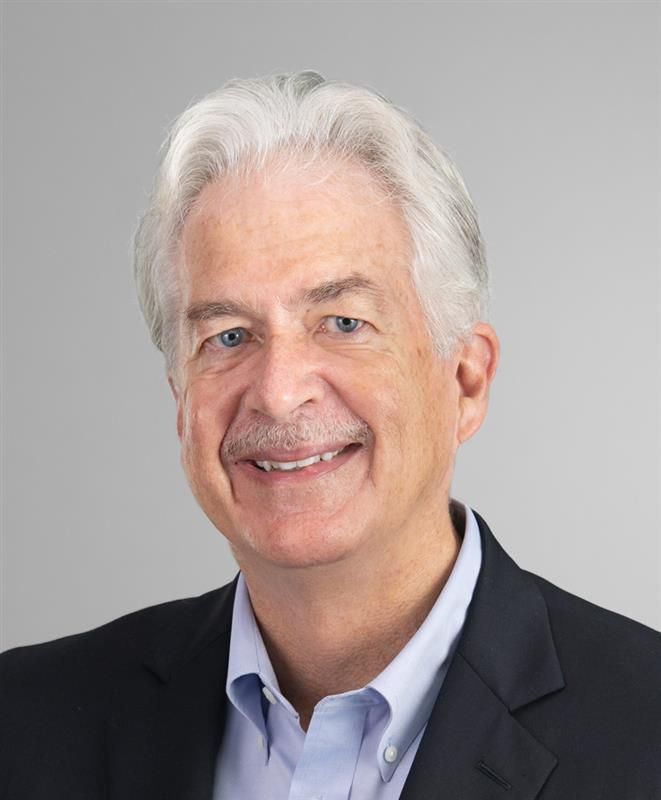
Former Carnegie President (2015-2021)
A former career diplomat, William J. Burns served as director of the CIA, deputy secretary of State, and ambassador to Russia and Jordan. Burns was also president of the Carnegie Endowment for International Peace from 2015 to 2021.
Recent Work
William J. Burns, Michael Chertoff, Catherine Ashton, …
William J. Burns
Carnegie does not take institutional positions on public policy issues; the views represented herein are those of the author(s) and do not necessarily reflect the views of Carnegie, its staff, or its trustees.

A summer of escalation in the Black Sea has hurt Ukraine economically and is exacerbating world food security. A truce is needed—as is a broader reframing of Europe’s Ukraine strategy.

Thomas de Waal

Are Germany’s economic, industrial, and political struggles becoming a liability for the EU’s ability to rise to the geopolitical moment?

Rym Momtaz, ed.

European Commission President Ursula von der Leyen is about to give her annual address on the state of the EU. Here’s what she won’t—but should—say.
Rym Momtaz

Radical-right parties are expected to do well in upcoming elections in four of the EU's biggest member states. If successful, they could prevent the union from addressing key challenges ahead.

Stefan Lehne

The aftermath of the Ceuta crisis shows Europe has drawn the wrong lessons. Rather than doubling down on failed migration policies, the EU needs to address the underlying roots of such episodes.

Richard Youngs