

Research
- +4
Milan Vaishnav, Rahul Verma, Rukmini S., …
{
  "authors": [
    "Christophe Jaffrelot"
  ],
  "type": "legacyinthemedia",
  "centerAffiliationAll": "dc",
  "centers": [
    "Carnegie Endowment for International Peace",
    "Carnegie India"
  ],
  "collections": [],
  "englishNewsletterAll": "ctw",
  "nonEnglishNewsletterAll": "",
  "primaryCenter": "Carnegie Endowment for International Peace",
  "programAffiliation": "SAP",
  "programs": [
    "South Asia"
  ],
  "projects": [],
  "regions": [
    "South Asia",
    "India"
  ],
  "topics": [
    "Political Reform"
  ]
}
Source: Getty
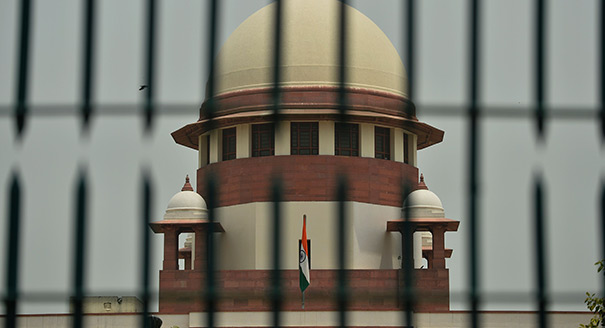
The Indian Supreme Court is facing its greatest challenge since the 1970s and tensions between the judges and the government have never been so intense for such a long period.
Source: Indian Express
There is no denying that the Supreme Court is one of the most trusted institutions in India and a pillar of the world’s largest democracy.
The challenge it — and, the judiciary at large — faces today may not look as enormous compared to what it faced in the 1970s. But a peril of this magnitude has not manifested itself since the 1970s and tensions between the judges and the government have never been so intense for such a long period.
The issue responsible for these tensions — vacancies in courts — is not new. I highlighted them in detail in an article last year (‘Holes in the government,’ The Indian Express June 4, 2015). But the holes have become larger. In May 2015, vacancies represented 35.9 per cent of the total approved strength of the judges in the Supreme Court and High Courts — 366 out of 1,017. By November 2016, the vacancies had increased by almost seven percentage points — 42.7 per cent (461 out of 1,079). Some states are more affected than the others. These include strife-prone states such as Chhattisgarh where 50 per cent (11 out of 22) of the judges posts lie vacant. What kind of justice can a state administer when half of the judges’ posts have not been filled up? Regions which are more calm have also been penalised. These include Andhra Pradesh (60.6 per cent vacancies), Karnataka (59 per cent), Uttar Pradesh (51.25 per cent) and Assam (45.8 per cent).
True, some states with a very high vacancy rate have a smaller backlog of cases. Tamil Nadu, where the vacancy rate was very high till recently (49 per cent this summer), is a case in point. While it has a very low judge-population ratio (14 judges per million population in contrast with states like Delhi which has 47 judges per million population or Gujarat which has 32 judges per million population), it also has a low pendency rate. But inevitably, there is a correlation between the effectiveness of the judiciary and the number of judges. That is why Supreme Court judges argue that the number of pending cases will never diminish if the number of vacancies keeps increasing. Chief Justice T.S. Thakur declared in May that 70,000 more judges were required to clear the pending cases.
Why doesn’t Narendra Modi’s election promise, “Minimum government, maximum governance”, hold good in the domain of law? There is an obvious explanation: It lies in the tussle over the procedure for appointing judges, which goes back to 2014. After taking over power, the Modi government introduced a bill in Parliament, which was intended to put an end to the collegium system (in a nutshell, this involved judges appointing judges) and to create a National Judicial Appointments Commission (NJAC). The commission would have comprised the Chief Justice of India (CJI), two other senior judges of the Supreme Court, the law minister and two other “eminent” persons appointed by a committee consisting of the prime minister, the CJI and the leader of the opposition. The NJAC would have been responsible for the appointment and transfer of judges to the higher judiciary. The Commission was established in August 2014 through the 99th amendment to the Constitution of India. The Bill was passed and approved by more than 16 states. But in October 2015 the Supreme Court decided to strike down this reform and to revive the collegium system in the name of the independence of the judiciary.
However, the Modi government did not resign itself to the status quo. It drafted a Memorandum of Procedure (MoP) that was supposed to improve the decision-making process regarding the appointment of judges. This MoP was sent to the Supreme Court in March. In May, the CJI returned it with the views of the collegium, which rejected at least two clauses: The need for judges to write their reasons for promoting (or rejecting) X or Y that the government had introduced for the sake of transparency and the possibility for the government to reject any name recommended by the collegium on grounds of national security.
Because of these bones of contention, for months, no real collaborative work has been possible between the executive and the judicial wings of the Indian state. They merely agreed to appoint retired judges in high courts to tackle pendency — and that too in early November, after months of a difficult dialogue. In between, a bench of the Supreme Court had told Attorney General Mukul Rohatgi that the court would not allow the judicial “institution to be decimated by the inaction, inefficiency or unwillingness of the executive”. Can decimation be a strategy for weakening a judiciary which has shown its independence lately by reinstating governments in Arunachal Pradesh and Uttarakhand in response to President’s rule? Such an interpretation is supported by the recent decision of the Union government to return 43 of the 77 names recommended by the collegium for appointment of judges in high courts, a first since, till then, the primacy of the CJI had prevailed in this matter.
This move reflects the government’s perception of the role of the judiciary, that has been well articulated by Arun Jaitley. After the rejection of the NJAC by the Supreme Court, he said that “democracy can’t be the tyranny of the unelected” and also: “There is no principle in democracy anywhere in the world that institutions of democracy are to be saved from the elected”. Emphasising that the popular vote was the keystone of democracy, he also declared that “Just as independence of the judiciary is part of basic structure [of the Constitution], the primacy of the legislature in policymaking is also part of basic structure.”. On the day the Supreme Court made it possible for Harish Rawat to return as chief minister of Uttarakhand, Arun Jaitley declared in the Rajya Sabha that Parliament should make its own decision about the Goods and Services Tax because “With the manner in which encroachment of legislative and executive authority by India’s judiciary is taking place, probably financial power is the last power that you have left”. And also: “Step by step, brick by brick, the edifice of India’s legislature is being destroyed”.
Such arguments were used by Indira Gandhi in the 1970s when she attacked the independence of the judiciary in the name of the people’s will — that she claimed she embodied after the 1971 election. The American social scientist Edward Shils, had shown, a long time ago, that populism is based on this opposition between the legitimacy of the elected politician and the legality enshrined in a Constitution whose custodians are the judges. Democracy without the rule of law quickly degenerates in mobocracy and eventually, even elections cannot be organised fairly. Which does not mean that the judiciary is always right, that the government of the judges is not posing a threat to democracy and that reforms should not take place in this domain too. But that will be the subject of another oped.
Postscript: The Supreme Court has informed the government that its collegium reiterated the 43 names that the government had just rejected. The arm-twisting game is turning into a tug of war which may damage a delicate institutional architecture.

Former Nonresident Scholar, South Asia Program
Jaffrelot’s core research focuses on theories of nationalism and democracy, mobilization of the lower castes and Dalits (ex-untouchables) in India, the Hindu nationalist movement, and ethnic conflicts in Pakistan.
Recent Work

Milan Vaishnav, Rahul Verma, Rukmini S., …
Christophe Jaffrelot
Carnegie does not take institutional positions on public policy issues; the views represented herein are those of the author(s) and do not necessarily reflect the views of Carnegie, its staff, or its trustees.

As the EU confronts profound challenges, several leaders have called for fundamental reform to the union’s model—but only modest, superficial changes have resulted. What if Europe really could be reimagined from zero today: What should such a redesigned European order look like?

Richard Youngs, ed.

Preparing candidate countries for EU membership is no longer enough. As the enlargement process becomes a reality, the union must also prepare its own societies.

Iliriana Gjoni
Countries face several hurdles in joining the EU, including the final stage of ratifying their accession treaties. Procedural reforms and substantive adjustments could help move the process forward.

Stefan Lehne
Europe has an interest in supporting Armenian leader Nikol Pashinyan as he tries to make peace with neighbors and loosen ties with Russia. But it is depersonalized support in the long term, not quickfire flash, that will win the day.

Thomas de Waal
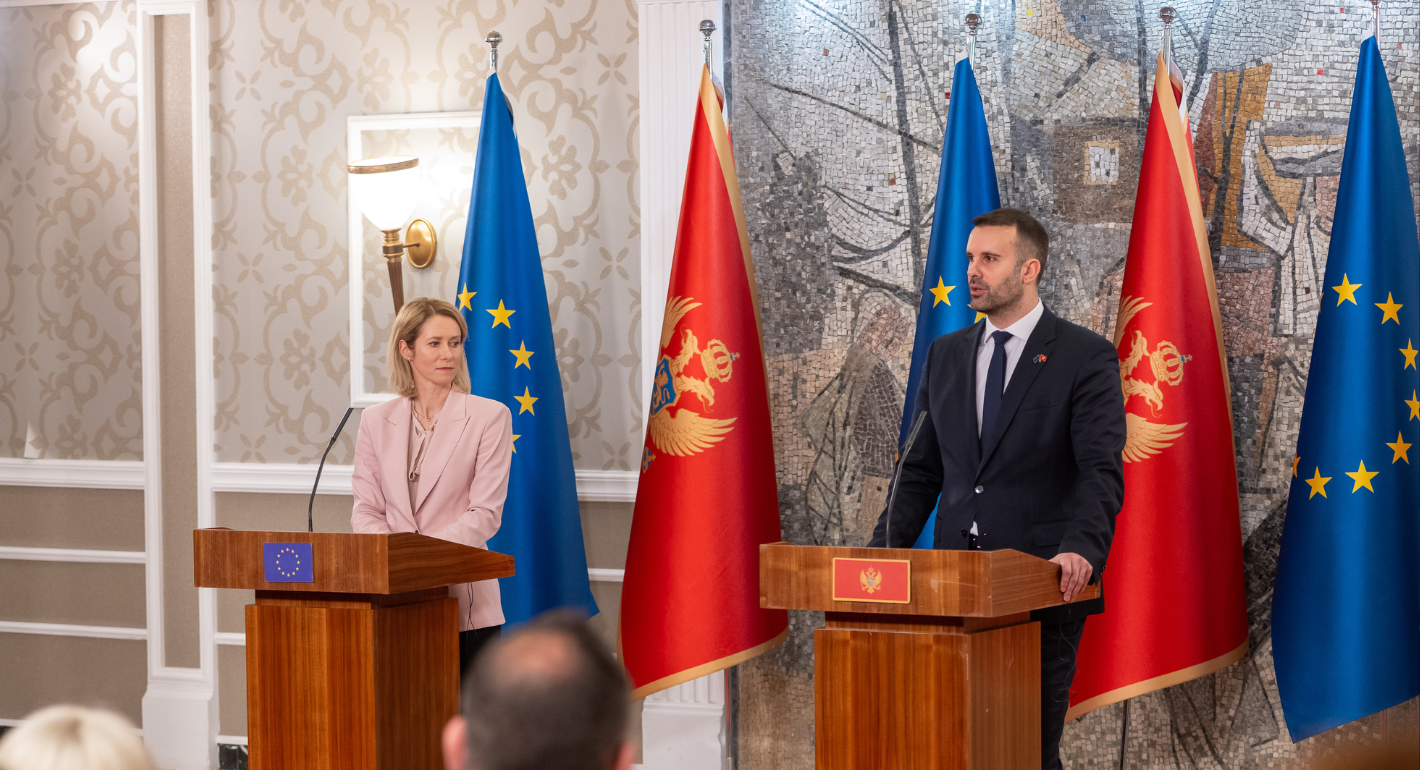
Montenegro and Albania are frontrunners for EU enlargement in the Western Balkans, but they can’t just sit back and wait. To meet their 2030 accession ambitions, they must make a strong positive case.

Dimitar Bechev, Iliriana Gjoni