

Commentary
Chung Min Lee
{
  "authors": [
    "Chung Min Lee"
  ],
  "type": "legacyinthemedia",
  "centerAffiliationAll": "dc",
  "centers": [
    "Carnegie Endowment for International Peace"
  ],
  "collections": [],
  "englishNewsletterAll": "asia",
  "nonEnglishNewsletterAll": "",
  "primaryCenter": "Carnegie Endowment for International Peace",
  "programAffiliation": "AP",
  "programs": [
    "Asia"
  ],
  "projects": [],
  "regions": [
    "East Asia",
    "South Korea"
  ],
  "topics": [
    "Political Reform"
  ]
}
Source: Getty
In South Korea’s unprecedented political crisis, the entrenched political class—including Park and her supporters—must be willing to take courageous action, including forsaking political power.
Source: Washington Post
South Korea is in the midst of an unprecedented political crisis, the worst since the restoration of democracy in 1987. The latest flare-up could potentially result in President Park Geun-hye’s resignation, a profoundly damaged and irreparably weakened presidency, a massive altering of the political landscape more than a year before the next presidential election in December 2017, and a growing impetus to revise the 1987 constitution.
On Monday, longtime presidential confidant Choi Soon-sil was arrested by the Supreme Prosecutors’ Office after revelations that she was deeply involved in affairs of state without any formal role in the Park administration. Indeed, the local press has dubbed Choi the “President of the Night” to highlight her behind-the-scenes influence in shaping critical national policies, creating new policy initiatives, planting her cronies in ministries and agencies, enriching her family and her associates through lucrative government contracts and real estate purchases, and twisting the arms of leading Korean conglomerates to “donate” millions of dollars to two foundations that she spearheaded. Her late father, Choi Tae-min, was a con artist-cum-cult leader who befriended Park when her mother was assassinated in 1974. While rumors have always persisted about the elder Choi’s influence on Park, no one really knew the true depth of Park’s reliance on the Choi family over the past four decades — until now.
While it is nearly impossible to see any upsides in this cascading crisis, the sky isn’t falling. South Koreans will pull through this, but only if members of the entrenched political class — foremost among them Park and her supporters in the ruling party but also key leaders in the opposition — realize that they must take courageous measures, including forsaking political power.
For Park, it means that until the Supreme Prosecutors’ Office completes its investigation and releases its findings, she must recuse herself from domestic affairs, resign from the ruling party and announce a supra-national, neutral cabinet. On Wednesday, the president appointed a former high-ranking official in the Roh Moo-hyun government, Kim Byung-joon, as prime minister. In response, opposition parties have all announced their unwillingness to open hearings to confirm the prime minister-designate.
Although her term ends in February 2018, an exasperated public and key members of the opposition have called on Park to resign immediately. Such a move would be emotionally satisfying, but it won’t resolve the ongoing crisis. Indeed, developments over the next several weeks will determine whether the only way forward is for Park to resign. But even if she steps down, she must do so after the machinery of government is fully restored. South Korea can’t be run like a banana republic.
The ruling and opposition parties have to leave aside the burning question of which party’s candidate is likely to win the next presidential election and instead concentrate their efforts on ensuring that a bipartisan cabinet not only takes office but also functions with their full blessing and support. The two key opposition parties — the Minjoo Party and the People’s Party — rather than doing everything possible to decimate Park’s already damaged credibility and belittling the free-falling ruling party — must act as though they are in power. And most critically, there has to be a solid political consensus that a new bipartisan cabinet will be able to fully address the growing nuclear threat from North Korea and maintain critical tenets of Korean foreign policy.
Regardless of how the crisis ultimately unfolds, three critical dimensions must be addressed if South Korea emerges stronger from the current crisis.
First and foremost, once a clear picture emerges on the magnitude of the damage that was sown by Choi, her wide web of cronies and the former Park officials who facilitated Choi’s shadow cabinet, Park must assume full political responsibility. According to polls conducted by the Munwha Ilbo, 36 percent of respondents said that Park should resign, while 12 percent responded that she should be impeached. But because Park’s approval rating has already dipped below 10 percent, if she can’t turn the tide, she should step down gracefully.
Second, while there is every reason to believe that the public mood has turned decisively against Park, the opposition is mistaken if it believes that anti-Park sentiment is going to translate automatically into support for the opposition. It is far from certain whether key figures such as Moon Jae-in, the former leader of the Minjoo party who lost to Park in the 2012 presidential election and who is a leading contender for the presidency, will emerge unscathed from the ongoing scandal. Specifically, if Moon continues to exploit the current crisis to capitalize on his own presidential aspirations rather than acting like a statesman of a loyal opposition during a period of unprecedented political uncertainty, South Korean voters won’t support him in 2017. As much as the South Korean public is deeply disappointed in Park Geun-hye (even Park’s die-hard supporters are wondering whether she can remain in office), it doesn’t mean that Moon Jae-in, Ahn Cheol-soo (head of the People’s Party) or Park Won-soon (mayor of Seoul) are automatic shoo-ins for the presidency.
Third, “Choi Soon-sil Gate” provides a genuine opportunity to re-engineer South Korean politics so that the current five-year single term presidency is relegated to the history books with the crafting of a new constitution. The current constitution was introduced in 1987, when South Korea was transitioning from authoritarian rule to democratic governance and when virtually everyone agreed that a single five-year presidential term was the most effective way of preventing a return to authoritarian politics. But South Korea needs a new constitution that strengthens checks and balances while providing greater power to the National Assembly.
South Koreans have to also understand that regardless of how the Park presidency ends, South Korea has to contend with several parallel challenges: Kim Jong Un’s determination to increase North Korea’s nuclear arsenal in the world’s last remaining totalitarian state, maximizing South Korea’s strategic leverage and defense capabilities in the face of mounting Chinese political and military pressure, the need to manage Seoul’s critical U.S. alliance with a new administration in Washington, and remaking Asia’s fourth-largest economy into a more competitive powerhouse.
A Korean proverb reminds us that each crisis opens the window to new opportunities, and the spiraling scandal in the Park administration is not an exception. And no one has a greater obligation than Park Geun-hye to show the South Korean people that her final duty as president is not to cling to power, but to ensure that the democratic process will become stronger and much more resilient, even if it means stepping down from office. That would be a legacy that all South Koreans would support, even if they remain deeply disappointed at the failings of the Park presidency.
This article was originally published in the Washington Post.
Senior Fellow, Asia Program
Chung Min Lee is a senior fellow in Carnegie’s Asia Program. He is an expert on Korean and Northeast Asian security, defense, intelligence, and crisis management.
Recent Work
Chung Min Lee
Carnegie does not take institutional positions on public policy issues; the views represented herein are those of the author(s) and do not necessarily reflect the views of Carnegie, its staff, or its trustees.

As the EU confronts profound challenges, several leaders have called for fundamental reform to the union’s model—but only modest, superficial changes have resulted. What if Europe really could be reimagined from zero today: What should such a redesigned European order look like?

Richard Youngs, ed.
Preparing candidate countries for EU membership is no longer enough. As the enlargement process becomes a reality, the union must also prepare its own societies.

Iliriana Gjoni
Countries face several hurdles in joining the EU, including the final stage of ratifying their accession treaties. Procedural reforms and substantive adjustments could help move the process forward.

Stefan Lehne
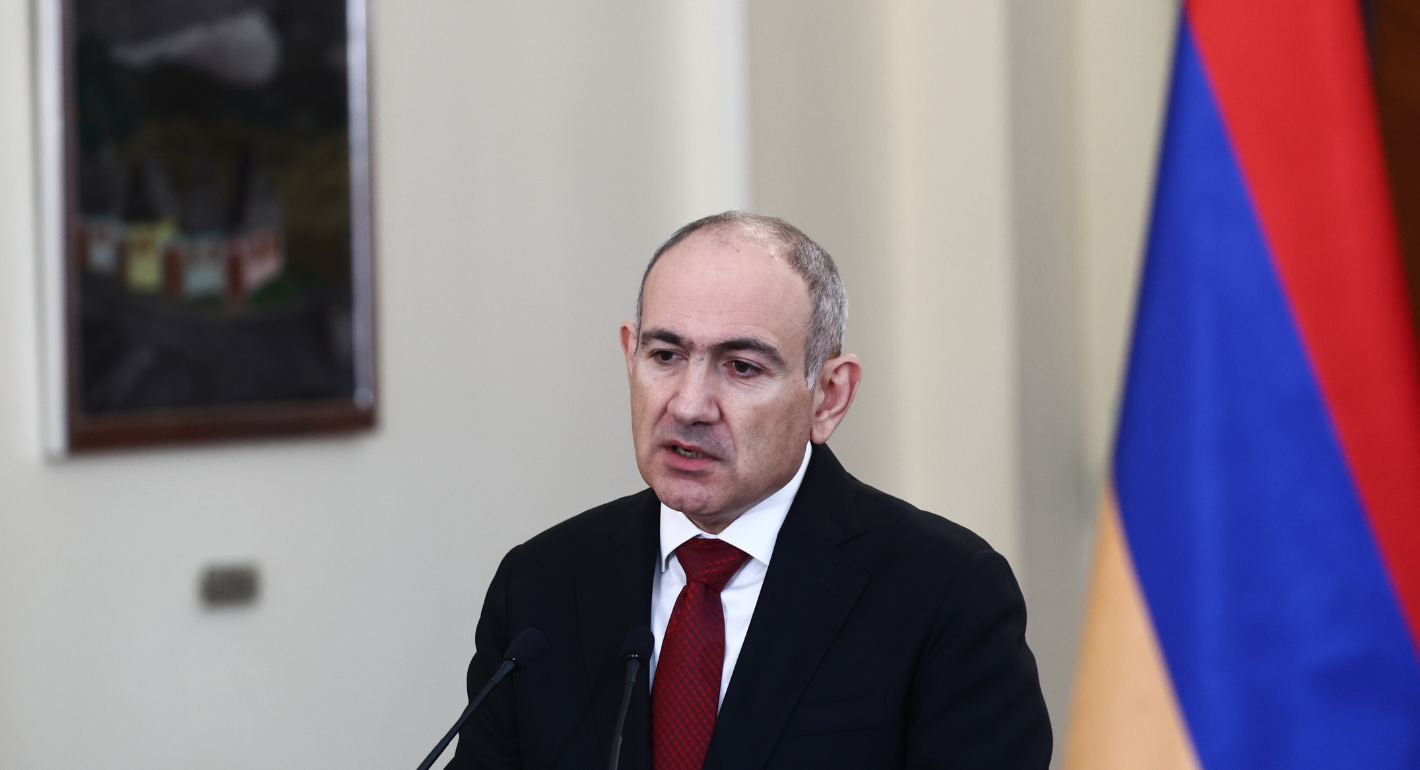
Europe has an interest in supporting Armenian leader Nikol Pashinyan as he tries to make peace with neighbors and loosen ties with Russia. But it is depersonalized support in the long term, not quickfire flash, that will win the day.

Thomas de Waal

Montenegro and Albania are frontrunners for EU enlargement in the Western Balkans, but they can’t just sit back and wait. To meet their 2030 accession ambitions, they must make a strong positive case.

Dimitar Bechev, Iliriana Gjoni