

Article
C. Raja Mohan, Darshana M. Baruah
{
  "authors": [
    "C. Raja Mohan"
  ],
  "type": "legacyinthemedia",
  "centerAffiliationAll": "dc",
  "centers": [
    "Carnegie Endowment for International Peace",
    "Carnegie India"
  ],
  "collections": [],
  "englishNewsletterAll": "ctw",
  "nonEnglishNewsletterAll": "",
  "primaryCenter": "Carnegie India",
  "programAffiliation": "SAP",
  "programs": [
    "South Asia"
  ],
  "projects": [],
  "regions": [
    "South Asia",
    "India"
  ],
  "topics": [
    "Domestic Politics",
    "Foreign Policy",
    "Political Reform"
  ]
}
Source: Getty
Urgent administrative reforms to generate greater efficiency and synergy hold the key to the construction of a New India that can fully tap into the nation’s internal and external potential.
Source: Indian Express
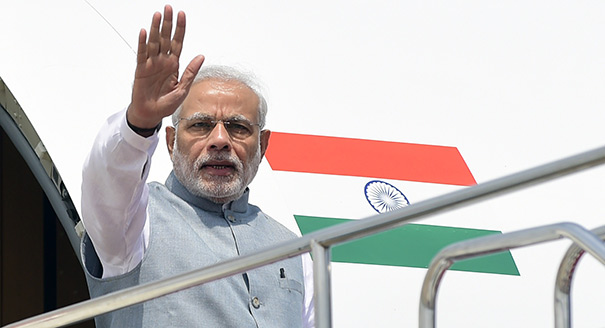
Never one to rest on his laurels, Prime Minister Narendra Modi has set himself a new target — showcasing a “New India” by 2022, the 75th anniversary of the nation’s independence. In a significant address to the workers of the BJP on the Sunday following the party’s massive victory in the Uttar Pradesh assembly elections, Modi said a New India is “on the horizon”. While the details of what he means by “New India” will have to wait, the PM has identified a near-term aspiration for the political mobilisation of the nation. What is important though is the fact that the PM is raising hopes for a more rapid economic development, whose benefits will accrue to the poor and middle classes.
Strong leaders do tend to lay out uplifting goals as a way of consolidating political support and establishing hegemony over national discourse. Two Chinese names come readily to mind — Deng Xiaoping and Xi Jinping. In 1980, just after he rescued China from the ravages of the Cultural Revolution, Deng Xiaoping proclaimed that the People’s Republic’s gross domestic product will be quadrupled by the end of the century. That goal was achieved a few years earlier than 2000.
For Deng, it was not just about numbers, but also politics. He was constructing an overarching framework that would drive the Chinese Communist Party (CCP) and the government to pursue an uninhibited and comprehensive modernisation of the nation. More recently, Deng’s successor, President Xi Jinping, outlined two great goals — to make China a “moderately well-off country” by 2021, when the CCP will celebrate the 100th anniversary of its founding.
And by 2049, when the PRC will complete a century, the CCP wants China to become a “strong, democratic, civilised, harmonious and modern socialist country”. Whether Xi might be as successful as Deng is not the question. For Xi, the slogan of “Two Centenaries” is a way of focusing national energies to achieve specific outcomes under his watch.
Those who pick nits might say Modi will find it much harder in India. That’s beside the point. If the development agenda has worked well for him in transcending some of the traditional divides in the heartland, the political vision of an India that makes solid economic progress and lifts all boats at home could well be his song for the elections in 2019 and beyond. Goal-setting is not entirely new to India. Its bureaucracies had routinely set developmental targets over the decades. But it’s been a long time since political leaders have articulated ambitious objectives for the nation.
Modi’s recent predecessors, who were running minority or coalition governments, had little energy or inclination to construct a political device to promote the case for change. The focus was on generating incremental change by stealth rather than making an explicit case for reform. In talking of a New India and change, Modi is under no obligation to tick off on the laundry list of reforms that are usually bandied about.
It is the broader political goals that he has set for himself that might define the PM’s reform priorities and direction. The two themes Modi identified on that particular Sunday — empowering the poor with opportunities rather than handouts and lifting the burden on the middle class — could allow him to transcend the traditional discourse on reforms being pro-poor or anti-poor.
Although the PM did not mention foreign policy in his Sunday address to his party workers, diplomacy will be a crucial element in his quest for constructing a new India. With more than 40 per cent of India’s GDP linked to imports and exports, India’s interdependence with the world has never been as deep as it is today. How we deal with the world is inextricably intertwined with our internal prosperity.
While the idea of leveraging diplomacy for development has been an integral part of his worldview since he took charge of Delhi nearly three years ago, Modi will now have to deal with a world that is in great flux. Many political assumptions that seemed rock-solid just three years ago, when he became India’s prime minister, now look quite shaky.
All the political strength at home will not be enough for Modi to cope with the unfolding backlash against economic globalisation in the West, the technological revolution that promises to change the very basis of modern economies, the growing opposition in the United States and Europe towards immigration, shifting great power relations, and the changing regional order in different parts of Eurasia and the Indo-Pacific amidst the assertion of Russian and Chinese power.
Adapting to external change in the pursuit of a New India is not about finding fresh foreign policy ideas. Modi has already shed much of India’s past self-doubt and ideological ambivalence that hobbled its post-Cold War foreign policy, injected greater energy into the conduct of international relations, and addressed long-pending problems. His big problem has been the unresponsiveness of India’s domestic governance to the opportunities and challenges that the world presents India.
Just as it found it difficult to implement various initiatives of the PM — from Swachh Bharat to Startup India — Delhi’s lumbering bureaucracy has found it hard to follow through on the developmental opportunities that Modi’s vigorous diplomacy created. If the economic and security ministries have been unable to capitalise on the opportunities that came India’s way in the last few years, they might find it rather hard to cope with the more complex international and regional environment that is emerging.
What India needs most is to change the way the government does its routine business and how different parts of it relate to each other and the world. Urgent administrative reforms to generate greater efficiency and synergy hold the key to the construction of a New India that can fully tap into the nation’s internal and external potential.
This article was originally published in the Indian Express.
Former Nonresident Senior Fellow, Carnegie India
A leading analyst of India’s foreign policy, Mohan is also an expert on South Asian security, great-power relations in Asia, and arms control.
Recent Work

C. Raja Mohan, Darshana M. Baruah


Alexander Gabuev, Paul Haenle, C. Raja Mohan, …
Carnegie does not take institutional positions on public policy issues; the views represented herein are those of the author(s) and do not necessarily reflect the views of Carnegie, its staff, or its trustees.

The aftermath of the Ceuta crisis shows Europe has drawn the wrong lessons. Rather than doubling down on failed migration policies, the EU needs to address the underlying roots of such episodes.

Richard Youngs

Canadian Prime Minister Mark Carney has twice inspired praise for standing up to U.S. President Donald Trump: at the 2026 World Economic Forum in Davos and on Canada-U.S. trade negotiations. Is Carney showing a third way better than the EU has in dealing with the Trump administration?

Rym Momtaz, ed.

The EU’s responses to two recent incidents expose the gulf between European perceptions and capabilities. Unless the union can bridge that gap, it will never become a real geostrategic power.
Rym Momtaz

European states control several Overseas Countries and Territories around the world that carry strategic, economic, and environmental weight. As great powers challenge the rules-based order, defending them is a geopolitical imperative for Europe.

Marc Pierini

In supporting Europe’s far-right, MAGA and Russia both want the same thing: a weaker EU. Europe must defend itself without abandoning the openness these forces exploit.

Armida van Rij