

Commentary
Alexander Baunov
{
  "authors": [
    "Alexander Baunov"
  ],
  "type": "legacyinthemedia",
  "centerAffiliationAll": "",
  "centers": [
    "Carnegie Endowment for International Peace",
    "Carnegie Russia Eurasia Center"
  ],
  "collections": [
    "Inside Russia"
  ],
  "englishNewsletterAll": "",
  "nonEnglishNewsletterAll": "",
  "primaryCenter": "Carnegie Endowment for International Peace",
  "programAffiliation": "",
  "programs": [],
  "projects": [],
  "regions": [
    "Russia"
  ],
  "topics": [
    "Political Reform"
  ]
}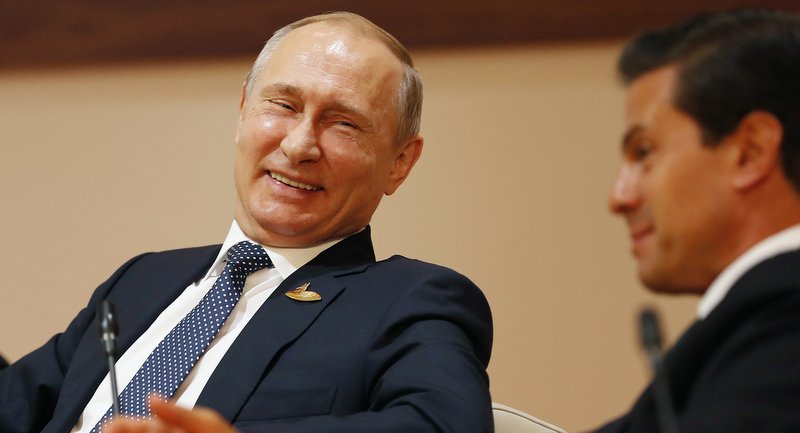
Source: Getty
It appears that Putin is much less of a disruptor than Trump. He is committed to the status quo at home and would rather join the global establishment than destroy it. In that, he is closer to Clinton than to Trump.
Source: Atlantic
As Vladimir Putin and Donald Trump prepare for their first face-to-face meeting in Germany, it’s easy to imagine the Russian president gloating over the disarray he’s sown across the world. He has upended the post-Cold War security order in Europe. His armies of cyber warriors have threatened democracy across the continent. His military has saved Bashar al-Assad’s regime, making a mockery of the America’s futile attempts to bring the war in Syria to an end. Putin has also challenged America’s global superiority, sending his planes harass U.S. warships in the Baltic and Black Seas, and undermining American democracy in last year’s presidential elections.
Whether Trump will rebuke Putin for any of these actions is unclear. One could, however, easily imagine them bonding over their shared dislike for Hillary Clinton, whom Putin is accused of helping Trump defeat last November. In reality, the Russian president probably has much more in common with Clinton than is commonly believed.
As Putin approaches the end of his third presidential term, he has become the embodiment of the status quo, just as much as Clinton was in last year’s U.S. presidential elections. Despite her liberal credentials and progressive agenda, she was cast as the candidate of the elite, corrupt, self-serving establishment that has run America for decades, a product of privilege who believed her time had come. This would prove a major vulnerability in the general elections, where she faced disgruntled voters from across the political spectrum, many of whom felt betrayed by previous administrations, and their unfulfilled promises of better times to come.
After 17 years in power, Putin, too, probably feels entitled to the presidency. In the eyes of the ruling elite, state bureaucracy, and his supporters (who still constituent a majority), he embodies the continuation of the current politics and—though it may sound strange to non-Russians—a sort of predictability, albeit one rife with corruption and cronyism. Russia has little experience with the smooth transition of power, so Putin’s familiar face and name, on their own, offer security. Putin wishes to remain in power not only because he likes being president (he does) but because he believes himself to be far more experienced and prepared for the myriad domestic and international challenges ahead than anyone else. In so doing, he has become the very definition of the establishment.
In Russia, the recent round of anti-corruption protests revealed that grass-roots politics in the country is not dead. These protests differed from those of 2011 and 2012, which were sparked by the flawed elections of 2011. This time, the demonstrations occurred across the country, and drew the participation of all the country’s major cities (the protests of five years ago were confined largely to Moscow and St. Petersburg). The immediate pretext was outrage over Prime Minister Dmitri Medvedev’s vast real estate holdings, fueled by opposition politician Alexey Navalny; Muscovites were also protesting against a city housing program that attempted to demolish tenants’ property. Both demonstrations targeted the sort of upper-level corruption that infects Putin’s government: Rewarding high-ranking bureaucrats and businessmen from his inner circle for services and loyalty, with the possibility of getting richer by using and abusing state properties and contracts.
For Russia’s youth, who made up the bulk of those who took to the streets, this merging of business and political interests embodies the injustice of life under Putin (the protests even had overtones of Occupy Wall Street). These Russians resent the corruption and crony capitalism that have enriched so few at the expense of so many. Many can’t even remember a Russia before Putin. They place Russia’s problems at his feet, but don’t hear any solutions from him. Their chief complaint is not that he is too conservative or too liberal, but that he embodies the corrupt establishment, which has lost their trust.
Much of this tension grew, ironically, from Putin’s desire to be embraced by the global community. In his first two presidential terms, he tried hard to join the global establishment. He clearly enjoyed his interactions with its leaders, and desired their respect. But when they rejected him, he turned against them, seeking instead to build a new patriotic consensus by disrupting the post-war liberal order.
For many Russians, there is a blatant contradiction between the patriotic consensus Putin seeks and the immiseration they face at home. The economic growth of his early years in office has been replaced with the idea of suffering—the hardship of stagnation and sanctions that are the apparent price for assertive foreign policy. But the wages of privation do not seem to extend to the new generation of oligarchs he has surrounded himself with—his old friends, including Gennady Timchenko, the Rotenberg brothers, and Igor Sechin, all of whom became billionaires during his rule, and even receive support from the state. (Parliament passed a special law with huge tax privileges for those touched by Western sanctions.)
This is what corruption in the Putin era means. While much has been done in recent years to combat low-level corruption between citizens and authorities, his style of rule implies a "controlled corruption," when his cronies can reckon for the reward.
It appears that Putin is much less of a disruptor than Trump. He is committed to the status quo at home and would rather join the global establishment than destroy it. In that, he is closer to Clinton than to Trump.

Senior Fellow, Editor-in-Chief, Carnegie Russia Eurasia Center
Baunov is a senior fellow and editor-in-chief at the Carnegie Russia Eurasia Center.
Recent Work
Alexander Baunov
Alexander Baunov
Carnegie does not take institutional positions on public policy issues; the views represented herein are those of the author(s) and do not necessarily reflect the views of Carnegie, its staff, or its trustees.
Preparing candidate countries for EU membership is no longer enough. As the enlargement process becomes a reality, the union must also prepare its own societies.

Iliriana Gjoni
Countries face several hurdles in joining the EU, including the final stage of ratifying their accession treaties. Procedural reforms and substantive adjustments could help move the process forward.

Stefan Lehne
Europe has an interest in supporting Armenian leader Nikol Pashinyan as he tries to make peace with neighbors and loosen ties with Russia. But it is depersonalized support in the long term, not quickfire flash, that will win the day.

Thomas de Waal
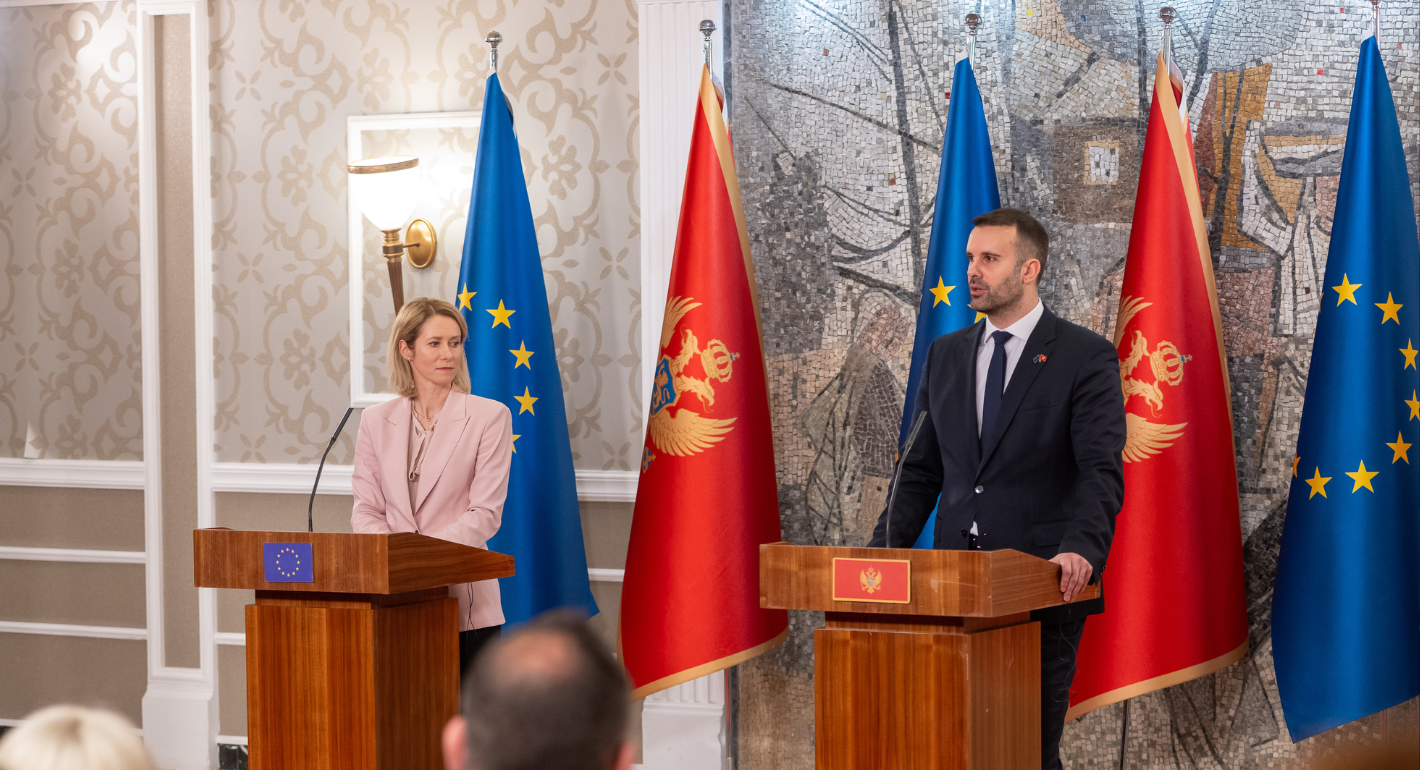
Montenegro and Albania are frontrunners for EU enlargement in the Western Balkans, but they can’t just sit back and wait. To meet their 2030 accession ambitions, they must make a strong positive case.

Dimitar Bechev, Iliriana Gjoni
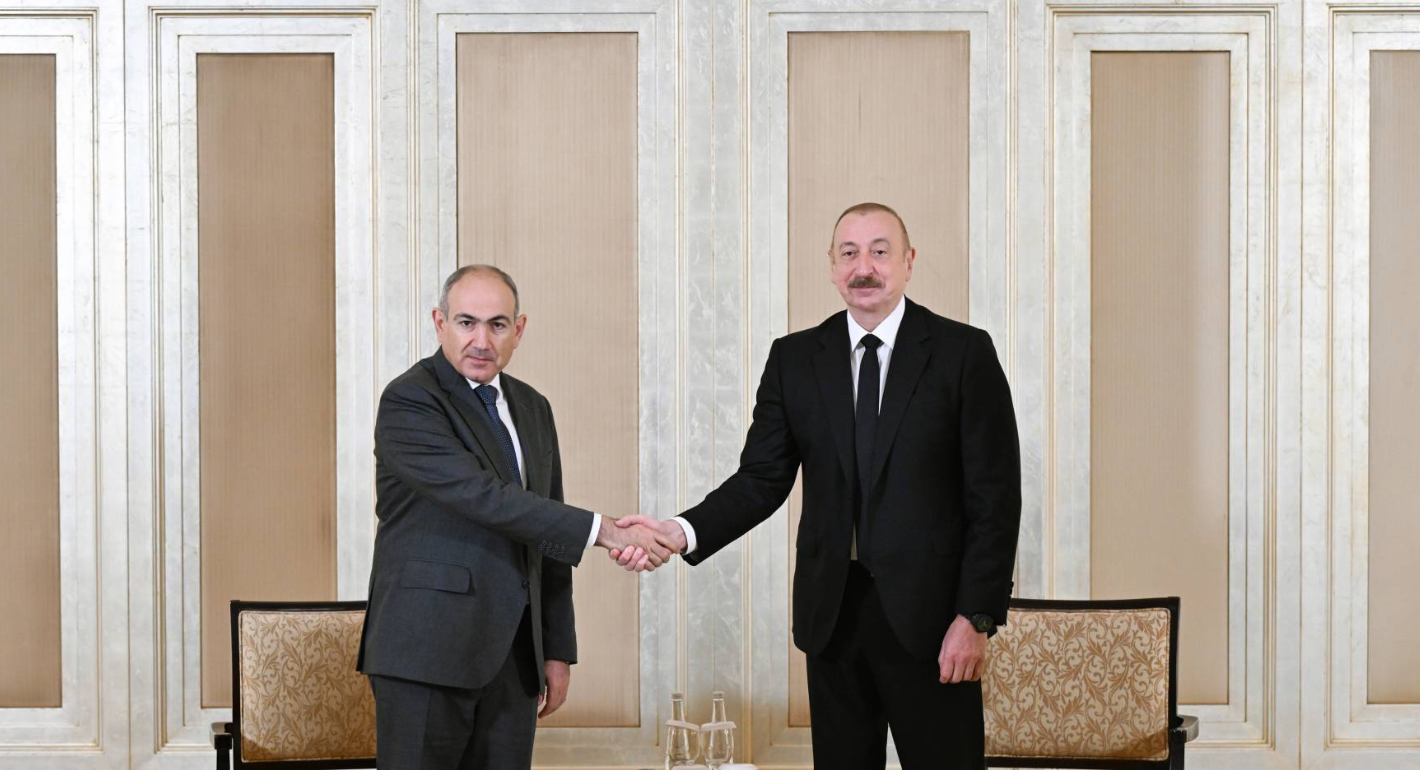
The U.S.-sponsored TRIPP deal is driving the Armenia-Azerbaijan peace process forward. But foreign and domestic hurdles remain before connectivity and economic interdependence can open up the South Caucasus.
Thomas de Waal, Areg Kochinyan, Zaur Shiriyev