

In The Media
David Rothkopf
{
  "authors": [
    "David Rothkopf"
  ],
  "type": "legacyinthemedia",
  "centerAffiliationAll": "",
  "centers": [
    "Carnegie Endowment for International Peace"
  ],
  "collections": [],
  "englishNewsletterAll": "",
  "nonEnglishNewsletterAll": "",
  "primaryCenter": "Carnegie Endowment for International Peace",
  "programAffiliation": "",
  "programs": [],
  "projects": [],
  "regions": [
    "North America",
    "United States"
  ],
  "topics": [
    "Political Reform",
    "Foreign Policy"
  ]
}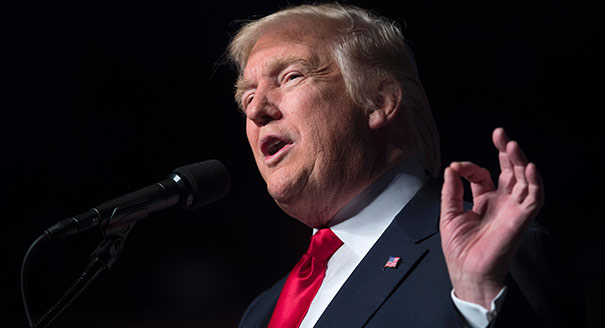
Source: Getty
Managing crises is one of the most crucial jobs presidents are hired to do. How presidents handle the highest pressure situations they face defines not only their legacies but also effects the lives of millions.
Source: Washington Post
Managing crises is one of the most crucial jobs presidents are hired to do. How presidents handle the highest pressure situations they face defines not only their legacies but also effects the lives of millions. President Trump’s first two major crises — the onslaught of Hurricane Harvey and the rapid escalation of the North Korean nuclear threat — have provided chilling insights into just how ill-suited America’s new president is to one of the most essential roles he must play.
As we have seen in the past — with George W. Bush in Iraq and Barack Obama in Syria — leadership missteps combined with bad policies are toxic combinations. But Bush’s and Obama’s worst missteps were exceptions offset by often effective efforts to produce positive outcomes worldwide. Trump appears to be orders of magnitude different. Thus far the norm for him seems to be to take dangerous or complex situations and make them worse through bad policy, bad process and his flawed character.
For example, while all presidents must deal with natural disasters such as Harvey, Trump has taken multiple steps to compound his maiden disaster’s tragic consequences at home and abroad. Some were relatively minor, just fodder for cable news. His evident lack of compassion, his consistent trivialization of the pain of others through his glibness and his impulse to politically cash in on the suffering of many are all pretty awful. But then there have been the steps that take situations such as this one and make them worse. For example, there is the fact that Trump has actively sought to minimize the influence of the Environmental Protection Agency and has put at its helm a person who sees his job as protecting companies rather than the environment. Consequently, when Superfund toxic dump sites or industrial facilities were damaged by the storm in ways that could further harm the environment, the response was weak and the damage unnecessarily greater.
Worse, and of global consequence, is the willful failure to at least ask questions about whether the once-in-500-year storm might be associated with climate change. Despite massive evidence that rising temperatures would produce more such disasters, Trump has sought to gut funding for climate research, purge government websites of references to climate change, roll back important environmental regulations, abandon the global climate accord, and effectively make the country and the world less prepared to deal with future such disasters.
North Korea’s rapidly developing nuclear weapons program is certainly the most significant traditional natural security threat the United States faces. Again, while it is tempting to focus on Trump’s bluster and bellicosity as potential sources of enhanced tension or to note how they have had no positive effect on North Korea, the president is making the situation worse in multiple material ways. First, he has not seen fit to appoint an ambassador to South Korea or fill top State Department arms control or diplomatic posts that are vital to managing such crises. Next, he chose this weekend, in the face of North Korea’s apparent test of a hydrogen bomb, to publicly attack our closest ally in this conflict, South Korea, as well as our most vital strategic partner, China.
Further, the president has recklessly threatened to cut off trade with any country that trades with North Korea (a list including China, India and Germany among others) and his administration has floated the idea of backing out of our trade deal with South Korea — at precisely the moment we should be showing it the most support. It is foreign policy malpractice to even threaten such things, much less actually contemplate doing them.
Other presidents have faced similar crises associated with even greater risk and resolved them in ways that made us safer. When President Dwight Eisenhower was under pressure from his own party to confront the Soviet Union as it ramped up nuclear and ICBM programs, he created a process — Project Solarium — that helped shape the view among even his opponents that the best thing to do would be to contain Russia geopolitically, strengthen our capabilities enough to make action by them unthinkable, and focus on letting time and whatever we could do to help it undermine the broken Soviet system from within. This is the only reasonable course with regard to North Korea when the costs of going to war are too high and the weakness of Pyongyang is orders of magnitude greater than it was in the Soviet case.
Eisenhower, made wiser by war and experienced in leadership, improved the situation. Trump makes matters worse. And with a looming confrontation with Iran on the horizon because of Trump’s own desire to undo or undermine the nuclear deal with that country and his threats of intervention in places like Venezuela, it seems certain that the likelihood of this president actively making a dangerous world even more dangerous is only going to grow.
This article was originally published by the Washington Post.
Former Visiting Scholar
David Rothkopf was a visiting scholar at the Carnegie Endowment as well as the former CEO and editor in chief of the FP Group.
Recent Work
David Rothkopf
David Rothkopf
Carnegie does not take institutional positions on public policy issues; the views represented herein are those of the author(s) and do not necessarily reflect the views of Carnegie, its staff, or its trustees.

The aftermath of the Ceuta crisis shows Europe has drawn the wrong lessons. Rather than doubling down on failed migration policies, the EU needs to address the underlying roots of such episodes.

Richard Youngs

Canadian Prime Minister Mark Carney has twice inspired praise for standing up to U.S. President Donald Trump: at the 2026 World Economic Forum in Davos and on Canada-U.S. trade negotiations. Is Carney showing a third way better than the EU has in dealing with the Trump administration?

Rym Momtaz, ed.

The EU’s responses to two recent incidents expose the gulf between European perceptions and capabilities. Unless the union can bridge that gap, it will never become a real geostrategic power.
Rym Momtaz

European states control several Overseas Countries and Territories around the world that carry strategic, economic, and environmental weight. As great powers challenge the rules-based order, defending them is a geopolitical imperative for Europe.

Marc Pierini

In supporting Europe’s far-right, MAGA and Russia both want the same thing: a weaker EU. Europe must defend itself without abandoning the openness these forces exploit.

Armida van Rij