

Commentary
The EU’s responses to two recent incidents expose the gulf between European perceptions and capabilities. Unless the union can bridge that gap, it will never become a real geostrategic power.
Rym Momtaz
{
  "authors": [
    "Andrey Movchan"
  ],
  "type": "legacyinthemedia",
  "centerAffiliationAll": "",
  "centers": [
    "Carnegie Endowment for International Peace",
    "Carnegie Russia Eurasia Center"
  ],
  "collections": [],
  "englishNewsletterAll": "",
  "nonEnglishNewsletterAll": "",
  "primaryCenter": "Carnegie Endowment for International Peace",
  "programAffiliation": "",
  "programs": [],
  "projects": [],
  "regions": [
    "Russia"
  ],
  "topics": [
    "Economy"
  ]
}
Source: Getty
Russian banking system needs a supervisory authority independent of the central bank. Retail banks should be prohibited from investing in non-liquid assets, while the liquid securities market should be saved for investors
Source: Financial Times
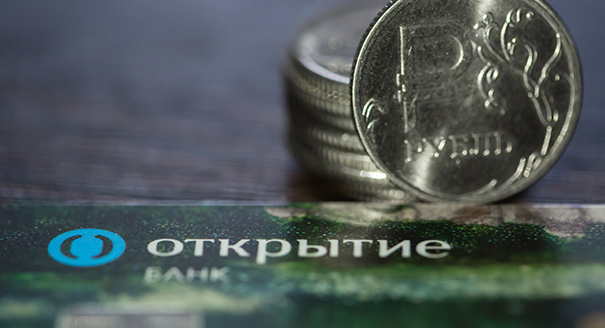
Russia’s privately owned banks are collapsing one by one. In 2017, Otkritie and B&N Bank failed within weeks of each other. In the past 17 years, 2,600 of just over 3,000 registered banks have lost their licences. Through years of mismanagement, the Bank of Russia, the country’s central bank, has created an unscrupulous and ineffective banking system. Now it must be rebuilt from the ground up.
The contemporary Russian financial sector emerged in the 1990s from the ruins of the Soviet banking system. Controlled by local oligarchs, banks focused on the accumulation of liabilities to finance shareholders’ purchases of privatising enterprises. Banks pursued profits through questionable activities, including money laundering and tax evasion. While many failed by the end of the millennium, most of those that survived did not transform into legitimate profit-generating institutions. Bankers expected that Russia’s economic growth, fuelled by the rise in oil prices, would cover hidden losses.
The 2008 financial crisis dashed these hopes. After five years of economic stagnation, consolidation of the fragmented banking sector would have been expected. But mergers and acquisitions have been rare, mostly because the Bank of Russia has created conditions that make prohibited transactions and asset stripping far more profitable.
The central bank has instituted excessive regulations that constrain institutions’ abilities to operate legally. Endless reporting requires Russian banks to employ five times as many employees per dollar lent as US counterparts.
In such a climate, banks have survived by finding ways around the law. They issued loans with fake collateral, overstated the value of assets and inflated formal capital through structured transactions with affiliated companies. Money laundering and cash conversion operations returned. In the past 15 years, more than 80 per cent of banks have exhausted their clients’ deposits through risky trades and offshore transfers to shareholders’ personal accounts.
Ironically, despite the draconian rules, the central bank is blind when it comes to oversight. The Bank of Russia has yet to forecast any collapse and has always denied any responsibility. In the case of Otkritie, Elvira Nabiullina, head of the central bank, said that Otkritie had overstated the prices of Russia’s sovereign bonds on its balance sheet. It is preposterous that such a misrepresentation made it past the central bank’s auditors, since bond prices are widely available. Yet the Bank of Russia refused to take issue with its auditors.
Even market mechanisms have failed to regulate Russia’s banking sector. The central bank’s system of guaranteeing the full balance of deposits up to $25,000 has stripped the market of its crucial regulator: investment risk.
The central bank has allowed Russian banks to cease performing their main function: being efficient intermediaries in capital markets. The institutions’ primary legal activity involves rerouting customers’ deposits to investments in Russian corporate and sovereign bonds.
Since the inflow of money inflates market prices, banks repurchase the bonds from the central bank multiple times using significant leverage to achieve higher returns. Prices are pumped up even higher, making the market unappealing for third-party investors.
The banking system needs a supervisory authority independent of the central bank. Retail banks should be prohibited from investing in non-liquid assets, while the liquid securities market should be saved for investors. Non-banking credit institutions and a marketplace for loans could encourage the market to distinguish between lending and transactional businesses to reduce the risk of purely transactional operations. To return an element of risk to the market, deposit insurance should never cover the entire balance and should be funded by depositors through an insurance fee.
Without these measures, Russia’s banking sector will remain a bankrupt system that merely facilitates the enrichment of people who know how to game the system.
Andrey Movchan
Former Nonresident Scholar, Carnegie Moscow Center
Movchan is a nonresident scholar at the Carnegie Moscow Center.

The EU’s responses to two recent incidents expose the gulf between European perceptions and capabilities. Unless the union can bridge that gap, it will never become a real geostrategic power.

Rym Momtaz

European states control several Overseas Countries and Territories around the world that carry strategic, economic, and environmental weight. As great powers challenge the rules-based order, defending them is a geopolitical imperative for Europe.

Marc Pierini

In supporting Europe’s far-right, MAGA and Russia both want the same thing: a weaker EU. Europe must defend itself without abandoning the openness these forces exploit.

Armida van Rij

As we close out another season of Strategic Europe, it is worth taking stock of the deep shifts underway.
Rym Momtaz

The hybrid warfare landscape is evolving rapidly, leaving policymakers without clear strategies. To better inform their work in addressing emerging challenges, governments must dig deeper into the underlying dynamics at play.


Raluca Csernatoni, Alicia Wanless