

Article
A notable degree of participative democracy has firmly arrived in Europe. But to have more far-reaching impact, democratic deliberation needs to move into a radically new phase.
Richard Youngs
{
  "authors": [
    "Christophe Jaffrelot",
    "Haider Abbas Rizvi"
  ],
  "type": "legacyinthemedia",
  "centerAffiliationAll": "dc",
  "centers": [
    "Carnegie Endowment for International Peace"
  ],
  "collections": [],
  "englishNewsletterAll": "ctw",
  "nonEnglishNewsletterAll": "",
  "primaryCenter": "Carnegie Endowment for International Peace",
  "programAffiliation": "SAP",
  "programs": [
    "South Asia"
  ],
  "projects": [],
  "regions": [
    "South Asia",
    "India"
  ],
  "topics": [
    "Political Reform",
    "Democracy",
    "Religion"
  ]
}
Source: Getty
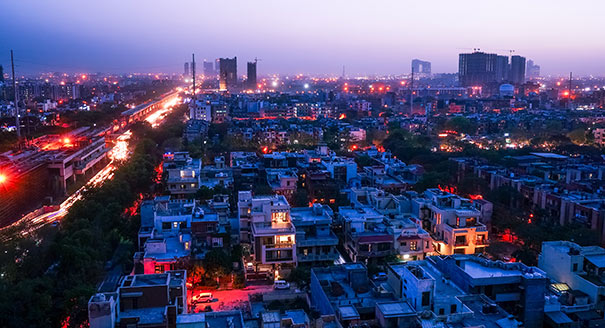
Hindu nationalists in Uttar Pradesh have found Shias—a minority within the Muslim minority—to be relatively open to supporting their initiatives, including the construction of a Ram Temple in Ayodhya.
Source: Indian Express
Ever since his election as Uttar Pradesh Chief Minister, Yogi Adityanath has been cultivating the Shias, a minority within the Muslim minority, which relates uncomfortably to the Sunnis, as is evident from recurring tensions between the two groups. He first appointed a Shia, Mohsin Raza Naqvi, an ex-Congressman who had joined the BJP in 2014, in his government as his only Muslim minister, to hold the minority affairs portfolio. Most recently, he nominated two Shias for election to the Upper House in the state assembly and both of them became BJP MLCs on April 26. Besides Naqvi, Bukkal Nawab, formerly in the SP, had resigned from the legislative council to allow one of Yogi Adityanath’s deputy chief ministers, Keshav Prasad Maurya, who needed a seat to stay in government, to be elected. But before that, both Raza and Nawab visited temples and prayed before Hindu dieties.
Only a few weeks earlier, in March, the other UP deputy chief minister, Dinesh Sharma, had been invited to the Shia-Sufi Unity Conference organised by Maulana Kalbe Jawad in Lucknow. In the press conference, representatives of Shias and Sufi Ulemas explained that while their two groups represented a majority of Indian Muslims, “a small minority” — that is, other Sunnis — claimed that it spoke in the name of Islam, in spite of the fact that Shias and Sufis were the first to oppose terrorism. Kalbe Jawad and a sufi cleric, Syed Hasnain Baqai, declared that they had received threats from an anonymous caller warning them not to speak against Wahabism and terrorism. At the conference, Dinesh Sharma stressed the need for reviving the Ganga-Jamuna culture, following the model of Nawab Asaf-ud-Daula, who had given equal land for Ram Lila and the Eidgah.
In return, Shia leaders have supported Hindu nationalists’ initiatives. In April 2017, the executive All India Shia Personal Law Board (AISPLB) passed a resolution in favour of the ban on cow slaughter, after seeking the advice of Sheikh Basheer Hussain Najafi, one of the five Grand Ayatollahs in Iraq entitled to issue a fatwa for the community. In April 2017, the second resolution of the AISPLB’s executive asked the central government to enact a law to ban triple talaq.
At the same time, Shamil Shamsi, the cousin of Kalbe Jawad, who heads Husaini Tigers, created the Shia Gau Raksha Dal and declared: “In the next two months, we will extend our outfit to all states. It is the duty of every Muslim to protect cows. We will pass on information to police about any cow slaughtering in areas where it is done discreetly.”
The AISPLB is not the only Shia organisation supporting items on the Hindu nationalist agenda. In August 2017, the Shia Waqf Board submitted to the Supreme Court an affidavit recommending that “to bring quietus, masjid can be located in a Muslim-dominated area at a reasonable distance from the most revered place of birth of Maryada Purshottam Sri Ram”. For these Shia leaders, the Sunni organisations involved in the Ayodhya dispute are not the legitimate interlocutors because — according to the affidavit mentioned above — “the Sunni Central Waqf Board UP is under the dominant control of Sunni hardliners, the fanatics and non-believers in peaceful coexistence” and, secondly, the Shia Central Waqf Board UP alone is entitled to negotiate because Mir Baqi, the aristocrat in Babur’s court who had built the mosque that has been razed to the ground in 1992, was a Shia.
The affidavit of the Shia Waqf Board was submitted at a time when a three-judge bench had been formed to hear the petitions challenging the 2010 Allahabad HC order ruling to divide the disputed land between Lord Ram, the Nirmohi Akhara and the Sunni Central Waqf Board. It met the expectations of Sangh Parivar leaders. In 2016, Indresh Kumar, margdarshak of the RSS’s Muslim outreach wing, the Muslim Rashtriya Manch, had declared that “many Muslims” would like to “take the initiative to build a Ram temple at Ayodhya”. And Mohammad Afzal, head of the Manch, had then said that his organisation would provide a platform to Hindus and Muslims to amicably settle the dispute, but his view of such a settlement excluded the possibility of a mosque at the site.
A couple of months ago, a minister of the Union government, Giriraj Singh, referred to the Shia stand for promoting the parivar’s agenda: “Shias have already supported the construction of a Ram Temple in Ayodhya. I’m hopeful Sunni Muslims will also extend their support for the cause.”
These recent developments are revealing, on the one hand, of the division of the Muslims along sectarian lines (something also evident from the way some Bohra leaders relate to the rest of the Muslim community) and, on the other, of the capacity of the sangh parivar to receive support from sectors of this community to legitimise its plans, at a time when the Ayodhya dispute enters a critical phase.
Whether the alignment of Shias with the sangh parivar is sustainable and likely to bring the expected results remains to be seen. Shias of Lucknow were supportive of the Jana Sangh, the BJP’s earlier avatar. Even before the All India Shia Personal Law Board was founded by Mirza Athar in 2005, his son Yasoob Abbas, openly supported Atal Bihari Vajpayee, the Lucknow MP, and Mohsin Raza organised a motorcycle rally for him when he became PM. But the Shias did not get much in return. So much so that in March 2017, Yasoob Abbas pleaded to Yogi Adityanath for the formation of a Sachar committee-like Commission to ensure the welfare of Shias. In fact, the main beneficiaries of the collaboration between Shias and the BJP are the leaders of the community who could get one kursi or another. Now, these leaders are divided along factional lines.
Last but not least, several Shia leaders suffer opprobrium, either because they face charges of bungling of Waqf properties or because they have supported vigorously the agenda of the sangh parivar. Shamil Shamsi, for instance, lost some credibility when he declared, in the wake of the 2010 Babri Masjid judgement, that he would give Rs 15 lakh for the construction of the Ram Temple. In fact, Shia leaders have a proven record of changing loyalties and their popularity has eroded, as was evident during the last municipal elections. But the sangh parivar may need the blessing of a few of them for claiming that Hindus are not the only supporters of a Ram Mandir in Ayodhya.
This article was originally published in the Indian Express.
Former Nonresident Scholar, South Asia Program
Jaffrelot’s core research focuses on theories of nationalism and democracy, mobilization of the lower castes and Dalits (ex-untouchables) in India, the Hindu nationalist movement, and ethnic conflicts in Pakistan.
Haider Abbas Rizvi
Rizvi is information commissioner in Uttar Pradesh.
Carnegie does not take institutional positions on public policy issues; the views represented herein are those of the author(s) and do not necessarily reflect the views of Carnegie, its staff, or its trustees.

A notable degree of participative democracy has firmly arrived in Europe. But to have more far-reaching impact, democratic deliberation needs to move into a radically new phase.

Richard Youngs

The domestic impacts of how long it is taking to end the war in Ukraine have pushed the French electorate to the political extremes and compromised the country’s diplomatic capacity.

Rym Momtaz

Before the next wave of EU enlargement takes place, the union needs to grapple with thorny questions of how power is distributed among its members.


Emil Sondaj Hansen, Ditte Brasso Sørensen

Radical-right parties are expected to do well in upcoming elections in four of the EU's biggest member states. If successful, they could prevent the union from addressing key challenges ahead.

Stefan Lehne

An overwhelming victory by a far-right-wing party in a small state in eastern Germany will have major repercussions for Chancellor Friedrich Merz’s coalition.

Judy Dempsey