In the year since the soft military coup in Zimbabwe that removed long-term leader Robert Mugabe from power, the country’s new, more predictable leadership has elicited keen interest from China and Russia. Having fallen for Mugabe’s empty promises in the past, Moscow is now seeking to establish cooperation with Harare not only in the traditional commodities sector but also in new areas.
For example, Russians played a significant role in the July 2018 presidential election that saw the ruling party’s Emmerson Mnangagwa (who replaced Mugabe after the coup) officially elected. This localized success could be the start of more systemic Russian participation in political processes across the African continent.
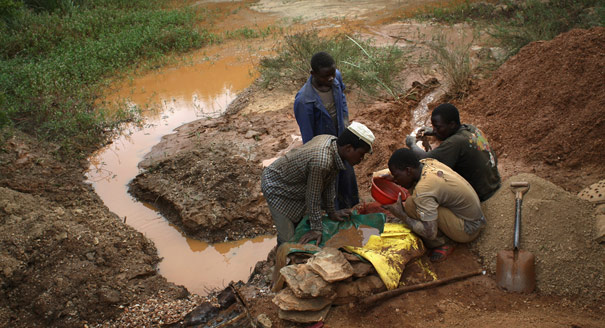
Russian Foreign Minister Sergey Lavrov visited the country in March 2018, followed in April by Sergei Ivanov Jr., CEO of Russian diamond miner Alrosa. One of the issues discussed during the visit of the former was the development of the Darwendale platinum deposit by Great Dyke Investments (Pvt) Ltd., a Russian-Zimbabwean joint venture. The Darwendale deposit could be the second largest in the world, with estimated investment volumes reaching $2.8 billion through 2055.
Of course, Russia’s activity in Zimbabwe still pales in comparison to that of China, the largest foreign investor in the country and the main source of hard currency, which is in deficit there, for the authorities. But the scale of the Chinese presence should not be overestimated, either: the volume of projects currently being implemented is many times lower than the sums announced.
China currently accounts for just 5–7 percent of Zimbabwe’s export-import market, compared with South Africa’s share of 50 percent of foreign trade turnover. The Chinese approach seems to be to first secure political influence and ensure the situation is stable, and only then move on to implementing truly major investment projects.
The government of Zimbabwe announced its interest in the East with its “Look East Policy” back in 2003 as a response to U.S. and EU sanctions, but the African nation has still not been able to fully replace those Western investors. This is largely due to its own inconsistent and short-sighted policies. For example, because of the decision to nationalize diamond mining in 2016, not only did the “hostile” transnational firm Rio Tinto lose its assets, but so did the friendly Russian firm Zarubezhgeologia, as well as several Chinese companies.
This year’s election in Zimbabwe was seemingly the first time in post-Soviet history that Russian political consultants have played an active role in an election campaign in an African nation. It did not go unnoticed by Zimbabwe’s opposition, which sharply criticized the March 2018 visit of Zimbabwe electoral commission head Priscilla Chigumba and presidential advisor Christopher Mutsvangwa to Moscow. Chigumba and Nikolai Levichev, a member of Russia’s central election commission, discussed suspicious-sounding topics such as “issues of electoral sovereignty” during their meeting.
This was followed by accusations that Zimbabwe’s authorities had secretly produced pre-marked ballots in Russia. A separate topic for the media and politicized social media users was tracking the delivery of these ballots to Harare airport by a “secret flight” from Russia.
On the eve of the election, the main opposition candidate Nelson Chamisa stated publicly that the Russians and Chinese were working together with the ruling party, ZANU–PF (Zimbabwe African National Union–Patriotic Front), to falsify the results of the vote. According to him, there were 64 Russians in a suburb of Harare working for the party of power and its nominee Mnangagwa.
But the main player in Mnangagwa’s dirty campaign, according to the opposition, was not Russia but China. Former ZANU–PF senior party official Jonathan Moyo claimed that Chinese-affiliated experts had hacked into biometric voter registration systems to manipulate turnout figures and votes for the ruling party’s candidates.
It is true that no serious evidence was presented to support these allegations, and even the opposition quickly forgot about them following the election. The involvement of foreign consultants at the invitation of a party running in an election is not a crime and is not prohibited by international law. Russian consultants, if they did take part in Zimbabwe’s election, merely provided their clients with alternatives to Western services in the field of electoral technologies. After all, competition is important for the consumer.
The plans of Russian consultants to take part in the Zimbabwe election campaign were written about back in April by Russian political analyst Stanislav Belkovsky. Of course, “64 Russians” is a clear exaggeration: such a large presence would be difficult to conceal from the broad contingent of election observers. But it’s quite clear that Russian consultants paid close attention to the unfolding of Zimbabwe’s presidential campaign.
In response to the pressure of sanctions, Russia is beginning to show interest in even the most distant spots on the map: any countries where a government skeptical of the West can be supported with minimal resources. And in these countries, Russia is greeted with eager anticipation.
On August 10, 2018, when the Zimbabwean opposition protested the election results, the first vice president and shadow leader of the country Сonstantino Chiwenga flew to Russia with a “special message” for President Vladimir Putin. Chiwenga took part in the closing ceremony of the International Army Games and met with Russian Defense Minister Sergei Shoigu.
The visit was not covered by the Russian media, but for Zimbabwe this was an important signal. Shortly before that, on July 25–27, President Mnangagwa had visited the BRICS summit in South Africa and met with Putin at the height of his election campaign: the visit to Johannesburg was in fact its culmination.
The Zimbabweans understand that the Russians will not be able to convert the results of their assistance into direct political or economic power, and even the simple monetization of influence is not yet being discussed. Therefore, they willingly accept any form of support from Moscow.
Russia, in turn, still lacks the experience, information, and human resources to compete in Africa with the former colonial powers or China. It can, however, comfortably play a role that requires significantly fewer resources: that of a restraining and independent power.
The West can count on virtually no one in Zimbabwe. The UK and the United States have long lost control of the situation there, and now China and South Africa, as Zimbabwe’s main partners, are interested in the political and economic stabilization of the country. Local elites perceive Russia as weak, but also as at least some kind of counterweight to China’s influence. Given the difference in scale of the two parties’ economic interests, however, this competition is largely nominal.