

Commentary
Dmitri Trenin
{
  "authors": [
    "Dmitri Trenin"
  ],
  "type": "legacyinthemedia",
  "centerAffiliationAll": "",
  "centers": [
    "Carnegie Endowment for International Peace",
    "Carnegie Russia Eurasia Center"
  ],
  "collections": [
    "Pax Sinica"
  ],
  "englishNewsletterAll": "",
  "nonEnglishNewsletterAll": "",
  "primaryCenter": "Carnegie Russia Eurasia Center",
  "programAffiliation": "",
  "programs": [],
  "projects": [],
  "regions": [
    "East Asia",
    "China",
    "Russia"
  ],
  "topics": [
    "Foreign Policy"
  ]
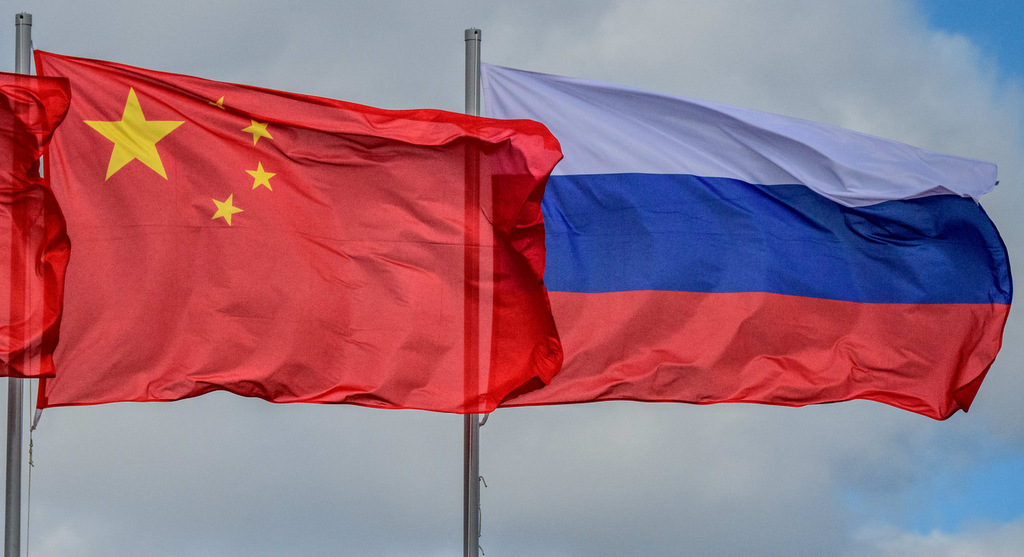
}
Source: Getty
The China-Russian military cooperation with its underlying strategic calculus is clearly aimed at countering US moves and capabilities in the region.
Source: Global Times
July 2019 marks an important milestone in the Russia-China strategic relationship. For the first time, Russian and Chinese bombers have carried out joint air patrols over the East China Sea and the Sea of Japan. The Diplomat quoted a Russian government decree as saying that "the two countries are currently negotiating a new military cooperation agreement." The news stories have resulted in speculation that in the emerging new global bipolar order between the US and China, Moscow was casting its lot with Beijing. The reality is much more nuanced, but it is clear that the China-Russian entente has now reached the quality of strategic cooperation partnership in the Western Pacific aimed at countering and deterring the US.
Russian-Chinese military cooperation did not start recently. Soon after the normalization of relations between Moscow and Beijing 30 years ago, Russia started selling arms to China. In the last five years, Moscow has sold Beijing advanced weapons like the S-400 air defense system and the Su-35 fighter aircraft. Almost 15 years ago, the two countries' armed forces began holding joint military exercises, initially to train troops to fight terrorists.
At first, such exercises were staged in Russia, China, and Central Asian members of the Shanghai Cooperation Organization, but later their scope was expanded by adding a naval component. The Russian navy and the navy of Chinese People's Liberation Army (PLA) held drills in the Yellow Sea and South China Sea, as well as in the Black Sea and the Mediterranean. 2018 marked another "first," with a Chinese brigade-sized force taking part in Russia's Vostok military exercise in Siberia and the Far East.
In the near future, this interaction is set to become closer. The just released white paper on China's national defense in the new era has made many more references to Russia than its 2015 predecessor, all of them positive.
Missile defense and air-space defense could become new areas for joint computer exercises. Russia's next strategic exercise, The Tsentr-2019 exercise, which will be held in Central Asia, might again include Chinese forces. Military talks would become more frequent, with the parties consulting closely not only about increasing interoperability of their armed forces, but also about possible contingencies in places like the Korean Peninsula. Judging by the genuine mutual warmth displayed by Chinese President Xi Jinping and Russian President Vladimir Putin at their recent get-together in St. Petersburg in June, the Russia-China entente is growing ever stronger.
The world is not returning to the 1950s era of bloc confrontation. Serious as it is, the China-US rivalry does not approach the intensity and antagonism of the US-Soviet Cold War. The US has no reason to fear China the way Americans, in the Joseph McCarthy era, feared Communism and the Soviet Union. China's challenge is of a different quality and caliber. Close as they are, China and Russia are not looking to merge into a monolithic bloc under a single leadership and a joint military command. Even a formal military alliance is not on the cards. Yet, major power rivalry, in which the US, China and Russia are directly involved, is intensifying. Following the breakdown of US-Russian relations under President Barack Obama, the US-China relationship under President Donald Trump has made a definite turn toward adversity.
In this context, East Asia and the Western Pacific are becoming the world's top area of strategic competition, way ahead of Europe and the Middle East. US military deployments in the area, which have been on the rise for some time, are being met with more coordination between China and Russia. China is more directly affected by the US presence there than Russia: US Terminal High Altitude Area Defense system in South Korea is already a source of concern. Moscow's most valuable assets lie outside the region, but its leadership probably believes that allowing Washington to drag down its rivals one by one would be an act of strategic folly.
The China-Russian military cooperation with its underlying strategic calculus is clearly aimed at countering US moves and capabilities in the region. As far as Russia is concerned, US allies such as Japan and South Korea may be implicated, but only to the extent that they play host to US forces and cooperate with Washington's policies. Moscow continues to be keenly interested in improving relations with Tokyo, being of course aware of the limitations because of the US-Japan Security Treaty. Russia also continues to take a neutral stance in maritime disputes in the Western Pacific.
Moreover, it seeks to expand relations with Southeast Asia. From Russia's standpoint, stability on the Asian continent can be assured if Beijing, Delhi and Moscow find a way to cooperate more closely. The RIC group, which includes Russia, India, and China, could be the driver of stability and development across the vast landmass, as well as a major force on a global scale.
US dual containment of Russia and China is producing a predictable result: the China-Russian strategic cooperation. Weaning Moscow off its alignment with Beijing — is no longer an option: Russia is not interested. As they continue to compete, the major powers owe one huge responsibility to themselves and the rest of the world: They must make sure that their power games, heated and nerve-wrecking as they might become, do not lead to a real collision.
Former Director, Carnegie Moscow Center
Trenin was director of the Carnegie Moscow Center from 2008 to early 2022.
Recent Work
Dmitri Trenin
Dmitri Trenin
Carnegie does not take institutional positions on public policy issues; the views represented herein are those of the author(s) and do not necessarily reflect the views of Carnegie, its staff, or its trustees.
French President Emmanuel Macron has unveiled his country’s new nuclear doctrine. Are the changes he has made enough to reassure France’s European partners in the current geopolitical context?

Rym Momtaz, ed.
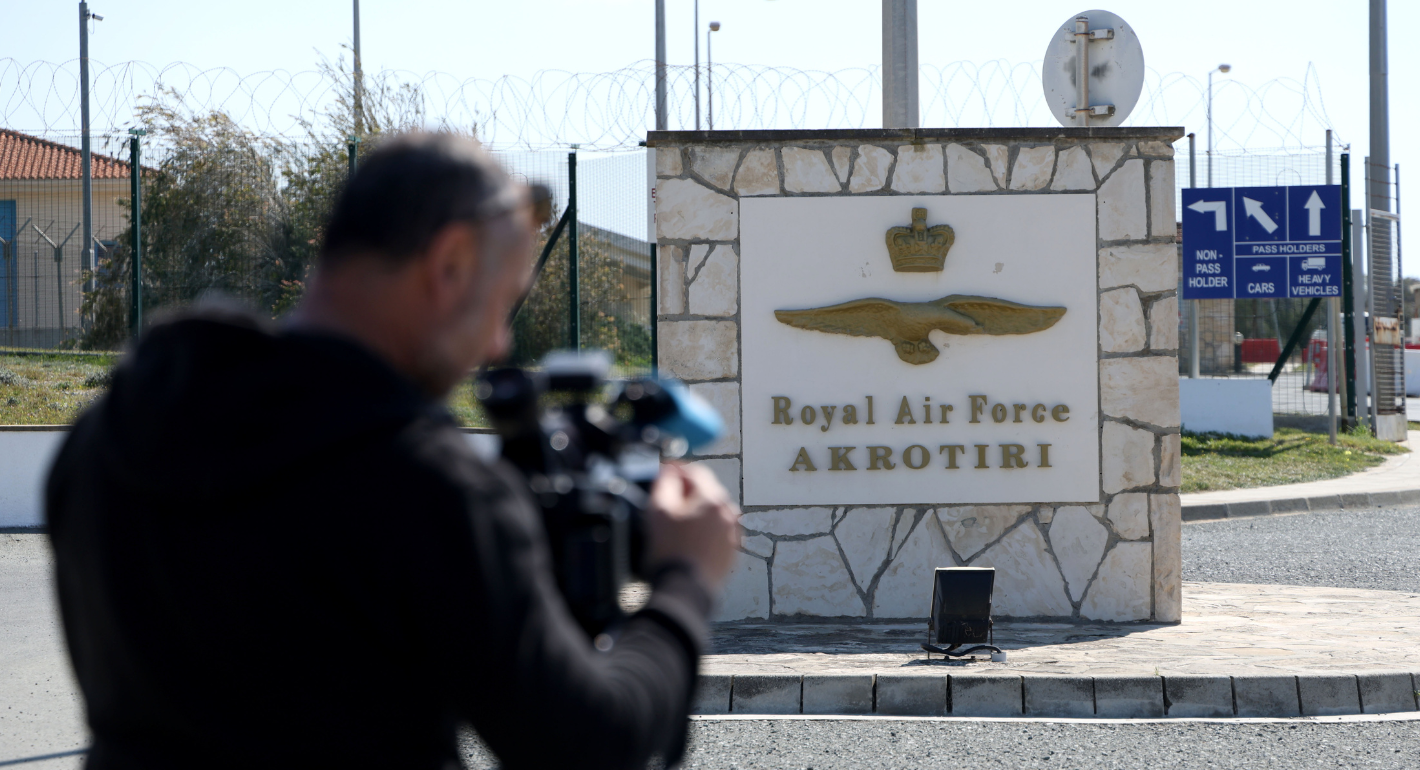
The drone strike on the British air base in Akrotiri brings Europe’s proximity to the conflict in Iran into sharp relief. In the fog of war, old tensions in the Eastern Mediterranean risk being reignited, and regional stakeholders must avoid escalation.

Marc Pierini
For years, the United States anchored global cyber diplomacy. As Washington rethinks its leadership role, the launch of the UN’s Cyber Global Mechanism may test how allies adjust their engagement.


Patryk Pawlak, Chris Painter
Europe isn’t as weak in the new geopolitics of power as many would believe. But to leverage its assets and claim a sphere of influence, Brussels must stop undercutting itself.

Dimitar Bechev

Europe’s reaction to the war in Iran has been disunited and meek, a far cry from its previously leading role in diplomacy with Tehran. To avoid being condemned to the sidelines while escalation continues, Brussels needs to stand up for international law.

Pierre Vimont