

Commentary
Andrei Kolesnikov
{
  "authors": [
    "Andrei Kolesnikov"
  ],
  "type": "legacyinthemedia",
  "centerAffiliationAll": "",
  "centers": [
    "Carnegie Endowment for International Peace",
    "Carnegie Russia Eurasia Center"
  ],
  "collections": [
    "Inside Russia"
  ],
  "englishNewsletterAll": "",
  "nonEnglishNewsletterAll": "",
  "primaryCenter": "Carnegie Endowment for International Peace",
  "programAffiliation": "",
  "programs": [],
  "projects": [],
  "regions": [
    "Russia"
  ],
  "topics": [
    "Political Reform"
  ]
}
Source: Getty
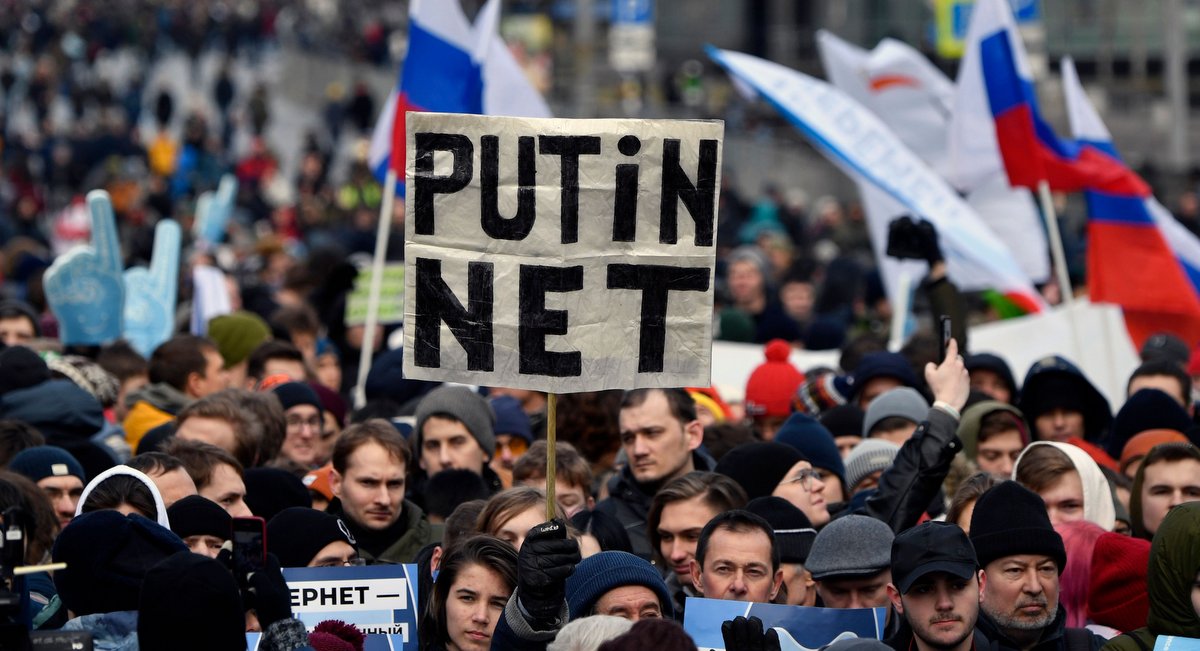
Recent demonstrations in Russia have not been led by a particular group or movement with grand political designs. Instead, protesters in Arkhangelsk – much like those in Yekaterinburg and even in Moscow – are simply people fighting for their government, finally, to treat them with the dignity and respect they deserve.
Source: Project Syndicate
Former finance minister Alexei Kudrin, now Chair of Russia’s Accounts Chamber, has warned that the country risks an “explosion” of protests caused by declining living standards and widespread poverty. He is wrong.
Kudrin is widely viewed as a standard-bearer for the cadre of liberal technocrats working within Russian President Vladimir Putin’s illiberal system, and his words carry significant weight among liberal-minded observers. But, in assessing today’s social unrest in Russia, Kudrin is confusing economic frustration with something much more fundamental: the struggle for dignity.
Of course, Russians do have serious economic grievances. The decline in real household income – which Kudrin cited as a major contributor to public frustration – has been consistent since 2014, when Putin made the costly decision illegally to annex Crimea from Ukraine. Unsurprisingly, private consumption has been weak. And last year, when the government implemented drastic pension reforms – which, among other things, raised the retirement age by five years – popular protests were formidable enough to force Putin not only to defend the policy publicly, but also to make some concessions.
Russians were not entirely convinced by Putin’s arguments, and public trust in the government fell. Although the protests against the pension reforms faded (in part with the help of some arrests by government forces), voters punished Putin’s United Russia party in September’s regional elections, and Putin’s approval rating – which had hovered around 80% – has fallen to 64-68% since October 2018.
Putin is thus roughly as popular now as he was before the annexation of Crimea, and the nationalist rhetoric that accompanied it, boosted support for him. Five years later, this tactic seems unlikely to work again: nowadays, Russians no longer seem to be persuaded by anti-Western discourse and militarist rhetoric.
With his favorite tool for shoring up public support having lost its efficacy, Putin is in an uncomfortable position. The fact remains, however, that his approval ratings, despite being lower than he might like, have stabilized, suggesting that Russians have largely accepted their economic plight as a “new normal.”
But that does not mean that Russians are willing to accept other “normal” behaviors by their government. Consider the protests that erupted in May in Yekaterinburg, Russia’s fourth most populous city, over government plans to build a new Orthodox cathedral in one of the city’s few remaining green areas.
The issue was corruption, not economics or even religion – even deeply observant Russians opposed the move. People are fed up with the relationship between government authorities, the Russian Orthodox Church hierarchy, and favored businessmen. Eager to preserve the support of his traditional base – ordinary Russians outside Moscow – Putin ordered the local authorities to suspend the project, at least for now. It was a rare win for Russian civil society.
Then there were the protests spurred by the arrest of Ivan Golunov, a respected investigative journalist reporting on corruption in the funeral businesses, on dubious drug charges, and his subsequent mistreatment in custody by the security services. The uproar and outrage were such that, in an unusual turn of events, the Kremlin quickly ordered that Golunov be released, instead of facing years in prison, as people in his position have come to expect. Yet again, Putin revealed his desire to appease the public, rather than risking the further erosion of popular support.
But appeasement has its limits. After Golunov’s release, police detained more than 500 demonstrators who remained in the streets of central Moscow, protesting Russia’s broader suppression of independent media and detention of political prisoners.
The most impressive recent case of civil disobedience occurred in Russia’s far north, in Arkhangelsk Province. Upon learning (by chance) of government plans to ship garbage from Moscow to be buried in the region’s pristine forests – beginning in the town of Shiyes – local people launched demonstrations that have lasted for a year and spread to neighboring regions.
Again, there is an economic component: the people of a poor region are rising up against incursions by wealthy Moscow. But they are not demanding action to raise their real incomes. Instead, they are defending their public spaces from occupation by the central government – not just by demanding an end to landfill construction, but also by calling for the resignation of their governor and, more recently, of Putin himself.
Though the government suspended its landfill plans in Shiyes in May, Putin has mentioned the protests only once, describing the dispute as purely regional. It is no coincidence that the topic did not arise on June 20, during Putin’s “Direct Line”: an annual live broadcast in which the president answers questions from Russians. The Kremlin, it seems, isn’t quite sure how to navigate this new kind of resistance.
And it is new. The Arkhangelsk protesters have demonstrated extraordinary firmness, professionalism, and insight about Putin’s government. The demonstrations have not been led by a particular group or movement with grand political designs. Instead, protesters in Arkhangelsk – much like those in Yekaterinburg and even in Moscow – are simply people fighting for their government, finally, to treat them with the dignity and respect they deserve.
Former Senior Fellow, Carnegie Russia Eurasia Center
Kolesnikov was a senior fellow at the Carnegie Russia Eurasia Center.
Recent Work
Andrei Kolesnikov
Andrei Kolesnikov
Carnegie does not take institutional positions on public policy issues; the views represented herein are those of the author(s) and do not necessarily reflect the views of Carnegie, its staff, or its trustees.

European Commission President Ursula von der Leyen is about to give her annual address on the state of the EU. Here’s what she won’t—but should—say.

Rym Momtaz

The EU’s responses to two recent incidents expose the gulf between European perceptions and capabilities. Unless the union can bridge that gap, it will never become a real geostrategic power.
Rym Momtaz

European states control several Overseas Countries and Territories around the world that carry strategic, economic, and environmental weight. As great powers challenge the rules-based order, defending them is a geopolitical imperative for Europe.

Marc Pierini

In supporting Europe’s far-right, MAGA and Russia both want the same thing: a weaker EU. Europe must defend itself without abandoning the openness these forces exploit.

Armida van Rij
As we close out another season of Strategic Europe, it is worth taking stock of the deep shifts underway.
Rym Momtaz