

Commentary
Maha Yahya
{
  "authors": [
    "Maha Yahya"
  ],
  "type": "commentary",
  "centerAffiliationAll": "",
  "centers": [
    "Carnegie Endowment for International Peace",
    "Malcolm H. Kerr Carnegie Middle East Center"
  ],
  "collections": [],
  "englishNewsletterAll": "",
  "nonEnglishNewsletterAll": "",
  "primaryCenter": "Malcolm H. Kerr Carnegie Middle East Center",
  "programAffiliation": "",
  "programs": [],
  "projects": [],
  "regions": [
    "Gulf",
    "Maghreb",
    "North Africa",
    "Saudi Arabia",
    "Syria",
    "Iraq",
    "Algeria",
    "Middle East",
    "Egypt",
    "East Asia",
    "China"
  ],
  "topics": [
    "Political Reform"
  ]
}
Source: Getty
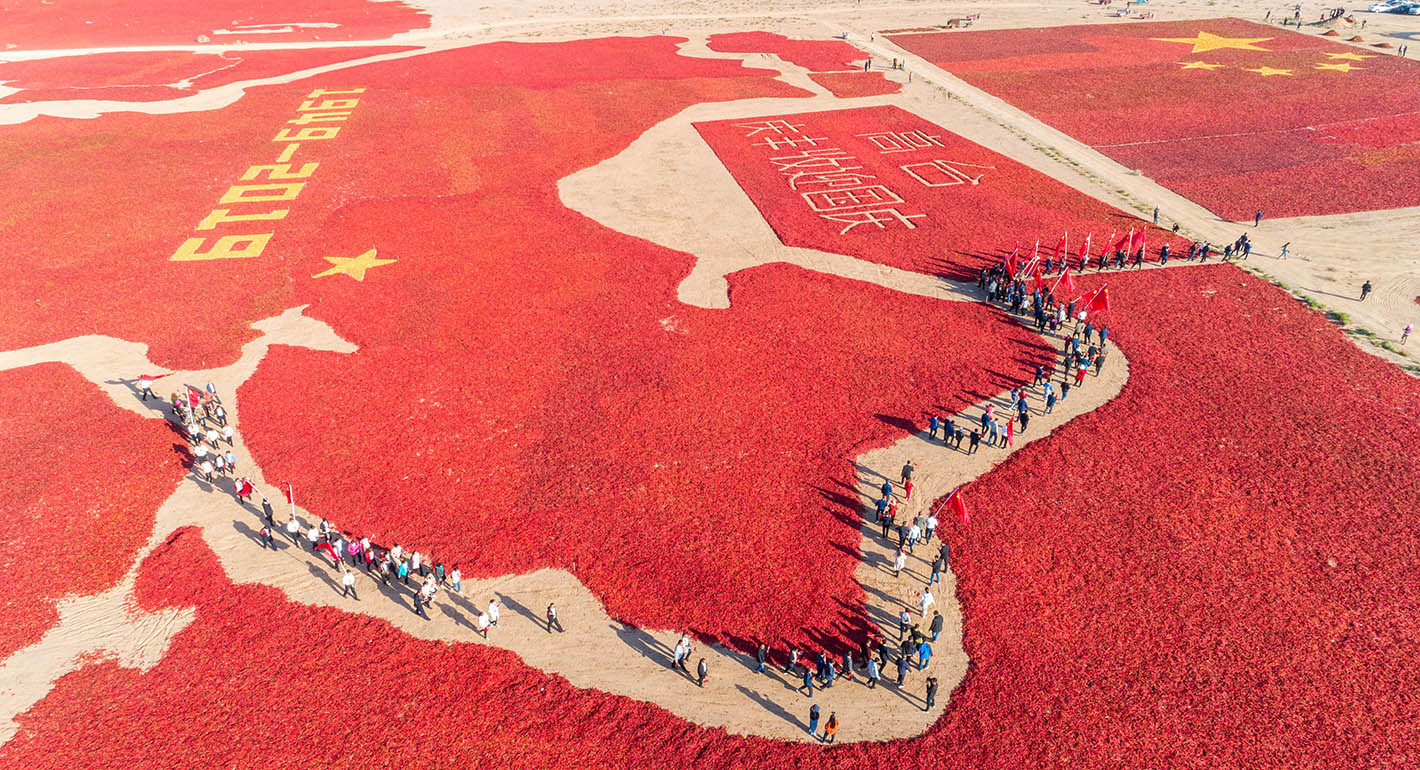
Shortly after the People’s Republic of China was founded seventy years ago, China and Middle Eastern countries forged a bond over their mutual opposition to colonialism. Today, China is the region’s biggest foreign investor.
The Asian-African Bandung Conference in 1955—a meeting of Asian and African states, many of which were newly independent—was a foundational moment. China showed support for anti-colonial and national independence movements, and endorsed people’s right to choose their own economic and political systems. However, China’s political role in the Middle East remained limited, especially following Mao Zedong’s isolationism during the 1960s and 1970s.
In the late 1970s, Deng Xiaoping’s Four Modernizations reforms, aimed at strengthening Chinese agriculture, industry, defense, and science and technology, laid the foundation for expanding economic relations with Middle Eastern countries. Over the next few decades, Beijing’s trade and economic role in the region grew and diversified. Exports rose from $10 billion in 1990 to $220 billion in 2016.
Today, China is the region’s largest foreign investor. It has invested approximately $177 billion in the Middle East, of which $70 billion went to the Gulf States, in sectors ranging from energy to real estate and infrastructure development.
Through the Belt and Road Initiative (BRI), China is seeking to expand its foreign policy influence and economic interests in the Middle East. Beijing has pledged 23 billion dollars in loans and aid to the region, signed BRI cooperation agreements with 17 Arab countries, and committed to building ports in Oman, factories in Algeria, and skyscrapers in Egypt’s new capital, as well as reconstructing infrastructure and health facilities in Syria. It has also extended lines of credit to some struggling states such as Djibouti, where it has built its first overseas military base.
However, China’s focus on political stabilization through regional development and connectivity will be difficult to achieve in a region that is fraught with instability. China is the world’s top crude oil importer and relies on the Middle East for its energy needs. In 2018, Saudi Arabia, Iraq, and Oman were Beijing’s second, fourth, and fifth largest crude oil suppliers. A regional conflict, or even supply disruptions, as occurred recently when an Aramco facility in Saudi Arabia was attacked, would have a detrimental impact on the Chinese economy.
In time, China may find itself further involved in the region’s geopolitics, as it ramps up support for current local rulers through economic and infrastructure investments. The question in the region is not if, but when, Beijing will match its growing economic might with more overt political influence. When it does, China will have to make difficult political choices, and in the process acquire not only friends but also enemies.
This quick take is part of a series authored by scholars from across the Carnegie Endowment’s global network, in advance of the seventieth anniversary of the founding of the People’s Republic of China.

Director, Malcolm H. Kerr Carnegie Middle East Center
Maha Yahya is director of the Malcolm H. Kerr Carnegie Middle East Center, where her research focuses on citizenship, pluralism, and social justice in the aftermath of the Arab uprisings.
Recent Work
Maha Yahya
Maha Yahya
Carnegie does not take institutional positions on public policy issues; the views represented herein are those of the author(s) and do not necessarily reflect the views of Carnegie, its staff, or its trustees.

While the EU and European governments are embracing the much-lauded middle-power moment, this entails three difficult conundrums.

Richard Youngs

Europe is facing rising populism internally as well as external pressures from Russia, China, Turkey, and the United States.

Dimitar Bechev

A notable degree of participative democracy has firmly arrived in Europe. But to have more far-reaching impact, democratic deliberation needs to move into a radically new phase.
Richard Youngs

The European Commissioner for Trade is headed to China. But after President Xi’s bridge-building visit to Washington, can a more isolated EU overcome Beijing’s stranglehold on critical raw materials? Who will blink first?

Rym Momtaz, ed.

Before the next wave of EU enlargement takes place, the union needs to grapple with thorny questions of how power is distributed among its members.


Emil Sondaj Hansen, Ditte Brasso Sørensen