

Paper
Andrew Leber, Zaha Hassan
{
  "authors": [
    "Zaha Hassan"
  ],
  "type": "commentary",
  "centerAffiliationAll": "dc",
  "centers": [
    "Carnegie Endowment for International Peace"
  ],
  "collections": [],
  "englishNewsletterAll": "menaTransitions",
  "nonEnglishNewsletterAll": "",
  "primaryCenter": "Carnegie Endowment for International Peace",
  "programAffiliation": "MEP",
  "programs": [
    "Middle East"
  ],
  "projects": [],
  "regions": [
    "Middle East",
    "Israel",
    "Palestine"
  ],
  "topics": [
    "Political Reform",
    "Democracy"
  ]
}
Source: Getty
If more Palestinian citizens of Israel vote, an unprecedented coalition between Arab parties and the main Israeli opposition party could scupper state plans to annex parts of the West Bank.
Palestinian citizens of Israel may have a decisive role in Israel’s upcoming election. If they vote in larger numbers than they did in the April 2019 election, it could affect whether Israeli Prime Minister Benjamin Netanyahu can make good on his promise to annex most of the occupied West Bank.
In 2015, the Joint List—a political alliance of the main Palestinian parties in Israel, got the third-most parliamentary seats (thirteen), though it was not invited to join the coalition government. The alliance’s numbers also did not stop the Knesset from passing a quasi-constitutional bill that legalized Palestinians’ unequal treatment before the law and prioritized settlement construction in the occupied West Bank.
Now, however, the head of the Joint List, Ayman Odeh, has said that he would consider joining a coalition government with center-left Israeli parties. This engagement is something most Palestinians want. According to a poll cited by Al-Monitor, 80 percent of the Joint List and almost 70 percent of Palestinian voters in Israel support Palestinian parties joining such a government.
On September 13, 2019—the last day to publish polling—one Israel Hayom poll suggests that the Joint List may secure twelve seats and retake the third spot in the Knesset. (In the last election, when voter turnout was low, Arab parties only received ten seats.) Odeh’s statement may encourage some voters to return to the polls—that may even have been the purpose all along.
A Palestinian party joining the government would be a first in Israel. The main opposition party, Blue and White, is neck and neck with the ruling party Likud for the most Knesset seats. The opposition has not said that it would consider asking the Joint List to join a coalition government. That suggests the point is moot. If, however, Likud wins and is again unable to form a coalition, Blue and White might be inclined to rethink things.
Blue and White, which includes three former chiefs of staff of the Israel Defense Forces at the top of the ticket, may not be as keen to make good on Netanyahu’s campaign promise to annex all Israeli settlements along with the Jordan Valley, because of the potential impact on security in the West Bank and on neighboring Jordan.
Israelis support annexation to varying degrees—but only if Palestinians in the West Bank are not offered citizenship and equality. If Israel were to legally annex most of the territory and place it under Israeli law, without enfranchising the nearly 3 million Palestinians who live there, that would put the country in stark opposition to the rest of the world—even if the United States were prepared to support this shift.
A coalition with the Joint List would not only be a handy counterargument to the charge that Israel is not a country for all its citizens. It would also provide an off-ramp for the Israeli right wing’s drive toward annexation of occupied Palestinian land, because it would let Blue and White point to its Arab coalition partner as the obstacle, thus avoiding the perils of annexation while saving face with Israeli voters.
However the election turns out, Palestinian voters are poised to be a more important factor than they have been in the past.

Senior Fellow, Middle East Program
Zaha Hassan is a human rights attorney, policy analyst, and senior fellow at the Carnegie Endowment for International Peace.
Recent Work

Andrew Leber, Zaha Hassan
Zaha Hassan
Carnegie does not take institutional positions on public policy issues; the views represented herein are those of the author(s) and do not necessarily reflect the views of Carnegie, its staff, or its trustees.
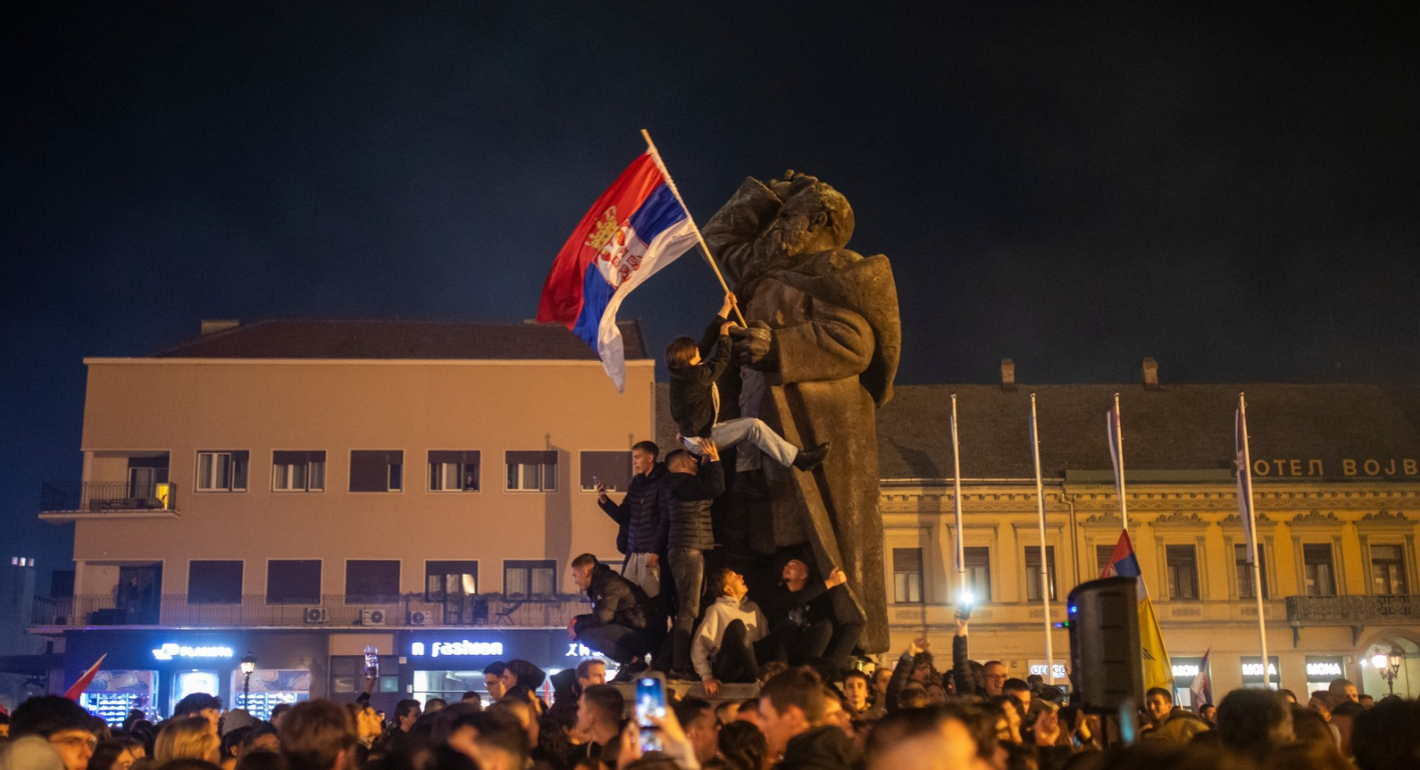
Excitement is in the air following Aleksandar Vučić’s defeat in Serbia. To build a truly democratic state, the movement that unseated the former president must learn from the mistakes of the past.

Ivan Vejvoda

A notable degree of participative democracy has firmly arrived in Europe. But to have more far-reaching impact, democratic deliberation needs to move into a radically new phase.

Richard Youngs

The domestic impacts of how long it is taking to end the war in Ukraine have pushed the French electorate to the political extremes and compromised the country’s diplomatic capacity.

Rym Momtaz

Before the next wave of EU enlargement takes place, the union needs to grapple with thorny questions of how power is distributed among its members.


Emil Sondaj Hansen, Ditte Brasso Sørensen

Radical-right parties are expected to do well in upcoming elections in four of the EU's biggest member states. If successful, they could prevent the union from addressing key challenges ahead.

Stefan Lehne