

Article
Erik Brattberg, David Whineray
{
  "authors": [
    "David Whineray"
  ],
  "type": "commentary",
  "centerAffiliationAll": "dc",
  "centers": [
    "Carnegie Endowment for International Peace"
  ],
  "collections": [],
  "englishNewsletterAll": "ctw",
  "nonEnglishNewsletterAll": "",
  "primaryCenter": "Carnegie Endowment for International Peace",
  "programAffiliation": "EP",
  "programs": [
    "Europe"
  ],
  "projects": [],
  "regions": [
    "Western Europe",
    "United Kingdom",
    "Iran"
  ],
  "topics": [
    "Political Reform"
  ]
}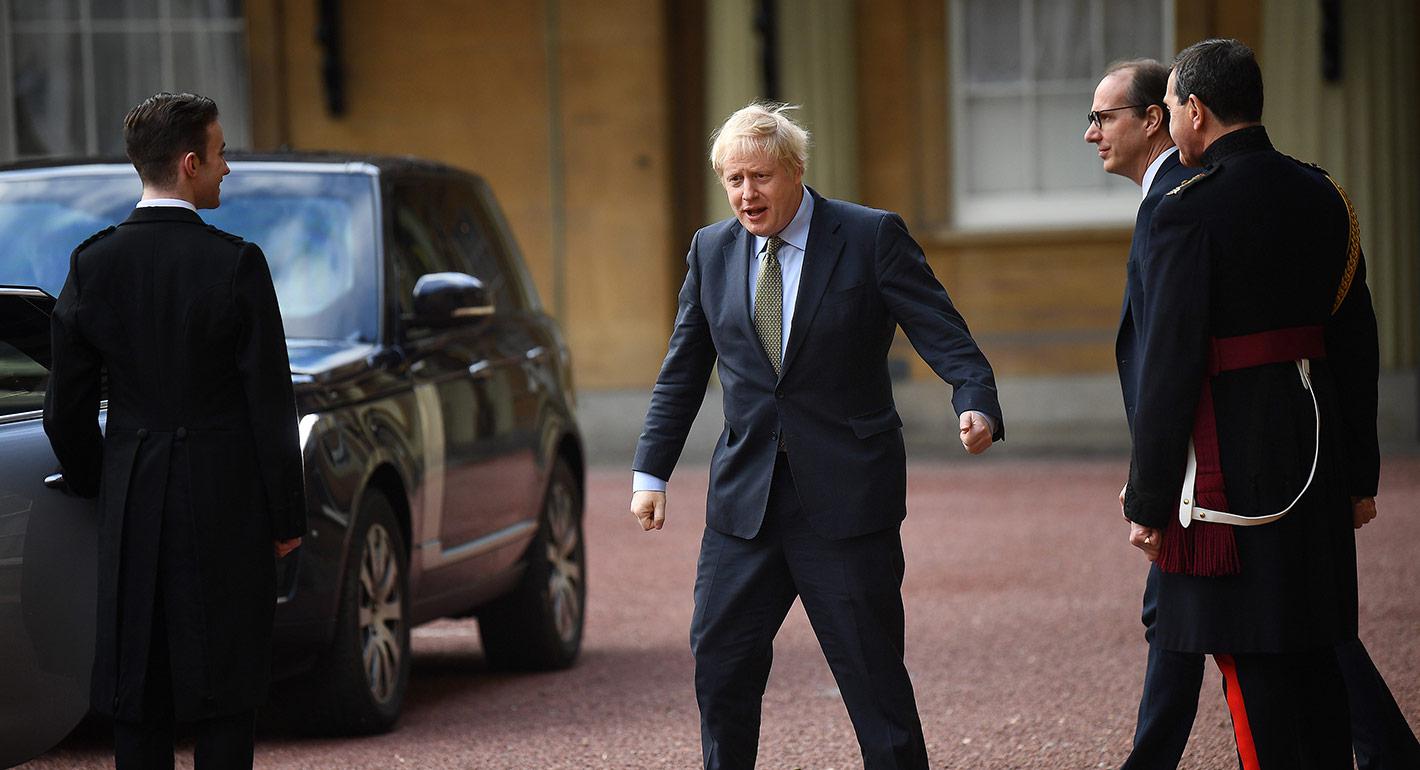
Source: Getty
The UK has a new government. What does this mean for the Brexit negotiations between the UK and EU? What happens next?
There are two main outcomes from the election of the new UK government for Brexit. The first is that the UK will leave the EU by the end of January 2020. The new British parliament will ratify the withdrawal agreement that the UK and EU have agreed, which sets the terms and conditions for the UK’s exit.
The second outcome is that the UK and the EU will begin negotiating their future relationship and partnership. The withdrawal agreement includes a one-year transition period through to the end of 2020, during which the UK will continue to adopt EU legislation, even though it will have exited the EU. This is designed to provide stability and continuity for UK and EU businesses while London and Brussels negotiate a new future economic and security relationship. A free trade agreement will be central to these talks. But the negotiations could also cover other areas, such as cooperation on crime and defense.
As the transition period lasts one year, the next big Brexit deadline is at the end of 2020. What will happen then?
There are four broad possible scenarios for the next twelve months.
First, the UK and EU agree on a comprehensive new partnership covering economic—including a free trade agreement—and security cooperation. Both the EU and UK have said that this is what they want. The challenge with this scenario is reaching and ratifying such an agreement in just one year. For example, the recent economic and trade deal between the EU and Canada took considerably longer.
A central issue in the negotiations will be the extent to which the EU demands that the UK matches EU regulations and standards—as French President Emmanuel Macron has said is required—in exchange for an ambitious trade deal, and the extent to which the UK is willing, or not, to agree to this. A softer Brexit—more convergence than divergence—may be easier and faster to agree.
Second, no agreement is reached, and the UK and EU begin to trade on World Trade Organization rules when the transition period ends. The challenge with this harder Brexit scenario is the potential economic implications of new tariffs. There would also be no agreement on security cooperation.
Third, to avoid a hard Brexit, the EU and UK agree to extend the transition period. The challenge with this scenario is that UK Prime Minister Boris Johnson has said he will not do this.
Fourth, a pared-down free trade deal is agreed covering, for example, trade in some goods but not services. The challenge with this scenario is, again, the potential economic implications given that most of the UK economy is made up of the services sector.
These four scenarios may not necessarily be exclusive. For example, it could be theoretically possible to agree to a phase one, pared-down trade agreement over the next year, and to also agree to extend the transition period to cover issues where no agreement has yet been reached.
The large size of the new UK government’s majority in parliament means that it will have scope to pursue any of these four scenarios it prefers. It could seek a Brexit that is shorter, longer, closer, further, softer, or harder. The main question now is: Which will it choose?
Former Nonresident Fellow, Europe Program
David Whineray was a nonresident fellow in the Europe Program at the Carnegie Endowment for International Peace in Washington, DC.
Recent Work
Erik Brattberg, David Whineray
David Whineray
Carnegie does not take institutional positions on public policy issues; the views represented herein are those of the author(s) and do not necessarily reflect the views of Carnegie, its staff, or its trustees.

A notable degree of participative democracy has firmly arrived in Europe. But to have more far-reaching impact, democratic deliberation needs to move into a radically new phase.

Richard Youngs

Before the next wave of EU enlargement takes place, the union needs to grapple with thorny questions of how power is distributed among its members.


Emil Sondaj Hansen, Ditte Brasso Sørensen

Are Germany’s economic, industrial, and political struggles becoming a liability for the EU’s ability to rise to the geopolitical moment?

Rym Momtaz, ed.

In supporting Europe’s far-right, MAGA and Russia both want the same thing: a weaker EU. Europe must defend itself without abandoning the openness these forces exploit.

Armida van Rij
As we close out another season of Strategic Europe, it is worth taking stock of the deep shifts underway.
Rym Momtaz