

Research
- +10
Rosa Balfour, Frances Z. Brown, Yasmine Farouk, …
{
  "authors": [
    "Moisés Naím"
  ],
  "type": "legacyinthemedia",
  "centerAffiliationAll": "",
  "centers": [
    "Carnegie Endowment for International Peace"
  ],
  "collections": [],
  "englishNewsletterAll": "",
  "nonEnglishNewsletterAll": "",
  "primaryCenter": "Carnegie Endowment for International Peace",
  "programAffiliation": "",
  "programs": [],
  "projects": [],
  "regions": [
    "North America",
    "United States",
    "South America"
  ],
  "topics": [
    "Political Reform",
    "Democracy",
    "Global Governance"
  ]
}
Source: Getty
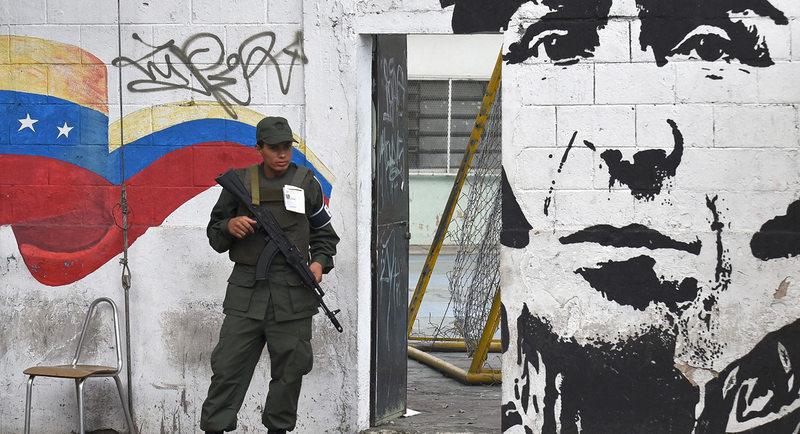
This is the equation that captures a big chunk of the forces driving the decline of liberal democracy: populism plus polarization plus post-truth lead to continuism.
Source: El País
This is the equation that captures a big chunk of the forces driving the decline of liberal democracy: populism plus polarization plus post-truth lead to continuism. And what is continuism? It’s one of those words from Spanish that English lacks – but increasingly needs. Continuismo is what happens when leaders manipulate institutions, the law and even the constitution in order to grab and retain power.
Populism is nothing new. In theory, it is the defense of the noble masses (the populous) from the abuses of the elite. In practice, it is used to describe policies, people and situations that can be radically different – Donald Trump and Hugo Chávez, for example. By itself, populism is highly problematic and it rarely ends well. But when it’s coupled with polarization and post-truth, its destructive power multiplies.
Few leaders define themselves as populists. Rather, the term is typically used as a derisive description used against political adversaries. A common mistake is to assume that populism is an ideology. But there are populists who defend economic and cultural openness to the world and others who are isolationists. There are some who trust the market and others who prefer government-centered approaches. “Green” populists prioritize environmental protection while industrialists favor economic growth, even if it pollutes the environment. In short, populism comes in many flavors and what history shows is that it is not an ideology but a strategy to take power and, do whatever possible, to hold on to it.
The longer that bad government hangs on, the more damage it does, the harder it is to replace it, and the longer and more expensive it is to recover.
The latter is the most dangerous. A country can recover from a populist government whose policies damage the economy, stimulate corruption, and weaken democracy. But the longer that bad government hangs on, the more damage it does, the harder it is to replace it, and the longer and more expensive it is to recover.
Venezuela, for example, may have survived a single term of Hugo Chávez. What devastated that country, and is making its recovery so difficult, are the two decades of the same inept, corrupt and autocratic regime that was initiated by Chávez and is being prolonged by Maduro.
Continuism is an enemy that we must defeat. We have seen its effects in Fujimori’s Peru, in Kirchner’s Argentina, Lula and Dilma’s Brazil, in Evo Morales’ Bolivia, and Ortega’s Nicaragua. Of course, clinging to power in violation of the constitution, or changing it to extend presidential terms, is not just a Latin American phenomenon. There is also Xi Jinping’s China, Putin’s Russia, Erdoğan’s Turkey, and Orbán’s Hungary, not to mention the list of longevous African dictators.
Radical polarization makes it impossible for rival political groups to reach the agreements that are necessary to govern in a democracy.
Populism and polarization make for comfortable bedfellows. It is normal for a democracy to have antagonistic groups that compete for power. In fact, it’s healthy. But in recent times and in many countries we have seen how that healthy competition has mutated into an extreme polarization that threatens democracy. Radical polarization makes it impossible for rival political groups to reach the agreements that are necessary to govern in a democracy. The political rivals become irreconcilable enemies who do not recognize the legitimacy of the “other” and do not accept their right to participate in any policy-making process or, much less, to rule.
Increasingly, the cleavages that have always divided societies (inequality, immigration, religion, regionalism, race, values, or the economy) are no longer the primary source of polarization. Instead group identity is the determining factor. In addition, this group identity is usually defined in opposition to the identity of the “other,” the rival group. From this perspective, everything becomes simpler because there are no grey areas. Everything is black and white. Either you are “one of my own” or you are from the group whose political existence I don’t tolerate.
This is how encouraging polarization by deepening existing disagreements and creating new social conflict, becomes a powerful tool for continuism. The “we” against “them” mentality mobilizes and energizes the polarizing leader’s followers who are motivated to defeat the “other side.” They, in turn, become an important support base for that leader, legitimizing their need to cling to power, and, perpetuating a cycle of division.
Paradoxically, at a time when information is more abundant and accessible, we are more confused about what and who to believe
But a new vice has joined populism and polarization: post-truth. Misinforming, confusing, alarming, distorting, and lying has always been part of politics and governing. Now, however, its impact has been greatly amplified by the digital revolution and, specifically, by social media. Paradoxically, at a time when information is more abundant and accessible, we are more confused about what and who to believe. One answer has been that nowadays people believe less and less in institutions and more and more in their friends or those who share their prejudices, preferences and political views. In today’s democracies the truth is what “friends” on Facebook, Instagram, or Twitter believe is true. Even if it’s a lie.
Destructive populists have come and gone, as have leaders who thrive on polarization. Societies suffer them and then overcome them. How? By holding on to the truth. Today that old defense is faltering. Post-truth threatens the antibodies that democracies use to fight off populism and repel continuism. Today these are shifting from recoverable illnesses to chronic conditions where mendacity and deception are the norm. When the line between truth and lie is blurred, the primary weapon we have always had for countering the populist’s aspirations to stay in power indefinitely is lost.

Distinguished Fellow
Moisés Naím is a distinguished fellow at the Carnegie Endowment for International Peace, a best-selling author, and an internationally syndicated columnist.
Recent Work



Rosa Balfour, Frances Z. Brown, Yasmine Farouk, …
Moisés Naím
Carnegie does not take institutional positions on public policy issues; the views represented herein are those of the author(s) and do not necessarily reflect the views of Carnegie, its staff, or its trustees.

Ahead of a tough winter for Ukraine, Donald Trump’s swing back toward Russia bodes ill. But instead of panicking, Kyiv’s European allies are focusing on action.

Rym Momtaz

While the EU and European governments are embracing the much-lauded middle-power moment, this entails three difficult conundrums.

Richard Youngs

Europe is facing rising populism internally as well as external pressures from Russia, China, Turkey, and the United States.

Dimitar Bechev

A notable degree of participative democracy has firmly arrived in Europe. But to have more far-reaching impact, democratic deliberation needs to move into a radically new phase.
Richard Youngs

European NATO countries are wrestling with the possibility of U.S. disengagement from the alliance. With the continent’s security increasingly uncertain, governments must restore the credibility of their collective defense.



Hans-Dieter Lucas, Adam Thomson, Pierre Vimont