

Commentary
Gwendolyn Sasse
{
  "authors": [
    "Gwendolyn Sasse"
  ],
  "type": "other",
  "centerAffiliationAll": "dc",
  "centers": [
    "Carnegie Endowment for International Peace",
    "Carnegie Europe"
  ],
  "collections": [
    "Europe’s Eastern Neighborhood"
  ],
  "englishNewsletterAll": "ctw",
  "nonEnglishNewsletterAll": "",
  "primaryCenter": "Carnegie Europe",
  "programAffiliation": "EP",
  "programs": [
    "Europe"
  ],
  "projects": [],
  "regions": [
    "Russia",
    "Iran"
  ],
  "topics": [
    "Political Reform"
  ]
}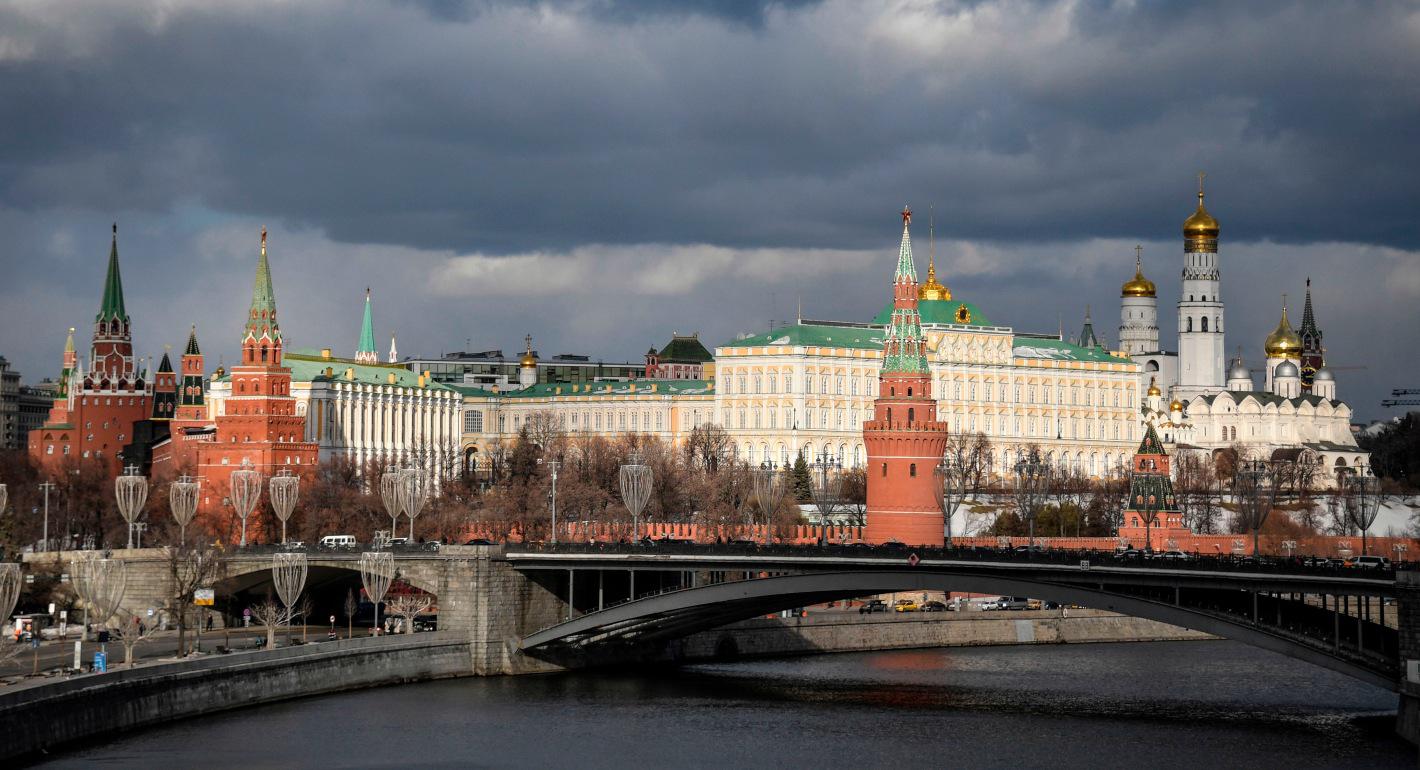
Source: Getty
In order to survive, authoritarian regimes undergo processes to adapt and reinvent themselves. Putin’s constitutional reform ensures that he will remain the key figure in Russian politics after 2024.
Source: Centre for East European and International Studies
On 22 April, the Russian populace is scheduled to vote on the constitutional reform announced in January 2020 and pushed forward at breakneck speed. The process does not comply with the procedure set out for such far-reaching changes in the currently still valid constitution of 1993. Nor can the planned referendum amount to a transparent expression of will, since the vote’s outcome is a foregone conclusion. Putin cannot allow a vote against the reform. Voter turnout – or the discrepancy between official and observable participation – can at best serve to gauge the political interest and mood of the populace. But why is President Putin even attempting, via the detour of constitutional reform and referendum, to create the appearance of social legitimacy?
For authoritarian systems, the question of succession has always involved a degree of risk. An authoritarian regime that has been stable for a long period can suddenly reveal itself to be remarkably unstable as soon as the key figure holding the system together is removed. The sudden death of an authoritarian ruler is the extreme case that can shake the foundations of the system overnight. A potential change at the top of the political system – as can be observed in Russia – is governed by a different time frame. The danger here, from the ruler’s point of view, is that speculation about a possible change and the accompanying uncertainty among the elites can slowly erode political stability. President Putin has now responded promptly to this risk.Authoritarian rulers respond to this challenge in different ways. For some, the primary concern is to safeguard their own immunity, which can be achieved by handpicking a successor – as with the transfer of power from Boris Yeltsin to Vladimir Putin in 2000. Others extend their term of office – for a number of years, terms, or even for life. Still others attempt to oversee the process early on, or create a range of options – as now with Putin. Just as speculation about the plans of the Russian president is growing at home and abroad, he reforms the system in full public view and with surprising swiftness and comprehensiveness. At the same time, he has sent a clear signal that he will also set the course in Russia post 2024. Yesterday, his term limit was effectively extended to 2036. Nevertheless, he has also left open other options to exercise formal and informal influence with guaranteed immunity.
Putin thus joins the ranks of authoritarian post-Soviet presidents who have prolonged their power through constitutional changes and other informal mechanisms. Accordingly, contrary to the constitution, the predecessor of the current president of Uzbekistan called on the populace to make the decision to extend his office beyond a second term. In Kazakhstan, President Nursultan Nazarbayev held a referendum to secure the title ‘Leader of the Nation’ and thereby cut short the debate about a possible prolongation of the president’s term of office before, in 2019, moving from the office of president to the position of chair of the now strengthened Security Council. The predecessor of the current president of Turkmenistan and the acting president of Tajikistan used referenda to legitimate themselves as ‘presidents for life’. Authoritarian rulers worldwide learn from each other, but also from democratic systems. In addition to efforts to reform the constitution and the use of referenda, a few also experiment with partially competitive elections. These elements should serve to satisfy the populace, but still pose a certain risk for the rulers, one that they assume they can control.
The swift constitutional reform in Russia is a clear signal that Putin will remain the key figure in Russian politics post 2024. Following the second reading in the Duma on 10 March, there is now a clear limit to two presidential terms. In the presence of the president, the Duma nevertheless made it immediately clear that, with the new constitution, time will be reset to zero, thereby clearing the way for Putin to stay in office. The strengthening of the role of parliament, including the Federation Council, which was announced in January, is only nominally significant. In fact, the president’s powers increase, in particular vis-à-vis the Constitutional Court. The most important change relates to the enhanced role of the State Council, a second advisory body alongside the hitherto extremely influential National Security Council. The powers of the State Council still need to be spelled out. While for the time being Putin has ruled out the possibility of retaining influence through this newly empowered body, this option can be called on at any time over the next four years if needed.
In order to survive, authoritarian regimes undergo processes of adaptation and in doing so continuously reinvent themselves. In Russia, Putin has now proactively begun this process – and with perfect timing. However, there are still risks. The obvious farce of the debate on the constitution in a working group made up of celebrities, a constitution that now contains even greater contradictions than before, Putin’s staged appearance in the Duma where he approved of the possibility of extending his term beyond 2024, and the referendum in April underline how long Putin has been president and how great his power is. Few in the country have political illusions. Despite the considerable support that still exists for Putin’s politics – according to a new Levada poll it is his politics rather than his person that meet with approval – polls show a diffuse desire for change, but also a feeling that there is no alternative to the current system.
On 28 February, Levada published data collected at the end of January according to which a third of the populace considers the Russian Constitution in general to be insignificant, a clear majority had heard of the planned constitutional reform, and just under fifty percent of respondents stated that the constitutional reform corresponded to the interests of the president. A further almost fifty percent of those who were aware of the reform saw it as a means to align the political system with the interests of the populace.Even without manipulation on the day, the constitutional reform is likely to be accepted in the referendum on 22 April based solely on the fact that a subparagraph at the back of the constitution will include social guarantees regarding a minimum wage and the indexing of pensions, as well as a range of traditional values. However, it is only a matter of time before this effect also disappears for want of perceptible changes. The memory of the constitutional reform will then confirm the impression that the president puts his own interests before those of the populace. The first protests against the constitutional reforms have already taken place. Whether this issue will feature more prominently in the now regular protests arising from local grievances in the country remains to be seen. What this highlights, however, is the risk that is inherent in every kind of authoritarian learning and experimenting with methods of democratic legitimation.
Nonresident Senior Fellow, Carnegie Europe
Gwendolyn Sasse is a nonresident senior fellow at Carnegie Europe. Her research focuses on Eastern Europe, with a particular focus on Ukrainian politics and society, EU enlargement, and comparative democratization.
Recent Work
Gwendolyn Sasse
Gwendolyn Sasse
Carnegie does not take institutional positions on public policy issues; the views represented herein are those of the author(s) and do not necessarily reflect the views of Carnegie, its staff, or its trustees.

Trump is distracted and Ukraine wants Europe to step up. The continent’s leaders must find their voice and assert it in talks with Russia.

Alissa de Carbonnel

Mounting economic strain and battlefield losses will not necessarily make the Kremlin less dangerous. They could instead push Moscow toward a more aggressive hybrid campaign designed to test NATO’s Eastern flank, exploit allied hesitation, and fracture European resolve.

Maksym Beznosiuk

As the EU confronts profound challenges, several leaders have called for fundamental reform to the union’s model—but only modest, superficial changes have resulted. What if Europe really could be reimagined from zero today: What should such a redesigned European order look like?

Richard Youngs, ed.
As Russia's war on Ukraine drags on, NATO is expanding its footprint in the Black Sea. Turkey, Romania, and Bulgaria are upgrading their fleets and deepening trilateral cooperation.

Dimitar Bechev
While Russia is not ready to sue for peace on Europe’s terms, it could still either seek a ceasefire in Ukraine or try escalation. Brussels needs to prepare for both and prioritize that preparation over normative discussions.
Kadri Liik