

Commentary
The European Commissioner for Trade is headed to China. But after President Xi’s bridge-building visit to Washington, can a more isolated EU overcome Beijing’s stranglehold on critical raw materials? Who will blink first?
Rym Momtaz, ed.
{
  "authors": [
    "Christopher Hill"
  ],
  "type": "legacyinthemedia",
  "centerAffiliationAll": "dc",
  "centers": [
    "Carnegie Endowment for International Peace"
  ],
  "collections": [],
  "englishNewsletterAll": "asia",
  "nonEnglishNewsletterAll": "",
  "primaryCenter": "Carnegie Endowment for International Peace",
  "programAffiliation": "AP",
  "programs": [
    "Asia"
  ],
  "projects": [],
  "regions": [
    "North America",
    "United States",
    "East Asia",
    "China"
  ],
  "topics": [
    "Foreign Policy",
    "Global Governance"
  ]
}
Source: Getty
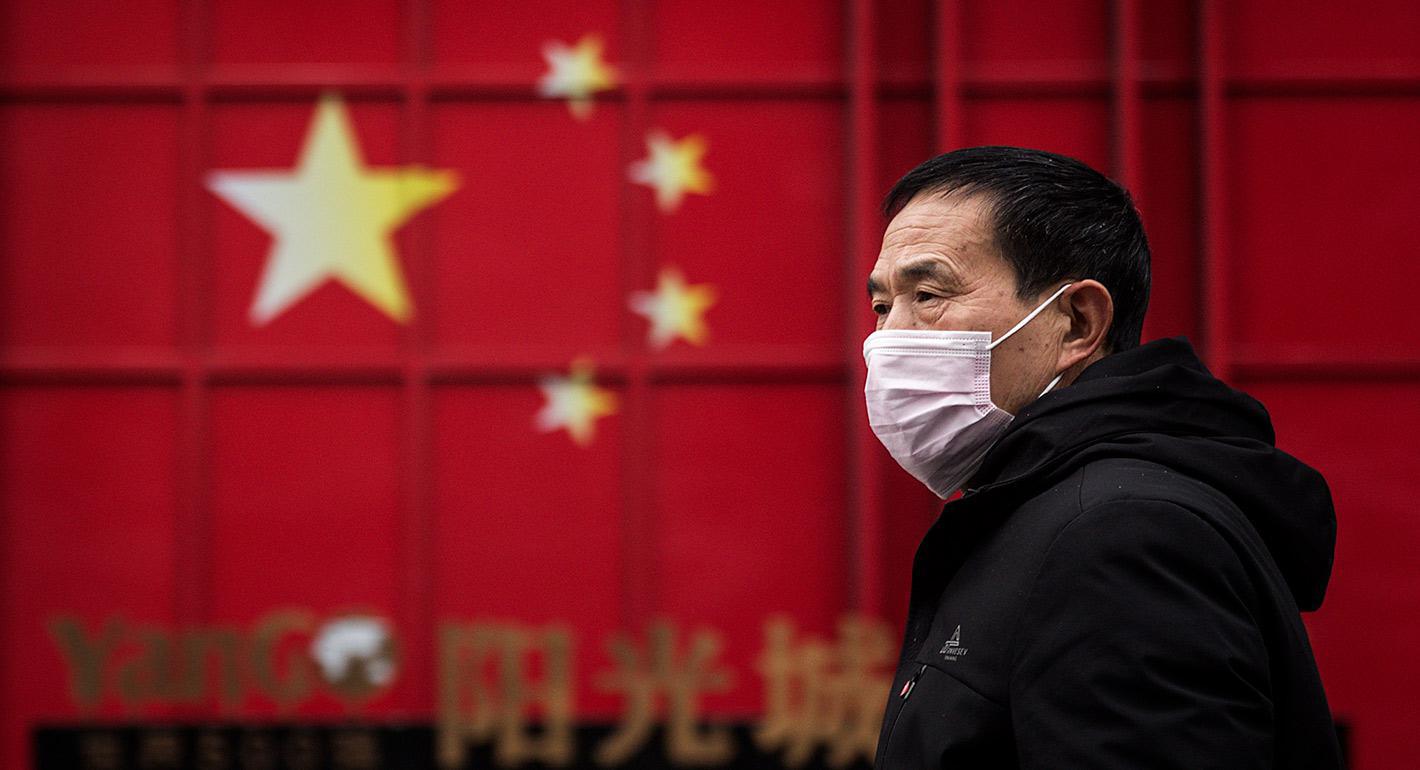
In any crisis, even in the midst of a pandemic, there is a moment where everybody might benefit from taking a deep breath and thinking clearly about the way forward.
Source: Hill
China’s foreign ministry — not unlike the U.S. State Department’s own checkered reputation in the United States — has a reputation among some in China for too often apologizing to foreign government positions and, in these fraught times, for committing the crime of excessive reasonableness. The foreign ministry’s strategy for mitigating such accusations, not surprisingly, is to employ a spokesperson who can protect the ministry from such critics, and demonstrate that the foreign ministry is not full of apologists as it is often accused, but rather is one that can fight back, and fight back hard. Enter foreign ministry spokesperson Zhao Lijian.
On March 11, a lightyear ago in coronavirus time, Zhao Lijian tweeted that “it might be the US army” that brought the disease to China, an accusation that had been making its way across China’s very active blogosphere where just about anything goes, provided it doesn’t include criticism of the Beijing government.
Former Nonresident Senior Fellow, Asia Program
Ambassador Christopher Robert Hill is currently an adjunct professor at Columbia SIPA. He is a former career diplomat, a four-time ambassador, nominated by three presidents, whose last post was as ambassador to Iraq.
Carnegie does not take institutional positions on public policy issues; the views represented herein are those of the author(s) and do not necessarily reflect the views of Carnegie, its staff, or its trustees.

The European Commissioner for Trade is headed to China. But after President Xi’s bridge-building visit to Washington, can a more isolated EU overcome Beijing’s stranglehold on critical raw materials? Who will blink first?

Rym Momtaz, ed.

European NATO countries are wrestling with the possibility of U.S. disengagement from the alliance. With the continent’s security increasingly uncertain, governments must restore the credibility of their collective defense.



Hans-Dieter Lucas, Adam Thomson, Pierre Vimont

The new U.S.–Denmark–Greenland agreement will help Washington exert political, economic, and financial dominance under the guise of security. Yet, it acknowledged Copenhagen’s and Nuuk’s sovereignty on the island.

Marc Pierini

A summer of escalation in the Black Sea has hurt Ukraine economically and is exacerbating world food security. A truce is needed—as is a broader reframing of Europe’s Ukraine strategy.

Thomas de Waal

Are Germany’s economic, industrial, and political struggles becoming a liability for the EU’s ability to rise to the geopolitical moment?
Rym Momtaz, ed.