

Commentary
Peter Kellner
{
  "authors": [
    "Peter Kellner"
  ],
  "type": "legacyinthemedia",
  "centerAffiliationAll": "dc",
  "centers": [
    "Carnegie Endowment for International Peace",
    "Carnegie Europe"
  ],
  "collections": [],
  "englishNewsletterAll": "ctw",
  "nonEnglishNewsletterAll": "",
  "primaryCenter": "Carnegie Europe",
  "programAffiliation": "EP",
  "programs": [
    "Europe"
  ],
  "projects": [],
  "regions": [
    "North America",
    "United States",
    "Iran"
  ],
  "topics": [
    "Political Reform"
  ]
}
Source: Getty
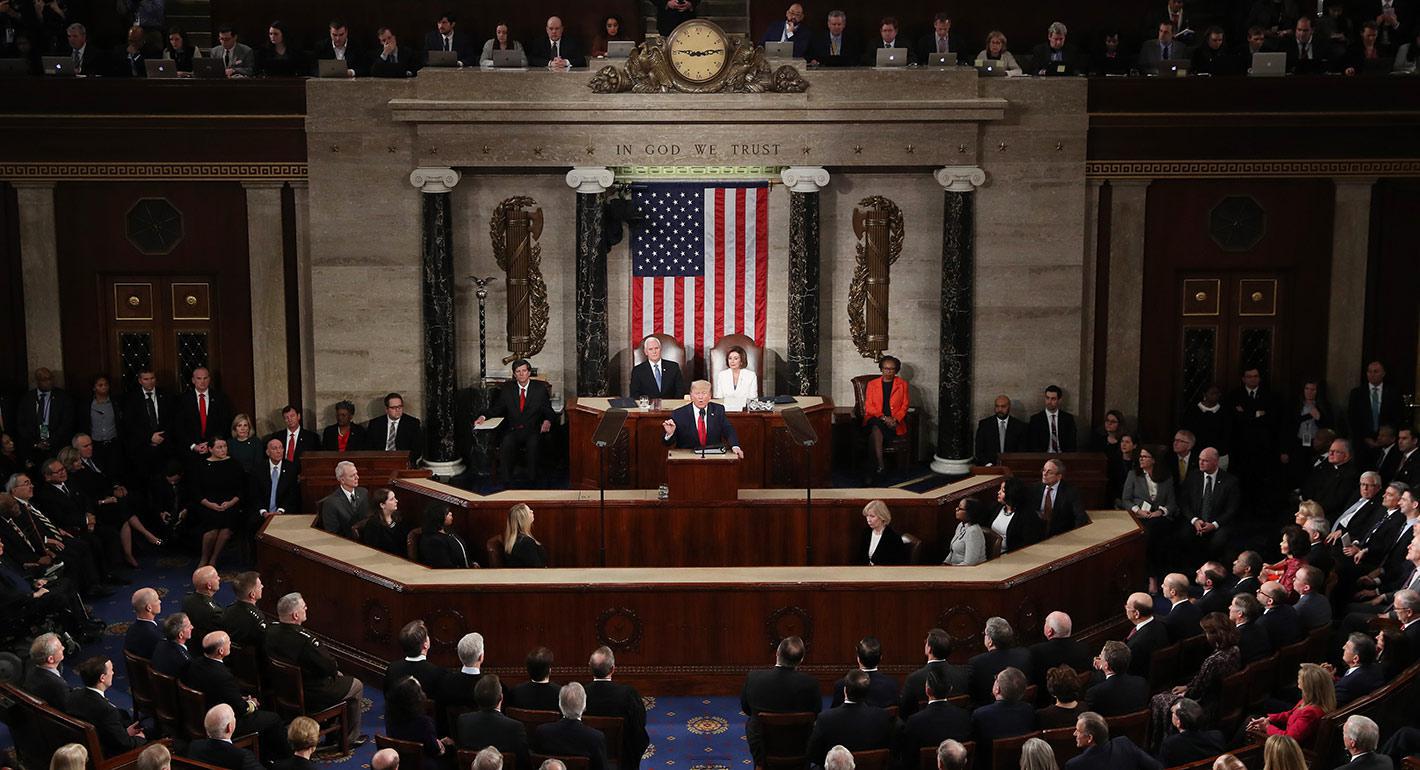
Former U.S. vice president Joe Biden has drawn well ahead of U.S. President Donald Trump in the latest American polls for the presidential election in November. But is Biden’s lead real—and will it last?
Source: TheArticle
Joe Biden has drawn well ahead of Donald Trump in the latest American polls. This analysis seeks to answer two questions: is Biden’s lead real — and will it last?
Let’s start with what the polls currently say. According to the 538 website — the most sophisticated of the sites that monitor the polls — Biden’s national lead has held steady at around nine per cent for the past fortnight. He also leads by at least six points in four states that Trump won in 2016: Florida, Pennsylvania, Wisconsin and Michigan. These states have a combined total of 75 electoral college votes. If Biden wins them all, and assuming no other states change hands, he would win the presidency with 317 electoral college votes, compared with Trump’s 221.Biden is currently ahead, though more narrowly, in five further states, with a total of 66 electoral college votes (Arizona, North Carolina, Ohio, Georgia and Iowa). If he wins all these, then he beats Trump by 383-155. A Biden super-optimist would add Texas, with its 36 electoral college votes, as a possible gain. Trump won by 9 per cent in 2016, but his polling lead is only 0.4 per cent today.
That’s what the polls say: but are they right? Here are some reasons for saying they are wrong.
Former Nonresident Scholar, Carnegie Europe
Kellner was a nonresident scholar at Carnegie Europe, where his research focused on Brexit, populism, and electoral democracy.
Recent Work
Peter Kellner
Peter Kellner
Carnegie does not take institutional positions on public policy issues; the views represented herein are those of the author(s) and do not necessarily reflect the views of Carnegie, its staff, or its trustees.

European Commission President Ursula von der Leyen is about to give her annual address on the state of the EU. Here’s what she won’t—but should—say.

Rym Momtaz

Radical-right parties are expected to do well in upcoming elections in four of the EU's biggest member states. If successful, they could prevent the union from addressing key challenges ahead.

Stefan Lehne

Canadian Prime Minister Mark Carney has twice inspired praise for standing up to U.S. President Donald Trump: at the 2026 World Economic Forum in Davos and on Canada-U.S. trade negotiations. Is Carney showing a third way better than the EU has in dealing with the Trump administration?
Rym Momtaz, ed.

European states control several Overseas Countries and Territories around the world that carry strategic, economic, and environmental weight. As great powers challenge the rules-based order, defending them is a geopolitical imperative for Europe.

Marc Pierini

In supporting Europe’s far-right, MAGA and Russia both want the same thing: a weaker EU. Europe must defend itself without abandoning the openness these forces exploit.

Armida van Rij