

Commentary
The EU can impose sanctions but struggles to enforce them without the United States. With Washington increasingly disinterested in backing European interests, the bloc must now fend for itself.
Nicu Popescu, Tiago Antunes
{
  "authors": [
    "Thomas Carothers",
    "David Wong"
  ],
  "type": "commentary",
  "centerAffiliationAll": "dc",
  "centers": [
    "Carnegie Endowment for International Peace"
  ],
  "collections": [],
  "englishNewsletterAll": "democracy",
  "nonEnglishNewsletterAll": "",
  "primaryCenter": "Carnegie Endowment for International Peace",
  "programAffiliation": "DCG",
  "programs": [
    "Democracy, Conflict, and Governance"
  ],
  "projects": [],
  "regions": [
    "North America",
    "United States"
  ],
  "topics": [
    "Political Reform",
    "Democracy"
  ]
}
Source: Getty
After a brief lull early in the pandemic, global protest movements are surging back.
When the COVID-19 pandemic began spreading across the world, an early victim was the wave of protests that had roiled many countries in recent years. Lockdowns imposed on public health grounds restricted citizens’ freedom of movement and assembly, while fear of contracting the virus discouraged many from publicly gathering. Consequently, major protests in countries like Chile and India have gone silent during the pandemic.
In some countries, illiberal governments have capitalized on the chaos of the pandemic to persecute critics, criminalize dissent, ban public demonstrations, and further concentrate political power. In Hong Kong, the introduction of a controversial new national security law and arrests of prominent dissidents could silence one of the world’s most significant recent protest movements. Meanwhile, in Algeria, authorities have detained several leading figures of the Hirak protest movement in recent weeks.
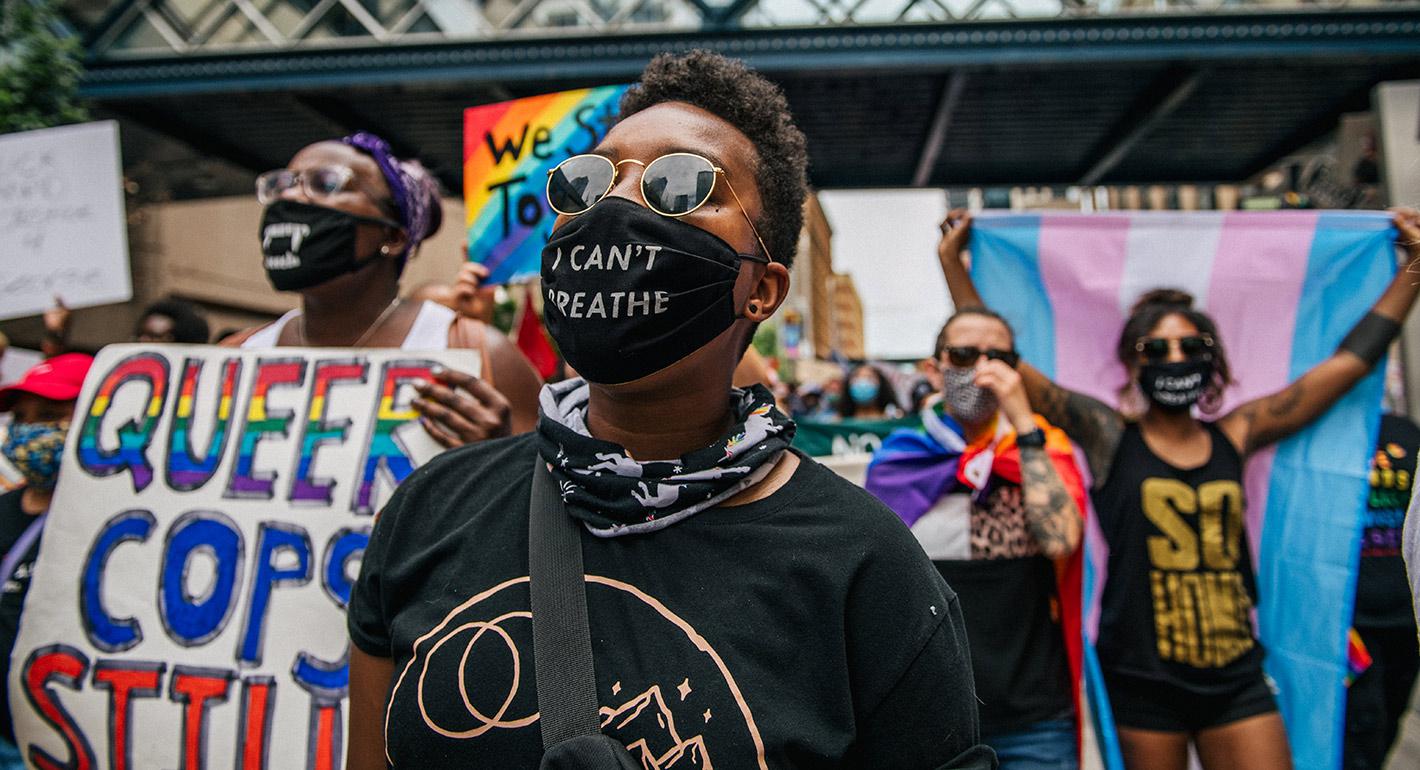
Yet the most recent update to the Global Protest Tracker reveals that, despite the seemingly unfavorable conditions for protests, mass demonstrations have begun to return at a notable rate and scale in the past month. In the United States, hundreds of thousands of people in over 2,000 localities across the country have protested the killing of Black Americans like George Floyd and Breonna Taylor by police officers. The wave of public grief and fury marks a level of participation exceeding that of previous U.S. protests against police brutality—or of any protests during the pandemic so far.
The protests have also reverberated beyond U.S. borders. At least sixteen countries—ranging from the UK and France to Australia, Brazil, Japan, Kenya, and South Africa—have seen major demonstrations over police violence against Black or minority populations and related issues, such as systemic racism and the legacies of colonial empires. In France and South Africa in particular, the pandemic has served to only crystallize the problem of police brutality: authorities enforcing lockdown regulations have disproportionately used force against Black citizens.
But new protests are also breaking out for reasons other than police violence and racism. Some are rooted in how governments have responded to the pandemic. Thousands of citizens in Brazil have protested against President Jair Bolsonaro’s pandemic response that has downplayed the virus’s danger and undermined quarantine and social distancing measures introduced at the state level. Currently, Brazil has the second-highest death toll from COVID-19 of any country. In Israel, citizens have protested against several of Prime Minister Benjamin Netanyahu’s decisions during the pandemic, such as the government’s shuttering of the courts and adjournment of the Knesset for two months, the deployment of a digital surveillance program to identify individuals potentially infected with the coronavirus, and more recent plans to annex parts of the West Bank.
Elsewhere, the pandemic’s economic repercussions have incited popular outrage. Lebanon has performed relatively well in managing the pandemic in public health terms, but citizens have demonstrated as preexisting problems of high poverty, currency devaluation, and skyrocketing debt continue to worsen. Ecuador, which faces one of the highest per-capita death rates from COVID-19 among developing nations, recently saw thousands protest against the government’s decision to close some state-owned companies and cut public sector salaries, in an effort to close a gaping $12 billion budget deficit.
Other protests are driven by unresolved issues that were boiling over even before the pandemic began. Citizens in Iraq have resumed protests over corruption, high unemployment, and the violent repression of protesters, with demonstrators in central and southern Iraq clamoring for the removal of governors who they deem to be corrupt. In Mali, tens of thousands have demanded the resignation of President Ibrahim Boubacar amid persistent intercommunal violence compounded by economic stagnation, a dearth of political reforms, and widespread government corruption.
The global wave of protests that the pandemic interrupted now shows signs of returning. As the pandemic reignites existing grievances and creates new drivers of citizen discontent, governments around the world should brace for increasing sociopolitical turbulence in the months ahead.


Harvey V. Fineberg Chair for Democracy Studies; Senior Fellow, Democracy, Conflict, and Governance Program
Thomas Carothers, a senior fellow in the Carnegie Endowment for International Peace’s Democracy, Conflict, and Governance Program, is a leading expert on comparative democratization and international support for democracy.
David Wong
Former James C. Gaither Junior Fellow, Democracy, Conflict, and Governance Program
David Wong was a James C. Gaither Junior Fellow with the Democracy, Conflict, and Governance Program.
Carnegie does not take institutional positions on public policy issues; the views represented herein are those of the author(s) and do not necessarily reflect the views of Carnegie, its staff, or its trustees.

The EU can impose sanctions but struggles to enforce them without the United States. With Washington increasingly disinterested in backing European interests, the bloc must now fend for itself.


Nicu Popescu, Tiago Antunes

Ahead of a tough winter for Ukraine, Donald Trump’s swing back toward Russia bodes ill. But instead of panicking, Kyiv’s European allies are focusing on action.

Rym Momtaz

While the EU and European governments are embracing the much-lauded middle-power moment, this entails three difficult conundrums.

Richard Youngs

Europe is facing rising populism internally as well as external pressures from Russia, China, Turkey, and the United States.

Dimitar Bechev

A notable degree of participative democracy has firmly arrived in Europe. But to have more far-reaching impact, democratic deliberation needs to move into a radically new phase.
Richard Youngs