

Paper
George Perkovich
{
  "authors": [
    "George Perkovich"
  ],
  "type": "other",
  "centerAffiliationAll": "dc",
  "centers": [
    "Carnegie Endowment for International Peace"
  ],
  "collections": [
    "U.S. Nuclear Policy"
  ],
  "englishNewsletterAll": "ctw",
  "nonEnglishNewsletterAll": "",
  "primaryCenter": "Carnegie Endowment for International Peace",
  "programAffiliation": "NPP",
  "programs": [
    "Nuclear Policy"
  ],
  "projects": [],
  "regions": [
    "North America",
    "United States",
    "East Asia",
    "Japan"
  ],
  "topics": [
    "Nuclear Policy",
    "Arms Control"
  ]
}
Source: Getty
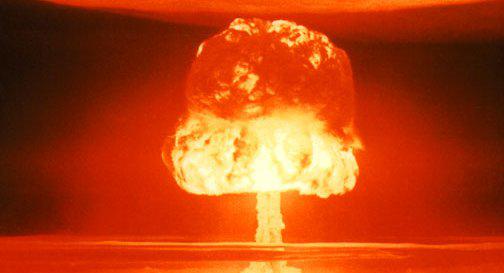
Seventy-five years ago, U.S. nuclear weapons devastated Hiroshima and Nagasaki. For individual human beings, 75 years signals nearness to the end of life. But for the nuclear age, does this anniversary mark the beginning, the middle, or the end?
Source: War On The Rocks
Seventy-five years ago, U.S. nuclear weapons devastated Hiroshima and Nagasaki. For individual human beings, 75 years signals nearness to the end of life. But for the nuclear age, does this anniversary mark the beginning, the middle, or the end?
There are two dramatic ways in which the nuclear age could end: annihilation or disarmament. If one ending is undesirable and the other unachievable, leaders should prolong life with nuclear weapons by making their use much less likely and reducing their destructiveness in case they are used. Clearer adherence to the law of armed conflict and greater understanding of the climatic effects of nuclear war would serve both purposes.
Annihilation could come through war involving arsenals that devastated not only the societies of the belligerent countries, but also the agricultural productivity and economic markets on which many other nations depend. Some nations would survive, and some could retain nuclear weapons or ambitions to acquire them, but for the purposes of marking epochs, we could say that the first nuclear age would have ended.
Nuclear disarmament is a much happier prospect. This is one reason that many in Japan and other countries advocate it and support the 2017 Treaty on the Prohibition of Nuclear Weapons. However, the treaty does not detail how nuclear disarmament would be defined, achieved over time, verified, and enforced. Nor have the nine nuclear-armed states done so, even though the Nuclear Non-Proliferation Treaty obligates the United States, Russia, the United Kingdom, France, and China “to pursue negotiations in good faith on effective measures” to end the nuclear arms race and achieve nuclear disarmament. (The Lawrence Livermore National Laboratory’s Center for Global Security Research just published a monograph by Toby Dalton and me that maps quandaries a disarmament regime would need to solve, “Thinking the Other Unthinkable: Disarmament in North Korea and Beyond.”)
This commentary was originally published by War On The Rocks.

Japan Chair for a World Without Nuclear Weapons, Senior Fellow
George Perkovich is the Japan Chair for a World Without Nuclear Weapons and a senior fellow in the Carnegie Endowment for International Peace’s Nuclear Policy Program. He works primarily on nuclear deterrence, nonproliferation, and disarmament issues.
Recent Work
George Perkovich
George Perkovich
Carnegie does not take institutional positions on public policy issues; the views represented herein are those of the author(s) and do not necessarily reflect the views of Carnegie, its staff, or its trustees.

The new U.S.–Denmark–Greenland agreement will help Washington exert political, economic, and financial dominance under the guise of security. Yet, it acknowledged Copenhagen’s and Nuuk’s sovereignty on the island.

Marc Pierini

European Commission President Ursula von der Leyen is about to give her annual address on the state of the EU. Here’s what she won’t—but should—say.

Rym Momtaz

Radical-right parties are expected to do well in upcoming elections in four of the EU's biggest member states. If successful, they could prevent the union from addressing key challenges ahead.

Stefan Lehne

Canadian Prime Minister Mark Carney has twice inspired praise for standing up to U.S. President Donald Trump: at the 2026 World Economic Forum in Davos and on Canada-U.S. trade negotiations. Is Carney showing a third way better than the EU has in dealing with the Trump administration?
Rym Momtaz, ed.

European states control several Overseas Countries and Territories around the world that carry strategic, economic, and environmental weight. As great powers challenge the rules-based order, defending them is a geopolitical imperative for Europe.
Marc Pierini