

Commentary
While the EU and European governments are embracing the much-lauded middle-power moment, this entails three difficult conundrums.
Richard Youngs
{
  "authors": [
    "Pranay Vaddi",
    "Adam Mount"
  ],
  "type": "legacyinthemedia",
  "centerAffiliationAll": "dc",
  "centers": [
    "Carnegie Endowment for International Peace"
  ],
  "collections": [
    "U.S. Nuclear Policy"
  ],
  "englishNewsletterAll": "ctw",
  "nonEnglishNewsletterAll": "",
  "primaryCenter": "Carnegie Endowment for International Peace",
  "programAffiliation": "NPP",
  "programs": [
    "Nuclear Policy"
  ],
  "projects": [],
  "regions": [
    "North America",
    "United States"
  ],
  "topics": [
    "Democracy",
    "Nuclear Policy"
  ]
}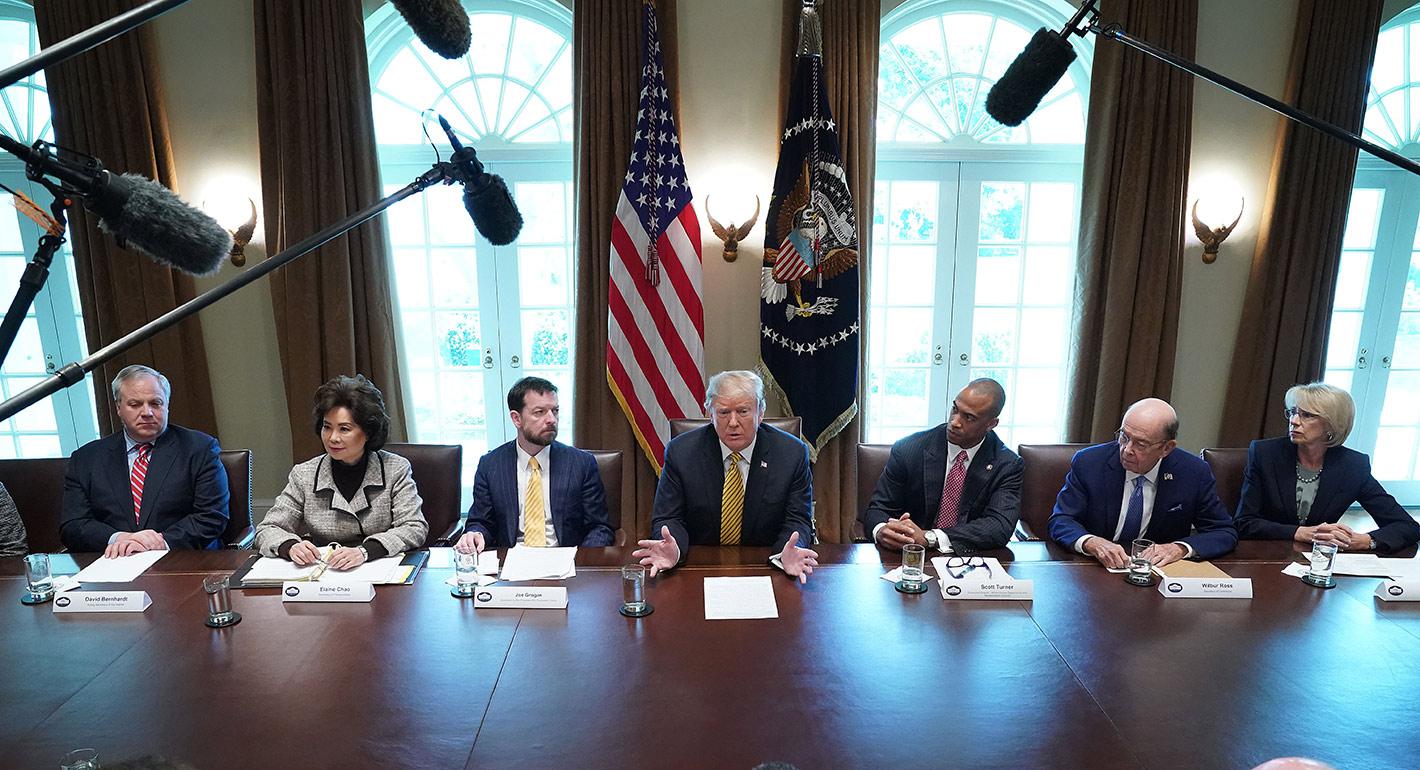
Source: Getty
As long as the order can be certified as coming from the president, and as long as military officials involved in implementing the decision do not object to the order as violating the law of armed conflict, U.S. forces are expected to carry out the order.
Source: Lawfare Blog
Over the past four years, many Americans have been surprised to learn that a U.S. president can order a nuclear strike at a moment’s notice without the approval of any other official. Though the president might be expected to consult with top military advisers, Congress or U.S. intelligence, there is no requirement that he or she do so. As long as the order can be certified as coming from the president, and as long as military officials involved in implementing the decision do not object to the order as violating the law of armed conflict, U.S. forces are expected to carry out the order.
Several members of Congress and experts have offered proposals to revise nuclear authorization procedures to require the approval of additional officials prior to the release of nuclear weapons. This would be an important step in improving the system, but it does not exhaust the changes needed to ensure the system serves U.S. interests. If and when the United States revises its policies on nuclear use authority, it should also address two other outstanding issues: ensuring that procedures are in place for the president to consult with the leaders of allied countries prior to ordering a nuclear operation that would affect them and reviewing the process by which the military would assess the legality of nuclear operations under the law of armed conflict.
Former Fellow, Nuclear Policy Program
Pranay Vaddi was a fellow in the Nuclear Policy Program at the Carnegie Endowment for International Peace.
Adam Mount
Adam Mount is a nonresident senior fellow at the Federation of American Scientists.
Carnegie does not take institutional positions on public policy issues; the views represented herein are those of the author(s) and do not necessarily reflect the views of Carnegie, its staff, or its trustees.

While the EU and European governments are embracing the much-lauded middle-power moment, this entails three difficult conundrums.

Richard Youngs

Europe is facing rising populism internally as well as external pressures from Russia, China, Turkey, and the United States.

Dimitar Bechev

A notable degree of participative democracy has firmly arrived in Europe. But to have more far-reaching impact, democratic deliberation needs to move into a radically new phase.
Richard Youngs

European NATO countries are wrestling with the possibility of U.S. disengagement from the alliance. With the continent’s security increasingly uncertain, governments must restore the credibility of their collective defense.



Hans-Dieter Lucas, Adam Thomson, Pierre Vimont

The domestic impacts of how long it is taking to end the war in Ukraine have pushed the French electorate to the political extremes and compromised the country’s diplomatic capacity.

Rym Momtaz