• Research
  • Strategic Europe
  • About
  • Experts
Carnegie Europe logoCarnegie lettermark logo
EUUkraine
  • Donate
{
  "authors": [
    "Zainab Usman",
    "Olumide Abimbola",
    "Imeh Ituen"
  ],
  "type": "other",
  "centerAffiliationAll": "dc",
  "centers": [
    "Carnegie Endowment for International Peace"
  ],
  "collections": [
    "Climate Change"
  ],
  "englishNewsletterAll": "ctw",
  "nonEnglishNewsletterAll": "",
  "primaryCenter": "Carnegie Endowment for International Peace",
  "programAffiliation": "SCP",
  "programs": [
    "Sustainability, Climate, and Geopolitics",
    "Africa"
  ],
  "projects": [],
  "regions": [
    "Southern, Eastern, and Western Africa",
    "North America"
  ],
  "topics": [
    "Climate Change"
  ]
}
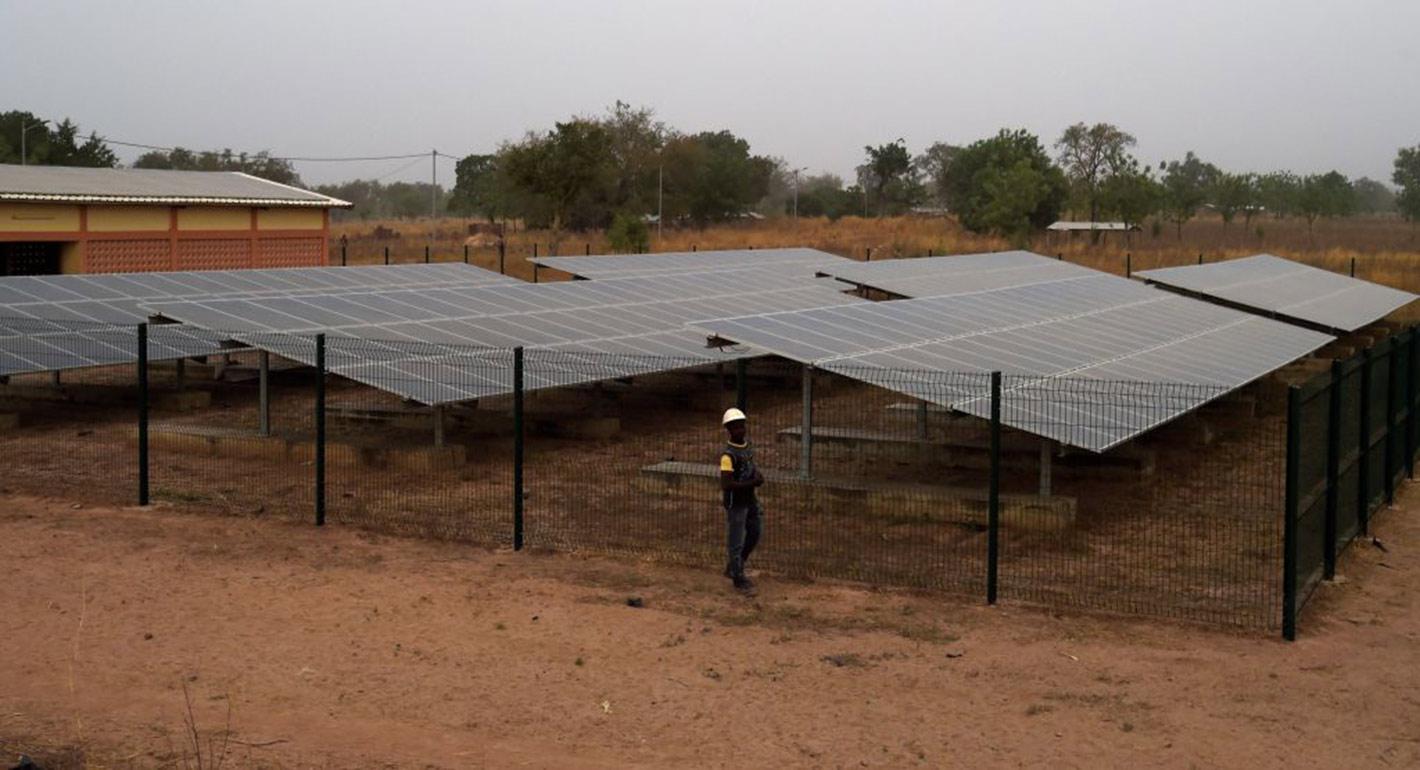
Source: Getty

Other

Navigating the Opportunities and Risks of the European Green Deal for Africa

The European Green Deal is mainly a collection of internal EU policy instruments, yet its potential impacts will reach African countries. Such effects will be felt in the market for agriculture, fossil fuels, and other natural resources.

Link Copied
By Zainab Usman, Olumide Abimbola, Imeh Ituen
Published on Oct 20, 2021

On July 14, 2021, the European Commission adopted a set of proposals that constitute the European Green Deal (EGD). The EGD is a set of policy initiatives that define the EU’s climate strategy and that aims to make Europe a first mover in international climate policy. Its central objective is to reduce the EU’s net greenhouse gas emissions by at least 55 percent from 1990 levels by 2030. Toward this goal, the EGD provides a road map to a low-carbon future and the building blocks for a green economic growth strategy.

The EGD’s potential global spillovers will reach Africa in view of the strong economic and historical ties between both continents. Opportunities and risks of the EGD for African countries abound in at least seven areas: agriculture, biodiversity, energy, critical raw materials (CRMs), circular economy, new technologies, and finance.1

Recommendations for EU Policymakers

  1. Forge genuine partnerships in sourcing CRMs and energy supplies from Africa by building industrial capacity, localizing value chains, and sharing technologies. Clean energy hardware industries, like battery and solar photovoltaic manufacturing plants, can be set up in mineral-rich countries, like the Democratic Republic of the Congo, as the EU shifts from Chinese supply chains.
  2. Align areas of the EGD that directly affect Africa with the continent’s own stated development priorities. These African priorities are outlined in continent-wide, sub-regional, or domestic policy documents. These include the AU’s Comprehensive African Agricultural Development Program on agroecological threats, adaptation of new standards and Pan-African Agenda on Ecosystem Restoration for Increased Resilience on protecting biodiversity, and the Africa Mining Vision on mineral resources. Overall, Europe should not use its financial muscle or technological standards to impose its foreign policy and geopolitical interests at the expense of Africa’s own development aspirations.
  3. Match the EU’s stated principles around sustainability with actual volumes of climate financing to Africa. This climate financing should be separated from official development assistance and provided either as grants or at highly concessional rates to avoid saddling poor countries with unsustainable debt. The financing should also be rebalanced from its current heavy focus on climate mitigation toward climate adaptation and resilience.

Recommendations for African Policymakers

To tap into the opportunities presented by the EGD and mitigate potential risks, African countries must clearly articulate and assert their own climate transition agendas. They should, individually and collectively, outline their own climate change priorities, considering their resource endowments, historical legacies, development strategies, and geopolitical interests while also presenting clear demands of the EU around specific aspects of the EGD. These transition agendas could include the following:

  1. Update geological surveys of their endowments of fossil fuels, CRMs, and renewable resources to help attract FDI. Resource mapping will help position African countries to capture some market share for green hydrogen supplies to Europe and an estimated 75.6 billion euros ($90 billion) worth of investments.
  2. Strengthen market-creating instruments by updating local content laws, policies, and regulations to reflect the low-carbon transition and to cover the specificities of CRMs. This should aim to achieve, among other objectives, knowledge, skills, and technology transfer; the localization of jobs; and forward and backward linkages to the rest of the economy.
  3. Work closely with local private sectors to leverage new financial instruments emerging in the context of the EGD toward jobs creation, skills upgrading, technology adoption, and investments in R&D to power local innovation.
  4. Develop their own overarching climate action strategy by finalizing the African Union’s climate action plan; updating sector-specific strategies in areas such as mining, biodiversity, the circular economy, and agriculture; and developing common positions at global fora on managing the energy transition, especially the various aspects of the oncoming fossil fuel obsolescence in Europe.

Knowledge Gaps for Research Communities

  1. Generate better data and conducting in-depth forecasting. This would entail quantifying and modeling the EGD impacts at continent-wide, sub-regional, and country levels toward helping policymakers understand what is at stake. Specific topics can include modeling CBAM impacts on agriculture, oil and gas, and merchandise exports from African countries to the EU; generating better data on climate financing; and quantifying changes to investment flows in hydrocarbons and CRM projects due to shifting European demand.
  2. Conceptualize a just transition for Africa. African scholars and decisionmakers should design a just climate transition attuned to the continent’s own realities to provide a framework for domestic policies and relations with external partners like the EU. Such a conceptualization would marry Africa’s development needs around quality jobs, sustained growth, economic transformation as well as addressing climate change.
  3. Avoid new technology dependencies. Extensive research is needed to examine how to avoid replicating the technology dominance and dependency of the oil and gas era, especially around hydrogen and CRMs.
  4. Advocate for transparency on the allocation of EU climate financing. More information is needed on how the EU will allocate climate financing across industries, sectors, and countries in comparison to commitments under the 2015 Paris Agreement. In-depth assessments of the risks and opportunities of Eurobonds for African countries will also be necessary, and how to de-risk African economies to attract investments in decarbonized gas projects and green hydrogen, among others.

Conclusion

The EGD is mainly a collection of internal EU policy instruments, yet its potential impacts will reach African countries. Such effects will be felt in the market for agriculture, fossil fuels, and other natural resources. The impacts will also occur through the channels of Europe’s financial muscle, technologies, and standards. Yet, no outcome is predetermined. In fact, the transition envisioned in the EGD offers the promise of overhauling EU-Africa relations from donor-recipient orientation of the past toward a mutually beneficial partnership in the twenty-first century if the right steps are taken now.

Notes

1 These recommendations are drawn from “What Does the European Green Deal Mean for Africa?,” Carnegie Endowment for International Peace, October 18, 2021, https://carnegieendowment.org/org/2021/10/18/what-does-european-green-deal-mean-for-africa-pub-85570.

About the Authors

Zainab Usman

Former Director, Africa Program

Zainab Usman was a senior fellow and the inaugural director of the Africa Program at the Carnegie Endowment for International Peace.

Olumide Abimbola

Olumide Abimbola is executive director of the Africa Policy Research Institute in Berlin.

Imeh Ituen

Imeh Ituen is a research associate in the Faculty of Business, Economics, and Social Sciences at the University of Hamburg.

Authors

Zainab Usman
Former Director, Africa Program
Zainab Usman
Olumide Abimbola

Olumide Abimbola is executive director of the Africa Policy Research Institute in Berlin.

Imeh Ituen

Imeh Ituen is a research associate in the Faculty of Business, Economics, and Social Sciences at the University of Hamburg.

Climate ChangeSouthern, Eastern, and Western AfricaNorth America

Carnegie does not take institutional positions on public policy issues; the views represented herein are those of the author(s) and do not necessarily reflect the views of Carnegie, its staff, or its trustees.
More Work from Carnegie Europe

  • Commentary
    Can Europe and Africa Mend Fences?

    Despite the strategic importance of relations between the EU and the African Union, deep divisions remain between the blocs. At their upcoming summit, both partners should strive to build a mutually beneficial cooperation.

      Marta Martinelli

  • Commentary
    Strategic Europe
    Taking the Pulse: Has Europe Given Up its Leadership on Climate Change?

    COP30 takes place amidst increased pessimism about the world’s commitment to energy transition and ecological protection. Beset by a host of other challenges, can Europe still maintain its role as a driver of global climate action?

      Thomas de Waal

  • Commentary
    Strategic Europe
    How the EU’s Global Gateway Can Compete in the Global South

    In competition with China’s Belt and Road Initiative, the Global Gateway strategy needs to find an edge. To better promote its interests through investment, the EU’s offer must become more coherent, transparent, and accountable.

      Ceren Ergenc, Chaofan Yu

  • Commentary
    Five Pillars for Europe in the Second Trump Era

    The second Trump administration has shifted the cornerstones of the liberal international order. How the EU responds will determine not only its global standing but also the very integrity of the European project.

      • Rym Momtaz

      Rym Momtaz

  • A row of large green trackors drive on a road made for cars. There is a block of apartment buildings in the background
    Article
    Confronting Backlash Against Europe’s Green Transition

    Greenlash is driven by an increasingly diverse set of actors. It is also prompting groups in favor of ambitious climate action to seek more effective strategies.

      Erin Jones, Richard Youngs

Get more news and analysis from
Carnegie Europe
Carnegie Europe logo, white
Rue du Congrès, 151000 Brussels, Belgium
  • Research
  • Strategic Europe
  • About
  • Experts
  • Projects
  • Events
  • Contact
  • Careers
  • Privacy
  • For Media
  • Gender Equality Plan
Get more news and analysis from
Carnegie Europe
© 2026 Carnegie Endowment for International Peace. All rights reserved.