

Commentary
Maha Yahya
{
  "authors": [
    "Maha Yahya"
  ],
  "type": "other",
  "centerAffiliationAll": "dc",
  "centers": [
    "Carnegie Endowment for International Peace",
    "Malcolm H. Kerr Carnegie Middle East Center"
  ],
  "collections": [],
  "englishNewsletterAll": "menaTransitions",
  "nonEnglishNewsletterAll": "",
  "primaryCenter": "Malcolm H. Kerr Carnegie Middle East Center",
  "programAffiliation": "MEP",
  "programs": [
    "Middle East"
  ],
  "projects": [],
  "regions": [
    "Middle East",
    "North Africa"
  ],
  "topics": [
    "Political Reform"
  ]
}
Source: Getty
By declaring the end of SykesPicot, the Islamic State was positioning itself as a force that was reuniting the region under the banner of Islam—symbolism that could resonate with many across the Arab world.
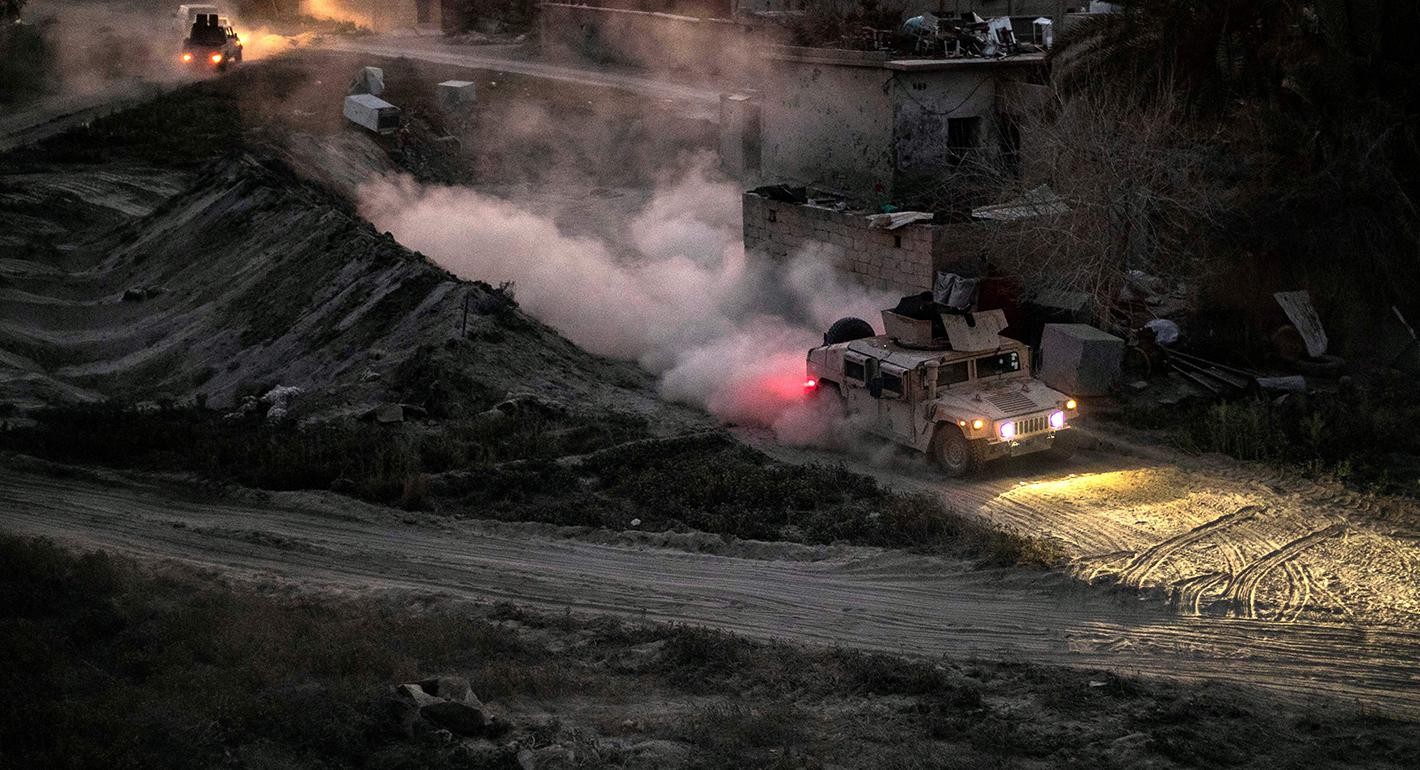
In 2014, Islamic State fghters stationed at a border crossing between Iraq and Syria declared the end of the Sykes-Picot agreement of 1916, which had defned spheres of infuence in the Levant, primarily between Britain and France.1 It was lost on the fghters that the agreement never drew specifc borders. In popular Arab and international interpretations of Sykes-Picot, the agreement divided the Arab world, and the Muslim community, into multiple, unnatural entities.2 By declaring the end of SykesPicot, the Islamic State was positioning itself as a force that was reuniting the region under the banner of Islam—symbolism that could resonate with many across the Arab world.
What was as interesting was where the declaration took place, namely, on a boundary that had once been among the most policed in the region. That both Syria and Iraq had lost control of their border regions only illustrated the seismic transformations that the region has undergone in the last two decades, especially after the invasion of Iraq in 2003 and the Arab uprisings starting in 2011. And while the Islamic State was ultimately repelled, the governance and socioeconomic challenges of the centralized states of the Middle East and North Africa persist and are often best revealed in their border areas.
To understand where many of these countries stand today, one has only to look at their peripheries. These are places where the sovereignty and authority of states is being transformed, the political legitimacy of their ruling elites are being questioned, and economic orders are being reshaped. However, alongside the elements of change, there is also continuity across the region, which include the durability of states, and even of regimes, and their borders. As Louise Fawcett has written, while state sovereignty is being contested at multiple levels throughout the region, “continuitystate (even regime) survival and border preservation—is likely to prevail over major change.”3
As elsewhere, Middle Eastern and North African states are the product of multiple dynamics at the subnational, national, regional, and global levels. The impact of colonialism, for example, has varied among countries in quite signifcant ways. However, colonialism did contribute to creating “incomplete, distorted versions of European modern states,” which were then “shaped and reshaped by indigenous elites as they sought to transform and control the societies they came to govern.”4
After independence, most states in the Middle East and North Africa tended to focus on developing their capitals and surrounding areas as the locus of state power. Whether it is Lebanon, Tunisia, Syria, Kuwait, Yemen, or Iraq, the consolidation of authority in the new states was accompanied by the subordination of peripheral regions to the interests of the center and its political and economic elites.5 Regions that had once been well integrated into regional networks of trade and exchange suddenly found themselves on the margins of modern states, their communications lines cut off by new national borders.
As Arab states developed, their leaders came to govern through increasingly despotic methods. As Robert Springborg has argued, republics, and to a lesser degree monarchies, put in place “deep states” that undermined governmental institutions upon which effective governance and rule of law rested. Instead, they expanded their security apparatus and revamped educational systems in keeping with their respective ideologies and privileged repression and patronage at the expense of inclusive economic development.6
Cronies and Contraband: Why Integrating Tunisia’s Informal Economic Elite Has Become Necessary
North Pacific: Why Lebanon’s Akkar Region Weathered the Syrian Conflict
Transnationalization of a Borderland: Center, Periphery, and Identity in Western Iraq
How Syria’s War Extended Border Policies to Much of the Country
Hadramawt’s Emergence as a Center: A Confluence of Yemeni Circumstances and Hadrami Resourcefulness
The Center Gives: Southern Syria and the Rise of New Peripheral Powerbrokers
On the Edge: How Risks from Iraq Have Helped Form Kuwaiti Identity

Director, Malcolm H. Kerr Carnegie Middle East Center
Maha Yahya is director of the Malcolm H. Kerr Carnegie Middle East Center, where her research focuses on citizenship, pluralism, and social justice in the aftermath of the Arab uprisings.
Recent Work
Maha Yahya
Maha Yahya
Carnegie does not take institutional positions on public policy issues; the views represented herein are those of the author(s) and do not necessarily reflect the views of Carnegie, its staff, or its trustees.

As the EU confronts profound challenges, several leaders have called for fundamental reform to the union’s model—but only modest, superficial changes have resulted. What if Europe really could be reimagined from zero today: What should such a redesigned European order look like?

Richard Youngs, ed.

The EU’s new migration policy is not suited to today’s realities. With climate change increasingly becoming a driver of displacement, Europe needs to rethink its deterrence-focused approach.

Shana Tabak
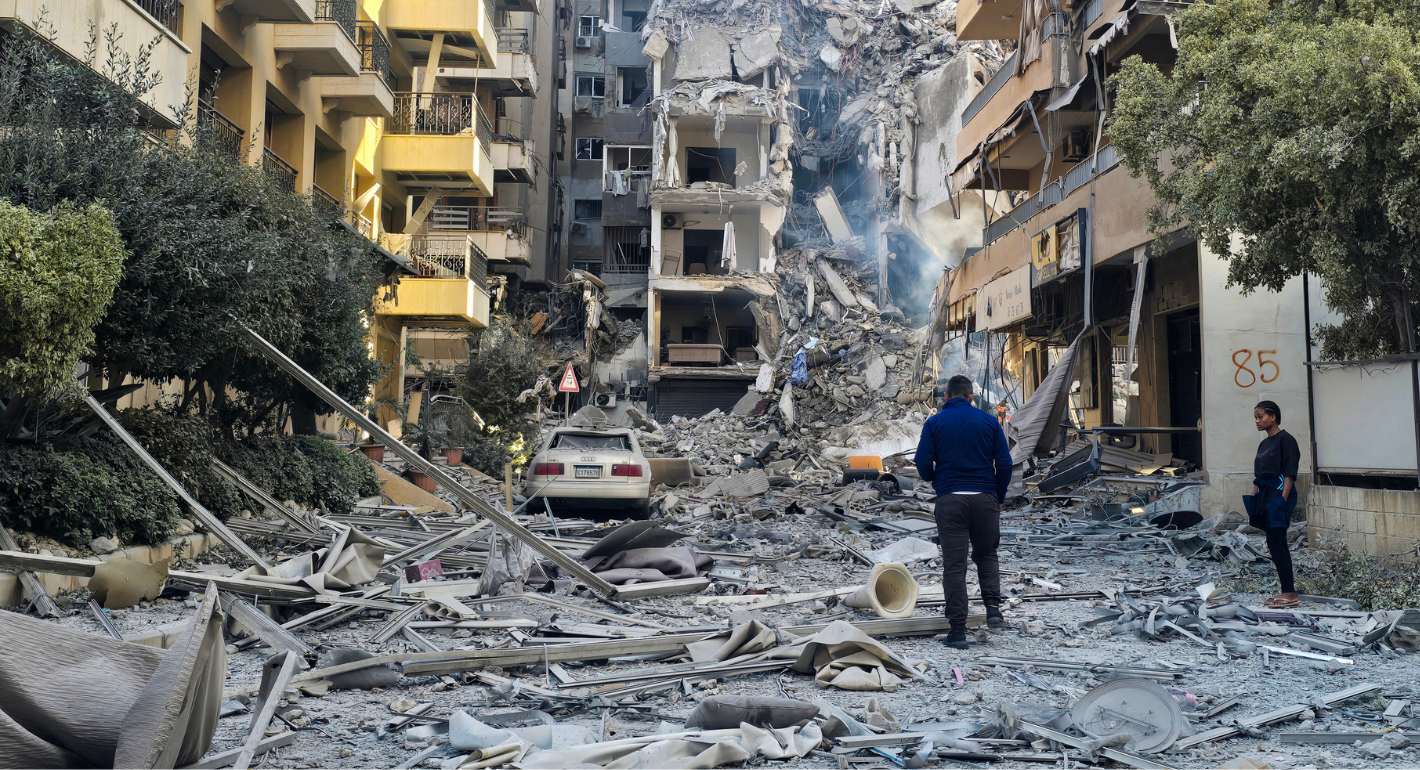
Europe seems to have accepted its sidelining in the Middle East. The EU must reassert its support for the international rules-based order and step up engagement.

Rym Momtaz
Preparing candidate countries for EU membership is no longer enough. As the enlargement process becomes a reality, the union must also prepare its own societies.

Iliriana Gjoni
Countries face several hurdles in joining the EU, including the final stage of ratifying their accession treaties. Procedural reforms and substantive adjustments could help move the process forward.

Stefan Lehne