

Other
Michael D. Swaine

Source: Carnegie
Reprinted with permission from National Bureau of Asian Research
Foreword
The proliferation of ballistic missiles and related technologies in Asia is a growing concern, both within the region and for the United States. Despite the May 2002 historic agreement between Russia and the United States to reshape the global strategic environment by slashing the numbers of deployed nuclear warheads and proceeding with plans for missile defense systems, U.S. policymakers must continue to pay close attention to activities and mechanisms that will prevent proliferation of ballistic missiles. Asia provides striking examples of the complex interactions between ballistic missile development programs, plans for missile defense systems, and the proliferation of missiles and weapons of mass destruction within and beyond the region. The development of these capabilities has increased the severity of the threats that exist in several potential flashpoints within the region?between India and Pakistan, China and Taiwan, and North and South Korea (and Japan)?as well as to forward-deployed U.S. forces in Asia and even to the United States itself. Moves to counter this threat with missile defense, and the possible development and deployment of theater missile defense capabilities by U.S. friends and allies, have the potential to improve the security environment by reducing the attractiveness of ballistic missiles, or to challenge it by prompting some states to accelerate their missile programs in an attempt to overcome such defensive systems.
In this issue of the NBR Analysis, Dr. Michael D. Swaine, senior associate and codirector of the China Program at the Carnegie Endowment for International Peace, with assistance from Loren H. Runyon, senior intern at NBR, outlines the ballistic missile capabilities and development programs of various Asian states. He examines the role of ballistic missiles in each state?s force structure, strategy, and doctrine, and considers the reactions of each to proposals for U.S. national missile defense and possible regional theater missile defense systems. Dr. Swaine concludes that these developments have significant implications for the Asian security environment and for U.S. political and military interests over the course of the next decade.
Dr. Swaine begins with a detailed examination of the ballistic missile holdings and development programs of the thirteen Asian states that already possess such capabilities (or, as in the case of Japan, that are able to develop such capabilities relatively quickly). Of particular concern are China?s deployment of greater numbers of short-range missiles across the strait from Taiwan, which, he argues, might increase Beijing?s willingness to use force in a crisis over the island, and the ability of Pyongyang to strike targets in Japan in the event of renewed hostilities on the Korean Peninsula?a capability it did not possess during the 1950?53 Korean War. Moreover, the rapid development of ballistic missiles and WMD in both India and Pakistan has greatly increased the risk of a dangerous escalation of any conflict between the South Asian neighbors. Dr. Swaine then assesses ballistic missile transfers among and from Asian states, highlighting the role that countries like China, North Korea, and to a lesser extent Pakistan (and India) have or are likely to play. He warns that proliferation of missiles and related technologies might increase the likelihood that additional states, and also non-state actors such as terrorists, will acquire ballistic missile and WMD capabilities.
Dr. Swaine concludes with an examination of the probable reactions of various Asian states to ballistic missile defense efforts that are currently under research and development. Although such systems may reduce the vulnerabilities and threats arising from ballistic missiles, and even reduce incentives to deploy or proliferate missiles, he argues that missile defense systems are as likely to complicate or exacerbate the threat posed by ballistic missiles?as potential adversaries might attempt to overwhelm missile defense systems through expansion of their missile development programs, or to neutralize missile defense by launching pre-emptive strikes before such systems are fully in place. He urges U.S. policymakers to consider carefully the impact of the planned U.S. national missile defense system on the security environment in Asia.
Dr. Swaine?s paper?a shorter and earlier version of which was published as a chapter in Strategic Asia 2001?02: Power and Purpose?adds new dimensions to themes addressed in previous issues of the NBR Analysis, such as Ashley Tellis?s ?India?s Emerging Nuclear Doctrine? (May 2001) and Michael Green and Toby Dalton?s ?Asian Reactions to U.S. Missile Defense? (November 2000) by further explicating and assessing the development of ballistic missiles and WMD in Asia.
We are very grateful to the Center for Nonproliferation Studies at the Monterey Institute of International Studies and the U.S. Department of Energy for supporting this study, and to the Henry M. Jackson Foundation for its support to The National Bureau of Asian Research. As with all NBR Reports, the author is solely responsible for the content and recommendations of this paper.
Richard J. Ellings President The National Bureau of Asian Research

Former Senior Fellow, Asia Program
Swaine was a senior fellow at the Carnegie Endowment for International Peace and one of the most prominent American analysts in Chinese security studies.
Recent Work
Michael D. Swaine
Michael D. Swaine
Carnegie does not take institutional positions on public policy issues; the views represented herein are those of the author(s) and do not necessarily reflect the views of Carnegie, its staff, or its trustees.

European states control several Overseas Countries and Territories around the world that carry strategic, economic, and environmental weight. As great powers challenge the rules-based order, defending them is a geopolitical imperative for Europe.

Marc Pierini

As the EU confronts profound challenges, several leaders have called for fundamental reform to the union’s model—but only modest, superficial changes have resulted. What if Europe really could be reimagined from zero today: What should such a redesigned European order look like?

Richard Youngs, ed.
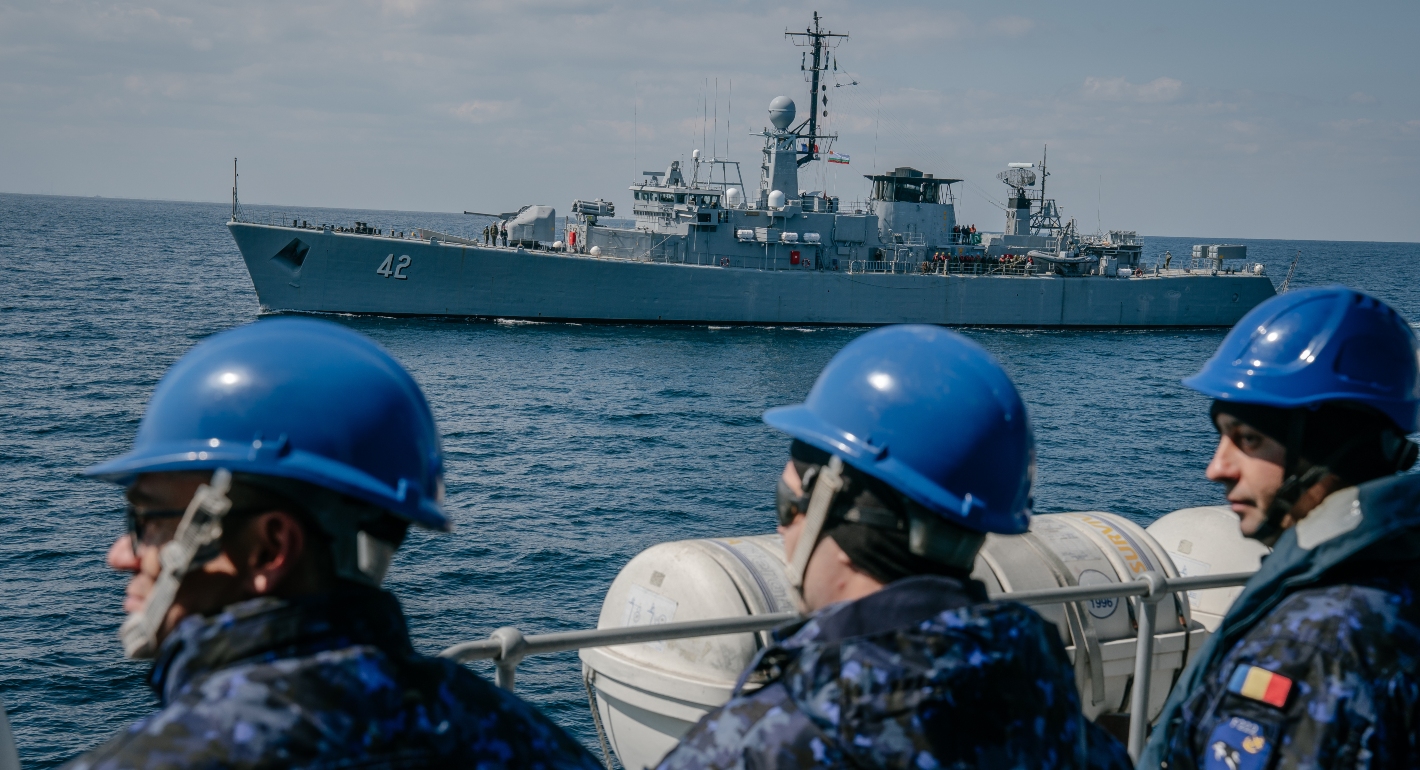
As Russia's war on Ukraine drags on, NATO is expanding its footprint in the Black Sea. Turkey, Romania, and Bulgaria are upgrading their fleets and deepening trilateral cooperation.

Dimitar Bechev
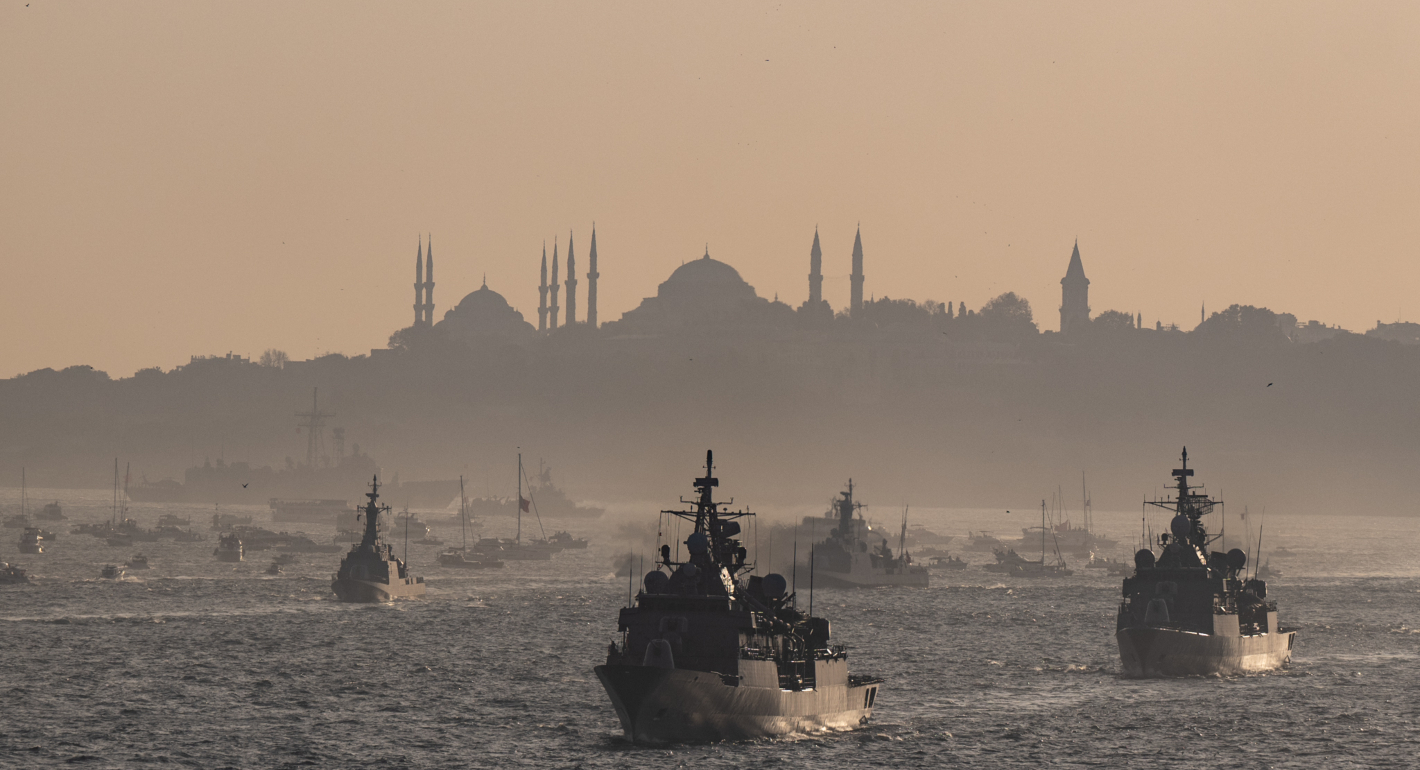
For ninety years, Turkey has been positioned as the principal gatekeeper of Black Sea security. As a result, European and NATO efforts to support Ukraine will require closer engagement with Ankara.

Thomas de Waal

Defense tech innovations will be at the heart of Europe’s new security strategy. But so far, Brussels has been making moves without a broader plan, undermining readiness and credibility.

Raluca Csernatoni