

Commentary
Evan A. Feigenbaum
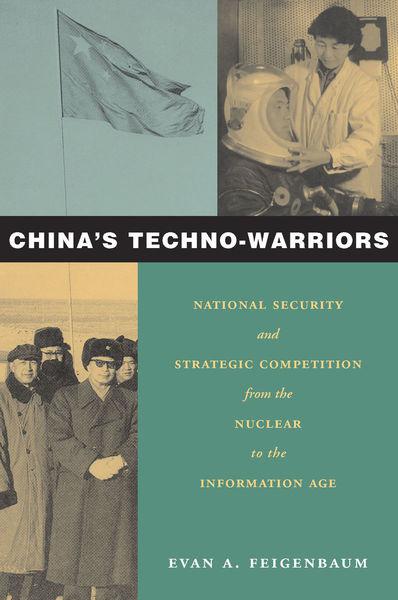
This book tells the story of how and why the Chinese military came to play such a powerful role in China’s economic and institutional development.
Source: Stanford University Press
In the spring of 1987, the father of China’s strategic missile program, Qian Xuesen, told colleagues that China must steel itself for a century of sustained “intellectual warfare.” His use of a military metaphor was not a linguistic quirk, but reflected the central role of the military in China’s emergence as a modern state, especially in the period since the establishment of the People's Republic of China in 1949. Over the course of the Communist era, a uniquely military approach to China's development became embedded in the ideologies of the country's political leadership, in policy choices about national security and economic development, and in the organizational solutions adopted to put these policies into practice.
This book tells the story of how and why the Chinese military came to play such a powerful role in China's economic and institutional development. It weaves together four stories: Chinese views of technology since 1950, the role of the military in China’s political and economic life, the evolution of open and flexible conceptions of public management in China, and the technological dimensions of the rise of Chinese power.
But the book primarily explores and explains a paradox. This military approach to technology and development emerged during China's period of greatest external threat, 1950-69. Yet these policies and management methods persist even as China enjoys perhaps its most benign strategic environment since the 1840s.
"China's Techno-Warriors is an exceptionally well written volume, whose lively literacy helps turn a doctoral dissertation into an informative and meaningful interpretation of the broad course of China's pursuit of high-technology development from the early years of the People's Republic to the present."
—China Business Review
"[P]acked with solid information and exceptional insights. Feigenbaum's [book] is a masterful review of how military considerations have dominated the development of science and technology in China."
—Foreign Affairs
"Students of Chinese technical and scientific development owe Feigenbaum a debt of gratitude for so richly constructing the story of China's strategic-technology planners and their organizational and institutional impact."
—Journal of Asian Studies
"This is a wonderfully multi-dimensional book on a subject about which little has been written. It has the added virtue of making its new material relevant to current academic and policy issues, including U.S. export controls, China's entry into the WTO, globalization, and China's economic and military modernization. Feigenbaum provides a good corrective to the reigning paradigm of Chinese bureaucratic politics that holds coordination to be difficult and largely absent in the process. Instead, he shows how China's 'weaponeers' built a system that was designed to overcome those problems."
—David M. Lampton, SAIS, Johns Hopkins University
"Feigenbaum's study is rich in detail and thought provoking in its conclusions."
—John Frankenstein, Weatherhead East Asia Institute, Columbia University
"Feigenbaum is not the first scholar to examine this topic, but his treatment has brought to it a degree of cogency, empirical support, nuance, and historical sophistication that sets it apart from the existing literature."
—Journal of Interdisiciplinary History

Vice President for Studies
Evan A. Feigenbaum is vice president for studies at the Carnegie Endowment for International Peace, where he oversees work at its offices in Washington, New Delhi, and Singapore on a dynamic region encompassing both East Asia and South Asia. He served twice as Deputy Assistant Secretary of State and advised two Secretaries of State and a former Treasury Secretary on Asia.
Recent Work
Evan A. Feigenbaum
Evan A. Feigenbaum

The hybrid warfare landscape is evolving rapidly, leaving policymakers without clear strategies. To better inform their work in addressing emerging challenges, governments must dig deeper into the underlying dynamics at play.


Raluca Csernatoni, Alicia Wanless

As geopolitical rivalry weaponizes global supply chains, the EU’s true vulnerability lies in emerging-risk imports. For these goods, suppliers are growing more concentrated, substitution more difficult, and political risk is looming.

Sinan Ülgen

Amid uncertainty caused by the Iran war, the global drive for nonproliferation has stalled. With Europe diplomatically marginalized and countries reassessing their nuclear options, efforts to curb the spread of nuclear weapons risk becoming irrelevant.

Jane Darby Menton
Between the United States’ market-driven approach and China's state-led industrial strategy, Europe is reckoning with how it can remain competitive in the global economy. But is Europe in danger of becoming a U.S. or China colony?


Noah Barkin, Anu Bradford
For years, the United States anchored global cyber diplomacy. As Washington rethinks its leadership role, the launch of the UN’s Cyber Global Mechanism may test how allies adjust their engagement.


Patryk Pawlak, Chris Painter