

Commentary
Evan A. Feigenbaum
{
  "authors": [
    "Evan A. Feigenbaum"
  ],
  "type": "commentary",
  "blog": "Emissary",
  "centerAffiliationAll": "dc",
  "centers": [
    "Carnegie Endowment for International Peace"
  ],
  "collections": [
    "Dynamic Security Risks in Asia",
    "The Iran War’s Global Reach"
  ],
  "englishNewsletterAll": "asia",
  "nonEnglishNewsletterAll": "",
  "primaryCenter": "Carnegie Endowment for International Peace",
  "programAffiliation": "AP",
  "programs": [
    "Asia"
  ],
  "regions": [
    "China",
    "United States",
    "Iran",
    "Venezuela"
  ],
  "topics": [
    "Security",
    "Defense",
    "Economy"
  ]
}
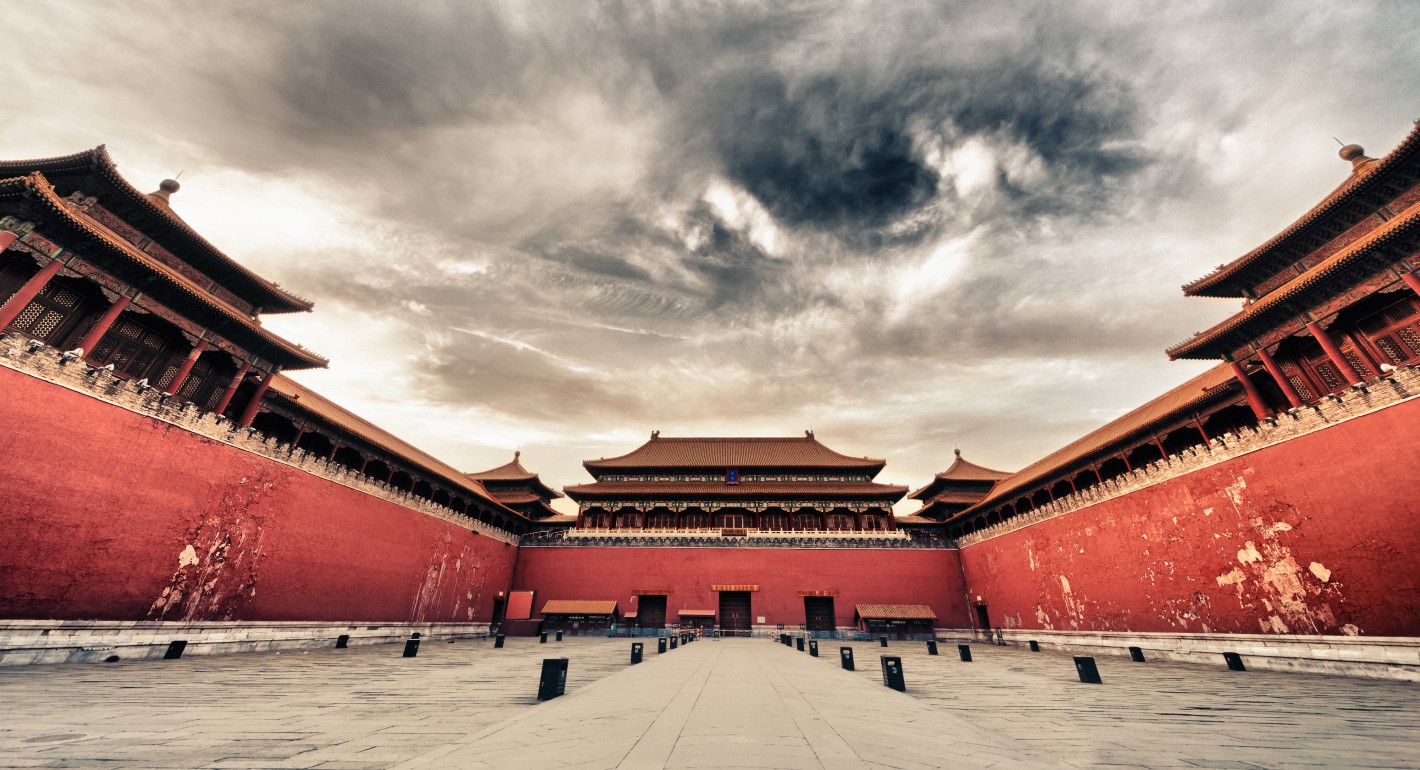
Photo by Laoshi/iStock
Arguing that Chinese policy is hung on alliances—with imputations of obligation—misses the point.
In the wake of the coordinated U.S. and Israeli attacks on Iran and the U.S. seizure of Nicolás Maduro from Caracas, many in the American strategic class express surprise that Beijing does not ride to the rescue of its strategic partners. A former U.S. ambassador to China (and my former boss) Nicholas Burns puts this point especially bluntly: “China,” he concludes, “is proving to be a feckless friend for its authoritarian allies.”
But China’s standoffish posture is not, in fact, a surprise. Simply put, avoiding binding security commitments to peripheral third countries is not a sign of weakness but is by strategic design.
It is patently obvious that regimes such as Ayatollah Khamenei’s or Maduro’s should not have counted on Chinese support if that means “rescuing” them. But this frame mirror-images U.S. foreign policy, refracting Chinese policy through the lens of what American strategists would do if they were Chinese Communists.
Too many Western strategists expect China to behave like the United States—and then when China does not behave like the United States, they conclude that it is a strategic failure rather than a deliberate choice, and that a chastened China has been put back on its heels.
Beijing has adopted architectural elements of U.S. posture, including sanctions instruments and certain types of security partnerships. But there’s little that suggests it was ever going to “do like America” in the way it approaches its security interests. When analysts refer to Iran or Venezuela as a Chinese “ally,” the word ally is doing so much heavy lifting, since these Chinese partnerships, unlike Washington’s alliances, carry no presumption of obligation or binding security commitment.
Venezuela and Iran were not “allies” to China in the way the United States has allies, with attendant security obligations built into them. China has security interests in third regions and has increased its posture, but even in this domain, it has leaned into internal security and policing, not commitments to others’ external defense in which it has zero core interest. We can point to this arms deal or that security partnership or that claim to political influence. But it was never the case that Beijing would treat Tehran, much less Caracas, the way that Washington treats Tokyo.
“Rescuing” a Khamenei or Maduro is not necessary to Beijing’s core goals. Its core security interests lie in East Asia, not far afield. And it has been laser focused on these first-tier security priorities, military capabilities for contingencies in the East Asian littoral, and reducing its vulnerabilities to pressure in its immediate geographic periphery.
China is also the largest trading partner to more than 120 countries, buys oil on a global market, and doesn’t hinge its policy in any region—from the Middle East to Latin America—on just one state. The Middle East well illustrates this approach. China had productive relations with Iran—but also with Saudi Arabia, the UAE, Egypt, even Turkey, and for a time with Israel. And it was unique in this among external powers, except perhaps only India. In Latin America, too, its eggs were never only in Venezuela’s basket. So, to argue that Chinese policy is hung on alliances in the American sense—with imputations of obligation—quite misses the point. China’s posture is better captured by a market metaphor than a geopolitical one: Beijing has diversified its portfolio by multiplying both its partnerships and its areas of focus with these partners.
A speaker in a Wall Street Journal piece from July says that what China does in the world “only makes sense through the lens of its positioning vis-à-vis the United States.” Yes, both can be strategic narcissists, prioritizing strategic competition with each other. But that’s not the whole story. First, not everything China does in the world is about the Americans. Second, even those parts of its posture that are about the United States do not require China to be sucked into security conflicts in peripheral regions, rescue tottering regimes, or deploy in a third country’s defense. China provides hardware, lifelines, and diplomatic support. But the whole point of its strategic competition with Washington has been to lean into economic, technology, construction, and training offerings, not security partnerships with inherent and costly obligations.
This is true even close to China’s border: In Myanmar, for example, Beijing has played all sides over the years, from junta to Aung San Suu Kyi and back to junta, and it interferes in what I would call an “ecumenical” rather than an obligatory way. And in some ways, Myanmar is a vastly more compelling interest to China than Iran or Venezuela, given the events on its border.
Presuming that China will mirror American policy in its own foreign policies to backfoot the United States is a fundamental conceptual error. That’s not been Beijing’s play—in Venezuela, in Iran, or whichever country lands in the global spotlight next. There is no sense in imputing American logic to Chinese strategy. Nor should the United States presume “fecklessness” and “failure” when Beijing doesn’t play Washington’s game.

Vice President for Studies
Evan A. Feigenbaum is vice president for studies at the Carnegie Endowment for International Peace, where he oversees work at its offices in Washington, New Delhi, and Singapore on a dynamic region encompassing both East Asia and South Asia. He served twice as Deputy Assistant Secretary of State and advised two Secretaries of State and a former Treasury Secretary on Asia.
Recent Work
Evan A. Feigenbaum
Evan A. Feigenbaum
It signals a new era of tech diffusion and warfare.

Steve Feldstein

The conflict has sent economic and political shock waves through a country with no representation at the negotiating table—and Kenya is not alone.

Georgia Schaefer-Brown, Jane Munga
The targeting of Damietta Port appears to be more than a mere security message.

Amr Hamzawy
Despite the agreement’s uncertainty, it’s still a significant development in regional and nuclear policy.


Andrew Leber, Jane Darby Menton
By burying disagreements in imprecision, the new deal risks same fate as its predecessors.

James M. Acton