

Commentary
Much has been said of the changes Brussels is trying to make to the EU enlargement process. Here’s why gradual integration might—or might not—be the answer.
Dimitar Bechev
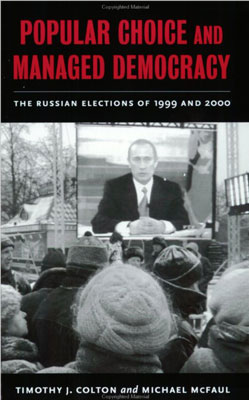
Demonstrates key trends in an extinct superpower, a troubled country in whose stability, modernization, and openness to the international community the West still has a huge stake.
Source: Brookings Institution Press, 2003

About the Author
Micheal McFaul is a senior associate at the Carnegie Endowment and associate professor of political science at Hoover Institution, Stanford University. He is the author of Between Dictatorship and Democracy: Russian Post-Communist Political Reform and Russia's Unfinished Revolution: Political Change from Gorbachev to Putin.
Timothy J. Colton is professor of government and Russian studies in the Department of Government and director of the Davis Center for Russian Studies at Harvard University. His previous books include Moscow: Governing the Socialist Metropolis (Harvard, 1995), named best book in government and political science 1995 by the Association of American Publishers.
"This is an excellent book, and an unusually valuable contribution to the growing literature on Russian electoral behavior. It brings together the skills and knowledge of two top scholars of Russian politics, and does so in an accessible, crisply written style. It will be a standard source on this election cycle for a long time."
—Thomas F. Remington, Professor and Chair, Department of Political Science, Emory University
"This is one of those rare books that combines policy relevance with the kind of argumentative rigor that will satisfy even hard-core social scientists. Written by two of the West's best known academic specialists on Russian politics, it is almost certain to become regarded as one the best (if not the best) books on the 1999-2000 election cycle."
—Henry E. Hale, Assistant Professor of Political Science, Indiana University
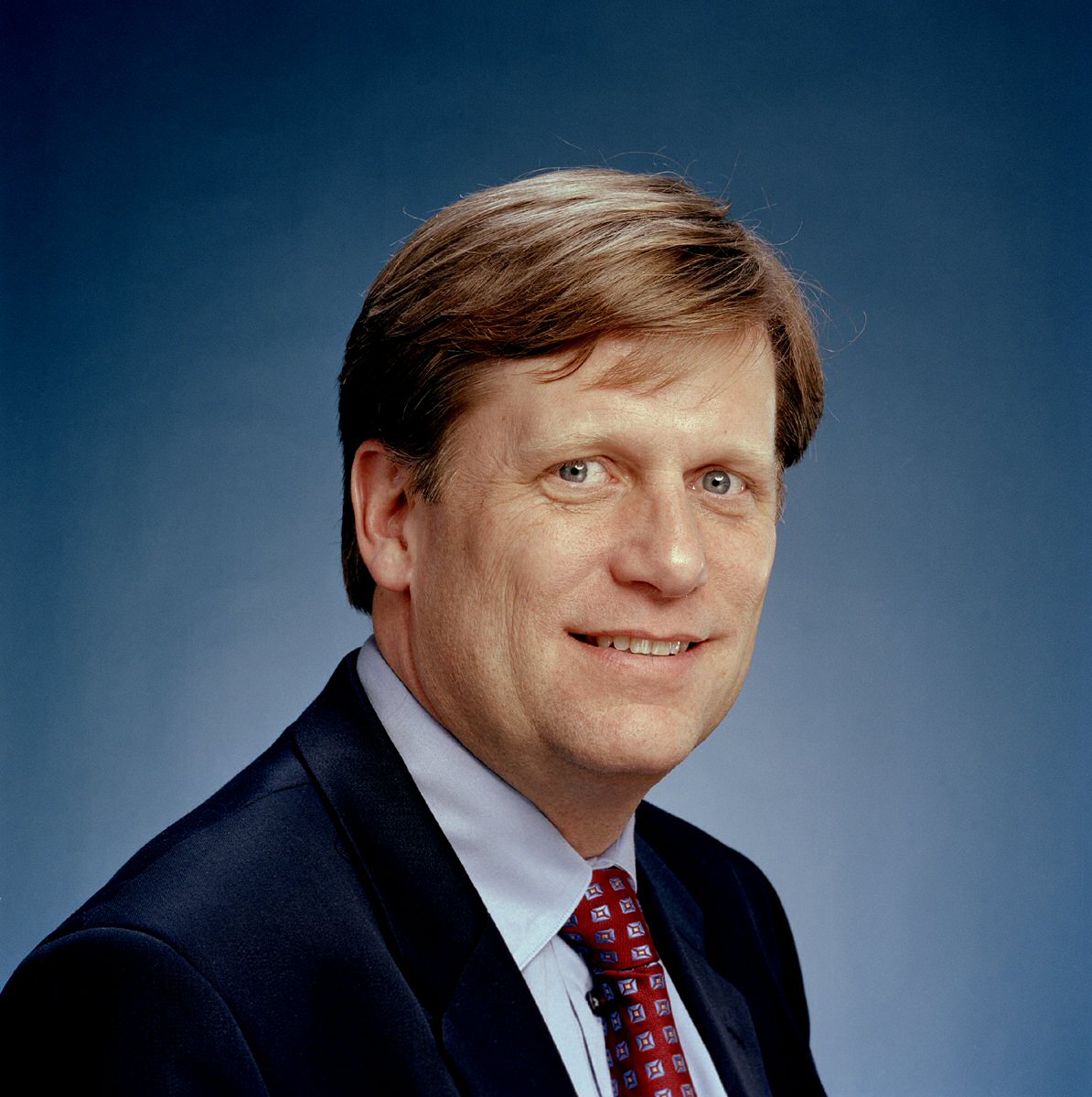
Former Senior Associate
In addition to his role at Carnegie, McFaul is Peter and Helen Bing Senior Fellow at the Hoover Institution and associate professor of political science at Stanford University.
Timothy J. Colton

Much has been said of the changes Brussels is trying to make to the EU enlargement process. Here’s why gradual integration might—or might not—be the answer.

Dimitar Bechev

The European Commissioner for Trade is headed to China. But after President Xi’s bridge-building visit to Washington, can a more isolated EU overcome Beijing’s stranglehold on critical raw materials? Who will blink first?

Rym Momtaz, ed.

The domestic impacts of how long it is taking to end the war in Ukraine have pushed the French electorate to the political extremes and compromised the country’s diplomatic capacity.
Rym Momtaz

A summer of escalation in the Black Sea has hurt Ukraine economically and is exacerbating world food security. A truce is needed—as is a broader reframing of Europe’s Ukraine strategy.

Thomas de Waal

Canadian Prime Minister Mark Carney has twice inspired praise for standing up to U.S. President Donald Trump: at the 2026 World Economic Forum in Davos and on Canada-U.S. trade negotiations. Is Carney showing a third way better than the EU has in dealing with the Trump administration?
Rym Momtaz, ed.