

Article
Dr. Albert Keidel
China’s growth and inflation risks are not trade-related but are instead driven by domestic forces.
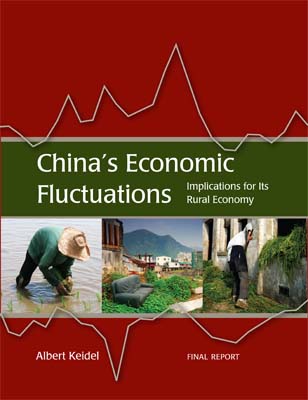
New research challenges conventional wisdom in Washington on China’s economy—the importance of its trade surplus, the size of its GDP, and the scale of its poverty. A newly updated Carnegie report by Senior Associate Albert Keidel confirms that China’s growth and inflation risks are not trade-related but are instead driven by domestic forces. A recent World Bank announcement also confirmed Keidel’s findings that China’s economy and GDP per capita are 40 percent smaller than earlier analysis had asserted, and that Chinese poverty levels involve 300 million people under the World Bank’s dollar-a-day standard rather than 100 million as previously thought. This more accurate picture supports the Treasury Department’s recent stance, once again declining to cite China as a currency manipulator, reflecting continued doubt by U.S. government experts that China’s currency is a major factor behind global commercial imbalances.
In China’s Economic Fluctuations: Implications for its Rural Economy, Keidel updates his previous analysis to show that China’s recent inflation surge is the product of domestic rural structural problems, not excessive monetary growth linked to trade surpluses or foreign reserves. The fundamental response to China’s inflation risk should be to raise bank deposit and lending rates to match inflation; failure to do so in the past has caused damaging swings in inflation, output growth, and social unrest.
Other key findings include:
• U.S. government analysts need to correct the popular misperception that Chinese growth is export-led and hence exchange-rate dependent—it is not. U.S. commercial and diplomatic thinking regarding China’s commercial behavior and long-term prospects needs to shift to account for this conclusion.
• Because China’s growth has not been export-led, the United States should concentrate on improving domestic components of its own international competitiveness rather than focusing so heavily on alleged Chinese violations of international commercial norms.
• The World Bank’s newer, more accurate picture of China as a smaller, poorer economy should encourage the United States to redouble its efforts to engage China in ways that contribute to solving its domestic growth and poverty challenges.
• China’s reticence to import grain leads to pressure on Chinese farmers to plant more grain—often a loss-making venture. China should increase its fine grain imports over time to improve rural standards of living through product diversification and to strengthen overall Chinese domestic consumption demand.
“As China’s longest-running high-growth period continued through 2007, warning signs of possible inflationary overheating became apparent. This report’s analysis of past inflationary cycles argues that major macroeconomic management steps need to be taken in 2008 to avoid the repetition of not only inflation but also of subsequently necessary macroeconomic tightening measures and the risk of social dissatisfaction and even unrest that have characterized similar sequences in the past.”
This report was produced in collaboration with Dr. Jianxing Liu of the International Cooperation Center in China’s National Development and Reform Commission, with substantial support from the Ford Foundation.
Click on the icon above to read the full text of this Carnegie report.
About the Author
Albert Keidel is a senior associate at the Carnegie Endowment, where his work concentrates on China’s economic development. He previously served as acting director of the U.S. Treasury Department’s Office of East Asian Nations and as senior economist in the World Bank’s office in Beijing.

Former Senior Associate, China Program
Keidel served as acting director and deputy director for the Office of East Asian Nations at the U.S. Department of the Treasury. Before joining Treasury in 2001, he covered economic trends, system reforms, poverty, and country risk as a senior economist in the World Bank office in Beijing.
Recent Work
Dr. Albert Keidel
Dr. Albert Keidel

The hybrid warfare landscape is evolving rapidly, leaving policymakers without clear strategies. To better inform their work in addressing emerging challenges, governments must dig deeper into the underlying dynamics at play.


Raluca Csernatoni, Alicia Wanless
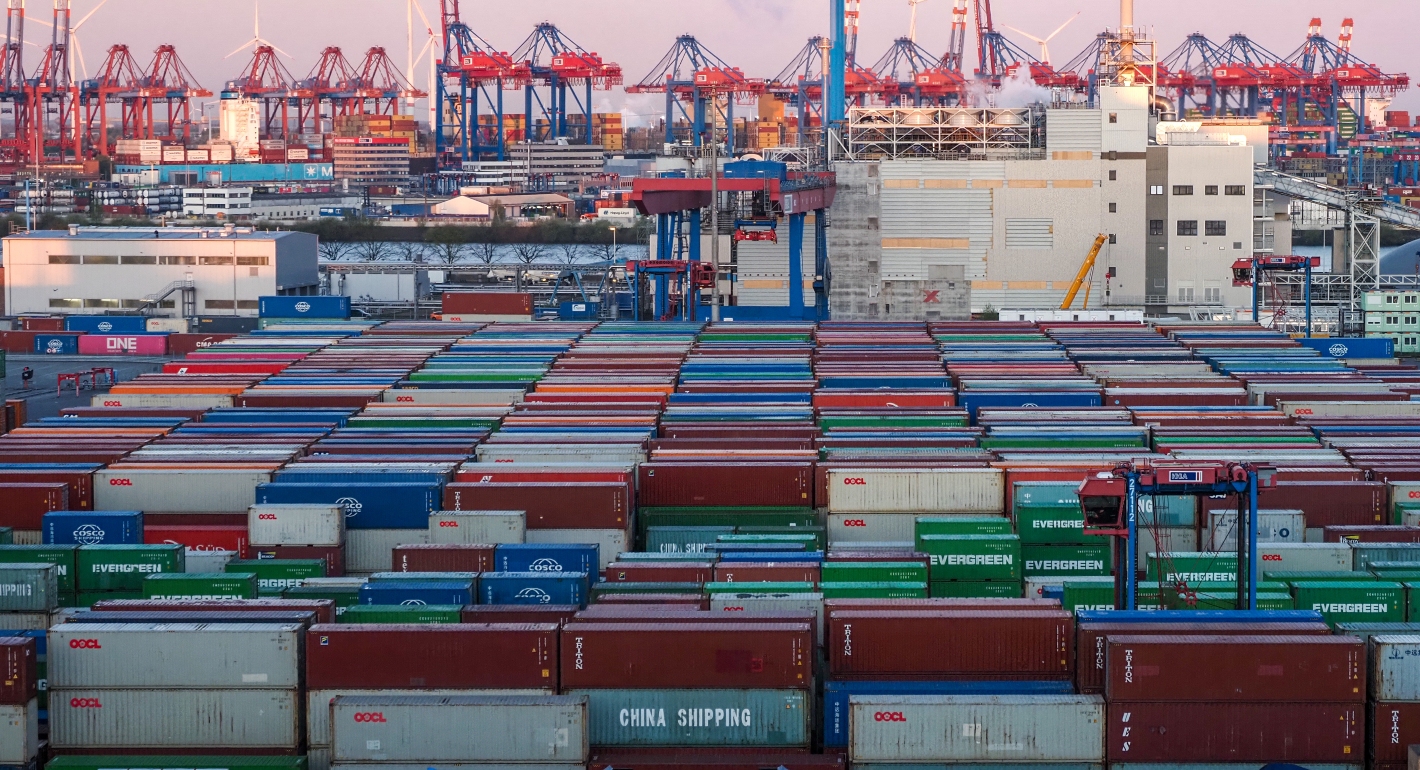
As geopolitical rivalry weaponizes global supply chains, the EU’s true vulnerability lies in emerging-risk imports. For these goods, suppliers are growing more concentrated, substitution more difficult, and political risk is looming.

Sinan Ülgen

The EU is putting together a new security strategy to meet today’s myriad challenges. But for any proposal to be effective, the union needs to grapple with its identity and ambitions.

Pierre Vimont

Amid uncertainty caused by the Iran war, the global drive for nonproliferation has stalled. With Europe diplomatically marginalized and countries reassessing their nuclear options, efforts to curb the spread of nuclear weapons risk becoming irrelevant.

Jane Darby Menton
Between the United States’ market-driven approach and China's state-led industrial strategy, Europe is reckoning with how it can remain competitive in the global economy. But is Europe in danger of becoming a U.S. or China colony?


Noah Barkin, Anu Bradford