• Research
  • Strategic Europe
  • About
  • Experts
Carnegie Europe logoCarnegie lettermark logo
EUUkraine
  • Donate
Turkey's Perspectives on Nuclear Weapons and Disarmament
Report

Turkey's Perspectives on Nuclear Weapons and Disarmament

Global nuclear disarmament could increase Turkey’s regional and international influence. If Iran achieves its nuclear ambitions and America’s influence is perceived as declining, however, Turkey’s inclination to favor a disarmament agreement may change.

Link Copied
By Henri J. Barkey
Published on Sep 22, 2009

Additional Links

Click here to read the full report

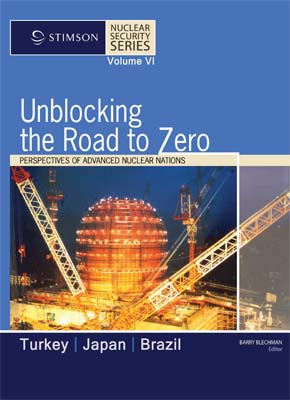
Source: Stimson Center's Nuclear Security Studies

Turkey's Perspectives on Nuclear Weapons and Disar
In principle, Turkey would welcome the global elimination of nuclear weapons. For the
current government, the possession of nuclear weapons by other states is a factor that, indirectly at least, reduces Turkey’s regional (if not global) aspirations and power. However, in the medium term, it remains deeply ambivalent on the future of nuclear weapons and its own plans regarding nuclear energy and weapons development.
 
Turkey lacks a coherently articulated national policy vis-à-vis nuclear weapons. This is partly due to the fact that as a member of NATO it is a direct beneficiary of the US nuclear umbrella and because the United States maintains a number of nuclear weapons at the Incirlik Air Force base in southern Turkey. The absence of such a policy is also the result of the unclear demarcation of lines of authority between civilian and military leaders on issues of national defense. While this may not have been a problem in the past, civil-military relations have been strained under the current ruling government, led by the Justice and Development Party (AKP). Until recently, when it came to setting national priorities, the military establishment’s role could best be described as primus inter pares. The AKP’s preoccupation with expanding Turkey’s role in the region and its push to reform Turkish state structures, including the military’s prerogatives, are radically challenging the military’s control of the national security agenda.
 
This report is part of larger series produced by the Stimson Center.
 

About the Author

Henri J. Barkey

Former Visiting Scholar, Middle East Program

Barkey served as a member of the U.S. State Department Policy Planning Staff, working primarily on issues related to the Middle East, the Eastern Mediterranean, and intelligence from 1998 to 2000.

    Recent Work

  • Article
    Winners and Losers in Turkey’s Election

      Henri J. Barkey

  • Article
    The Road to Turkey’s June Elections: Crises, Strategies, and Outcomes

      Henri J. Barkey

Henri J. Barkey
Former Visiting Scholar, Middle East Program
Henri J. Barkey
TürkiyePolitical ReformForeign PolicyNuclear PolicyNuclear Energy

Carnegie does not take institutional positions on public policy issues; the views represented herein are those of the author(s) and do not necessarily reflect the views of Carnegie, its staff, or its trustees.

More Work from Carnegie Europe

  • Commentary
    Strategic Europe
    Time to Merge the Commission and EEAS

    The EU is structurally incapable of reacting to today’s foreign policy crises. The union must fold the EEAS into the European Commission and create a security council better prepared to take action on the global stage.

      Stefan Lehne

  • Commentary
    Strategic Europe
    Russia’s Imperial Retreat Is Europe’s Strategic Opportunity

    The war in Ukraine is costing Russia its leverage overseas. Across the South Caucasus and Middle East, this presents an opportunity for Europe to pick up the pieces and claim its own sphere of influence.

      William Dixon, Maksym Beznosiuk

  • Commentary
    Strategic Europe
    Europe and the Arab Gulf Must Come Together

    The war in Iran proves the United States is now a destabilizing actor for Europe and the Arab Gulf. From protect their economies and energy supplies to safeguarding their territorial integrity, both regions have much to gain from forming a new kind of partnership together.

      • Rym Momtaz

      Rym Momtaz

  • Commentary
    Strategic Europe
    Taking the Pulse: Is France’s New Nuclear Doctrine Ambitious Enough?

    French President Emmanuel Macron has unveiled his country’s new nuclear doctrine. Are the changes he has made enough to reassure France’s European partners in the current geopolitical context?

      • Rym Momtaz

      Rym Momtaz, ed.

  • Commentary
    The Iran War’s Dangerous Fallout for Europe

    The drone strike on the British air base in Akrotiri brings Europe’s proximity to the conflict in Iran into sharp relief. In the fog of war, old tensions in the Eastern Mediterranean risk being reignited, and regional stakeholders must avoid escalation.

      Marc Pierini

Get more news and analysis from
Carnegie Europe
Carnegie Europe logo, white
Rue du Congrès, 151000 Brussels, Belgium
  • Research
  • Strategic Europe
  • About
  • Experts
  • Projects
  • Events
  • Contact
  • Careers
  • Privacy
  • For Media
  • Gender Equality Plan
Get more news and analysis from
Carnegie Europe
© 2026 Carnegie Endowment for International Peace. All rights reserved.