• Research
  • Strategic Europe
  • About
  • Experts
Carnegie Europe logoCarnegie lettermark logo
EUUkraine
  • Donate
At Last, Iraqi Lawmakers Agree on the 2010 Election Law

Source: Getty

Article

At Last, Iraqi Lawmakers Agree on the 2010 Election Law

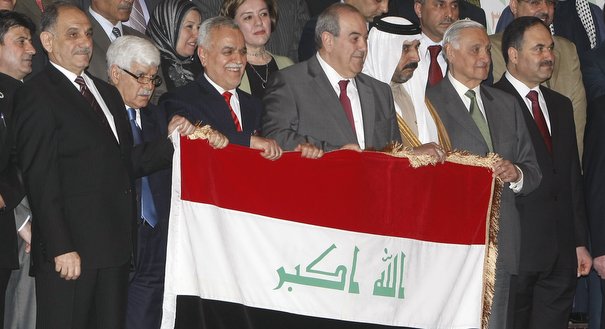
On December 6, 2009, the Iraqi parliament finally passed an election law for the 2010 elections. The law deals with the most controversial issues regarding the election.

Link Copied
Published on Dec 14, 2009

On Sunday, December 6, 2009, the Iraqi parliament finally passed an election law for the 2010 elections. The Presidency Council swiftly approved the measure, the result of sensitive negotiations among Iraq’s top legislators.

 The most controversial issues were the distribution of parliamentary seats among provinces, and the number and distribution of minority and compensatory seats, which are apportioned to parties too small to win election in any single province, but that win a large enough share of the national vote to earn a seat in parliament.
  • The 325-seat parliament will consist of 310 seats for the provinces, eight seats for minority groups, and seven compensatory seats.
     
  • Provincial seats will be distributed on the basis of the 2005 Ministry of Trade’s population numbers (based on food ration cards), with 2.8% population growth added for all provinces. 
     
  • Iraqis living abroad will vote for representatives of their home provinces, with no special status attributed to them.
     
  • Minority seats will be distributed as follows: five Christian seats will be contested within a single national district reserved for Christians. In addition, Yazidis will have one reserved seat in Nineveh, Saibis one in Baghdad, and Shabakis one in Nineveh. 
     
  • The seven remaining compensatory seats will be distributed among parties that fare well on the national level but do not gain any seats on the provincial level
 
Province2005 Elections2010 Elections
Baghdad5968
Nineveh1931
Basra1624
Dhi Qar1218
Babil1116
Sulaymaniya 1517
Anbar 914
Irbil 1314
Diyala 1013
Kirkuk 912
Salahaddin 812
Najaf 812
Wasit 811
Qadisiyah 811
Maysan710
Dohuk 710
Karbala 610
Muthanna 57
Compensatory Seats4515
Total275325
IraqPolitical ReformDemocracy

Carnegie does not take institutional positions on public policy issues; the views represented herein are those of the author(s) and do not necessarily reflect the views of Carnegie, its staff, or its trustees.

More Work from Carnegie Europe

  • Commentary
    Strategic Europe
    The EU Needs a Third Way in Iran

    European reactions to the war in Iran have lost sight of wider political dynamics. The EU must position itself for the next phase of the crisis without giving up on its principles.

      Richard Youngs

  • Research
    New Approaches to Defending Global Civil Society

    New thinking is needed on how global civil society can be protected. In an era of major-power rivalry, competitive geopolitics, and security primacy, civil society is in danger of getting squeezed – in some countries, almost entirely out of existence.

      Richard Youngs, ed., Elene Panchulidze, ed.

  • Commentary
    Strategic Europe
    How Europe Can Survive the AI Labor Transition

    Integrating AI into the workplace will increase job insecurity, fundamentally reshaping labor markets. To anticipate and manage this transition, the EU must build public trust, provide training infrastructures, and establish social protections.

      Amanda Coakley

  • Commentary
    Strategic Europe
    Can Europe Still Matter in Syria?

    Europe’s interests in Syria extend beyond migration management, yet the EU trails behind other players in the country’s post-Assad reconstruction. To boost its influence in Damascus, the union must upgrade its commitment to ensuring regional stability.

      Bianka Speidl, Hanga Horváth-Sántha

  • EU democracy support policies
    Paper
    European Democracy Support Annual Review 2025

    European democracy support strategy in 2025 prioritized protecting democratic norms within Europe. This signals the start of a structural recalibration of the EU’s approach to democracy support.

      • Elena-Viudes-Egea
      • +6

      Richard Youngs, ed., Elena Viudes Egea, Zselyke Csaky, …

Get more news and analysis from
Carnegie Europe
Carnegie Europe logo, white
Rue du Congrès, 151000 Brussels, Belgium
  • Research
  • Strategic Europe
  • About
  • Experts
  • Projects
  • Events
  • Contact
  • Careers
  • Privacy
  • For Media
  • Gender Equality Plan
Get more news and analysis from
Carnegie Europe
© 2026 Carnegie Endowment for International Peace. All rights reserved.