

In The Media
Lahcen Achy

Source: Getty
The level of education among job seekers in Tunisia has improved, yet, the government still fails to make policies that guarantee enough job creation to absorb new entrants to the labor market, causing the country's youth feelings of frustration and despair.

However, economic growth in Tunisia began to lose some of its momentum over the last decade, and the government has been unable to make policies guaranteeing enough job creation to absorb new entrants to the labor market, especially those with university degrees. Tunisia has one of the highest levels of unemployment among Arab states. According to official statistics, unemployment exceeds 14 percent at the national level, and 30 percent among those between the ages of 15 and 29. These percentages have not improved over the past five years, in spite of repeated promises in the official media.
Many of those with degrees, after completely despairing of finding work commensurate with their qualifications, have no choice but to launch small businesses in the informal sector, which do no more than almost prevent them from having to ask for aid for their families. Others choose to emigrate to other countries, either legally or illegally.
Frustration and despair has reached a peak among many of the youth, and an increase in the suicide rate has been recorded. In a number of cases, youth have lit themselves on fire in public places in order to draw officials’ attention to the oppressiveness of their psychological and social conditions. Contrary to what is often repeated in official Tunisian circles, these cases are neither isolated nor exceptional. Rather, they express a deep sense among wide groups of youth that their horizons are closed and their chances for employment and a dignified life are dwindling. If the last generation of Tunisians traded freedom of expression for jobs guaranteeing them an acceptable standard of living, the current generation is facing deprivation on all sides. Space for freedoms and independent political and collective activism is non-existent, just as opportunities for employment and dignified life are unavailable.
The Tunisian growth model suffers from excessive specialization and great dependence on one market – the European Union. In addition to this, Tunisia based its growth strategy on low-skill sectors that depend on cheap labor, such as textiles and clothes manufacturing, and tourism aimed Europeans with medium-to-low incomes. These sectors do not provide enough job opportunities for the highly educated newcomers arriving in the labor market.
It is true that the level of education has seen great improvement during the last two decades, but this improvement was not met with an equivalent change in demand for labor. Over the past decade, the average annual growth rate of the portion of the Tunisian labor force with post-high school education was more than 9 percent, versus a negative growth rate of 2 percent for those in the work force without any kind of education. As a result, the proportion of job seekers with higher education rose from 20 percent of the labor force in 2000 to more than 55 percent at the close of 2009. This fundamental change in the qualifications of those entering the Tunisian labor market was not accompanied by a similar development in labor demand. In general, the same sectors continued to produce job opportunities.
Although the eleventh national development plan for 2007-2010 aims to move the economy toward knowledge-intensive value-added activities, the government has not yet been able to effectively make this intention a reality.
Moreover, the business environment in Tunisia offers little protection for investors, especially local ones, due to the absence of transparency and the state of law. In addition, small and medium-size institutions suffer from limited funding opportunities. Both of these factors limit the spirit of initiative and restrain private sector investment, negatively affecting job creation.
Tunisia spends one percent of its GDP on labor market policies, a percentage amount equivalent to the average European Union budget for the same goal. Due to restrictive eligibility criteria, only a small segment of the labor force benefits from these programs – estimates indicate that only 25% of the unemployed benefit from them. As a result, the average amount spent on each beneficiary is very high, and injustice is done to those who do not qualify for the programs.
Tunisia must therefore design sufficient incentives to direct resources toward knowledge-intensive sectors and industries, stimulate technological innovation, and overcome weaknesses in the business climate and administration. The return on investment in education is a central part of the Tunisian social model that is currently being wasted at both the individual and collective level due to the lack of a strategic vision for growth that would enable the economy to absorb available human capital.
In conclusion, development cannot be limited to reducing poverty and providing job opportunities. More important than this is providing individuals with sufficient space to freely express their opinions and effectively participate in the public life of their nation. With regard to this dimension, the Tunisian experiment is certainly not a model. It is possible to reconcile economic effectiveness with the provision of a wide space for freedoms and democratic practice. This is not only possible, but required – urgently, in fact. It will be a factor aiding the launch of individual and collective initiatives, as well as the incorporation of available human energies in order to achieve true development.

Former Nonresident Senior Associate, Middle East Center
Achy is an economist with expertise in development, institutional economics, trade, and labor and a focus on the Middle East and North Africa.
Recent Work
Lahcen Achy
Lahcen Achy

With its public finances in shambles, the far right polling at 35 percent ahead of the 2027 presidential election, and a growing protest movement, is France’s crisis a threat to the EU’s geopolitical awakening?

Rym Momtaz, ed.

The European Commissioner for Trade is headed to China. But after President Xi’s bridge-building visit to Washington, can a more isolated EU overcome Beijing’s stranglehold on critical raw materials? Who will blink first?
Rym Momtaz, ed.

The domestic impacts of how long it is taking to end the war in Ukraine have pushed the French electorate to the political extremes and compromised the country’s diplomatic capacity.
Rym Momtaz

A summer of escalation in the Black Sea has hurt Ukraine economically and is exacerbating world food security. A truce is needed—as is a broader reframing of Europe’s Ukraine strategy.

Thomas de Waal
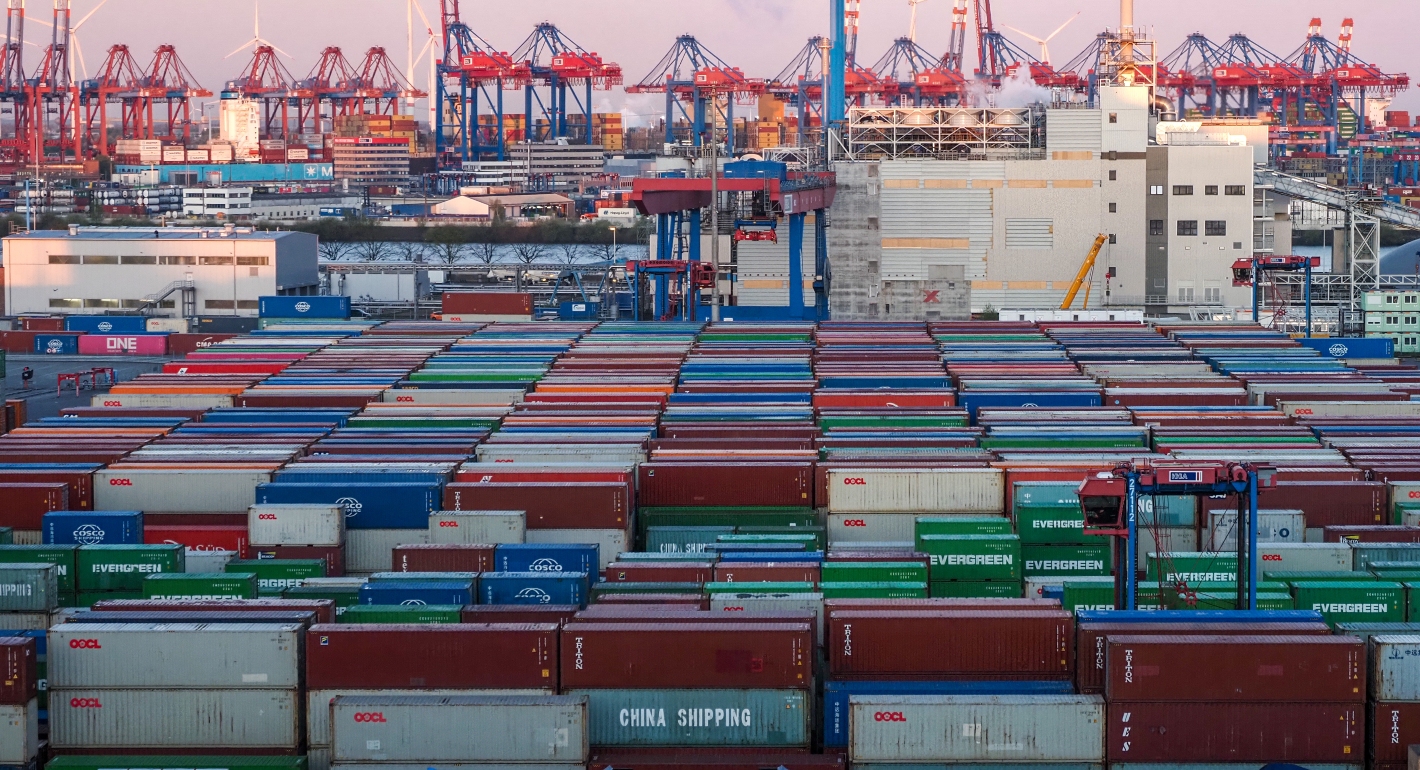
As geopolitical rivalry weaponizes global supply chains, the EU’s true vulnerability lies in emerging-risk imports. For these goods, suppliers are growing more concentrated, substitution more difficult, and political risk is looming.

Sinan Ülgen