• Research
  • Strategic Europe
  • About
  • Experts
Carnegie Europe logoCarnegie lettermark logo
EUUkraine
  • Donate
Overview of Egypt’s Constitutional Referendum

Source: Getty

Article

Overview of Egypt’s Constitutional Referendum

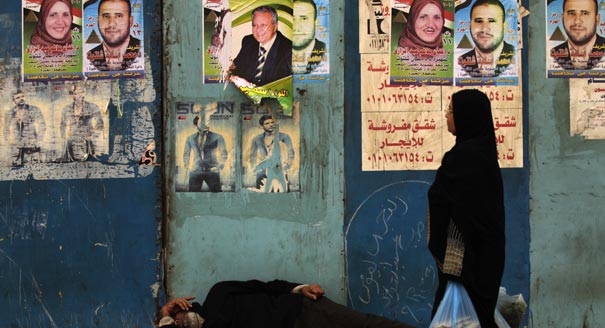
The Egyptian constitutional reform committee appointed by the Supreme Council of the Armed Forces announced several proposed revisions to Egypt's constitution on February 26. On March 19, Egyptians will vote in a referendum concerning these amendments.

Link Copied
By Michele Dunne and Mara Revkin
Published on Mar 16, 2011
Referendum date: March 19, 2011. Polling will be conducted between the hours of 8:00 a.m. and 7:00 p.m.
 
Number of eligible voters: Approximately 45 million Egyptians over the age of 18 are eligible to vote, excluding members of the judiciary, armed forces, and police. 
 
Voter cards: Voting will be conducted with national ID cards, rather than voting cards, as has been the practice in past referenda and elections.
 
Referendum administration: The Supreme Council of the Armed Forces, Egypt’s military leadership, has appointed a committee of judicial authorities to supervise the referendum process. The 7-member committee, headed by First Deputy Chairman of the State Council Mohamed Attiyeh, is responsible for defining the rules governing voting and counting procedures and will announce the final results of the referendum.
 
Judicial supervision: An estimated 16,000 members of the judiciary will supervise voting and counting procedures at over 54,000 polling stations nationwide. A subcommittee staffed by judicial authorities will be responsible for overseeing every ballot box. 
 
Security presence: 28,000 soldiers and 8,000 police officers will be on hand to maintain order at voting sites, but they are prohibited from entering a polling station without the permission of the chairman of the supervising judicial subcommittee. 
 
Civil society monitoring: Independent of the official election administrators, several Egyptian civil society organizations plan to monitor the referendum through on-the-ground observation as well as social media and blogging tools. The judicial committee supervising the referendum has stated that Egyptian as well as international organizations and members of the media will be permitted to enter polling stations for observation purposes.
 
Amendments overview:
 
The constitutional reform committee appointed by the Supreme Council of the Armed Forces (SCAF) announced several proposed revisions to Egypt's constitution on February 26. The package of amendments must be approved or defeated as a bloc.
  • Article 75: Introduces new eligibility requirements for presidential candidates. The president must be an Egyptian without dual nationality. A candidate would be ineligible to run for office if he/she or either of his/her parents has ever held citizenship in a country other than Egypt, or if he/she is married to a non-Egyptian. 
  • Article 76: Eases restrictions on the eligibility of presidential candidates. In order to get on the ballot, presidential candidates must either obtain the support of 30 members of parliament; have the backing of 30,000 eligible voters from at least 15 different governorates; or be nominated by a registered political party with at least one representative in the Shura Council or People's Assembly. 
     
  • Article 77: Reduces the president's term to four years and establishes a two-term limit. 
  • Article 88: Restores full judicial supervision. All voting and counting procedures will be directly supervised by members of the judiciary from start to finish of the elections period. 
  • Article 93: Gives the Court of Cassation  (the highest appeal court) the authority to decide and enforce challenges to disputed parliamentary races. (Under the constitution before these revisions , the People's Assembly was the exclusive arbiter of court challenges to election results.) 
     
  • Article 139: Requires the president to appoint a vice president within 60 days of taking office. 
     
  • Article 148: Restricts the conditions under which the president may declare a state of emergency. Under the revised article, a state of emergency cannot be declared without the approval of a parliamentary majority. The state of emergency cannot exceed six months unless an extension is authorized through a popular referendum.
  • Article 179: The cancellation of article 179 removes controversial counter-terrorism provisions that allowed for the trial of civilians in military courts and authorized invasive surveillance measures. 
  • Article 189: Preserves the original procedure for amending the constitution (amendments can be proposed by either the president or the People’s Assembly and must be approved by a parliamentary majority as well as a popular referendum), but also adds provisions for redrafting the constitution in its entirety. Under the amended text, the president and parliament are obligated to appoint a 100-member constituent assembly within six months of elections to rewrite the constitution over the course of a subsequent six-month period, after which the document will be subject to a popular referendum. 
 
Resources:
  • Official referendum website: http://www.referendum.eg/homepage.html
     
  • Official Facebook page of the committee supervising the referendum: http://www.facebook.com/#!/EgyRef2011

About the Authors

Michele Dunne

Former Nonresident Scholar, Middle East Program

Michele Dunne was a nonresident scholar in Carnegie’s Middle East Program, where her research focuses on political and economic change in Arab countries, particularly Egypt, as well as U.S. policy in the Middle East.

Mara Revkin

Nonresident Scholar, Democracy, Conflict, and Governance Program

She is a nonresident scholar with Carnegie’s Democracy, Conflict, and Governance Program.

Authors

Michele Dunne
Former Nonresident Scholar, Middle East Program
Michele Dunne
Mara Revkin
Nonresident Scholar, Democracy, Conflict, and Governance Program
Mara Revkin
North AfricaEgyptMiddle EastPolitical Reform

Carnegie does not take institutional positions on public policy issues; the views represented herein are those of the author(s) and do not necessarily reflect the views of Carnegie, its staff, or its trustees.

More Work from Carnegie Europe

  • Commentary
    Strategic Europe
    Europe on Iran: Gone with the Wind

    Europe’s reaction to the war in Iran has been disunited and meek, a far cry from its previously leading role in diplomacy with Tehran. To avoid being condemned to the sidelines while escalation continues, Brussels needs to stand up for international law.

      Pierre Vimont

  • Commentary
    Strategic Europe
    Can Europe Still Matter in Syria?

    Europe’s interests in Syria extend beyond migration management, yet the EU trails behind other players in the country’s post-Assad reconstruction. To boost its influence in Damascus, the union must upgrade its commitment to ensuring regional stability.

      Bianka Speidl, Hanga Horváth-Sántha

  • Commentary
    Strategic Europe
    Europolis, Where Europe Ends

    A prophetic Romanian novel about a town at the mouth of the Danube carries a warning: Europe decays when it stops looking outward. In a world of increasing insularity, the EU should heed its warning.

      Thomas de Waal

  • Commentary
    Strategic Europe
    Taking the Pulse: What Issue Is Europe Ignoring at Its Peril in 2026?

    2026 has started in crisis, as the actions of unpredictable leaders shape an increasingly volatile global environment. To shift from crisis response to strategic foresight, what under-the-radar issues should the EU prepare for in the coming year?

      Thomas de Waal

  • Commentary
    Can Europe and Africa Mend Fences?

    Despite the strategic importance of relations between the EU and the African Union, deep divisions remain between the blocs. At their upcoming summit, both partners should strive to build a mutually beneficial cooperation.

      Marta Martinelli

Get more news and analysis from
Carnegie Europe
Carnegie Europe logo, white
Rue du Congrès, 151000 Brussels, Belgium
  • Research
  • Strategic Europe
  • About
  • Experts
  • Projects
  • Events
  • Contact
  • Careers
  • Privacy
  • For Media
  • Gender Equality Plan
Get more news and analysis from
Carnegie Europe
© 2026 Carnegie Endowment for International Peace. All rights reserved.