

Commentary
Are Germany’s economic, industrial, and political struggles becoming a liability for the EU’s ability to rise to the geopolitical moment?
Rym Momtaz, ed.
Source: Getty
Successful foreign and security policies require the backing of a united European society that must learn to adapt to changing global realities.
May 9, 2025
Honorable High Representative,
Exactly seventy-five years ago today, Robert Schumann declared his vision of a supranational Europe. In light of this momentous anniversary, pending your address before the plenary in the European Parliament, and given the current tumultuous events in the Nagorno-Karabakh region along our southeastern-most border, it may be time to ask ourselves some vital questions with respect to our current and future policies.
How well do we project our values and power elsewhere in the world where we have key strategic interests? What are the levels of our strategic depth since the ratification of the Treaty of Zagreb and the subsequent introduction of the European Foreign and Security Policy (EFSP) eight years ago? How capable are we at handling conflicts and exerting influence in our neighborhood after the completion of the enlargement process? Have the strategies we employed in regards to global threats like climate change, energy security, and cyberterrorism been successful in your view?
The thought of a truly strategic Europe seemed almost unfathomable even fifteen years ago, but we Europeans seem to have the relentless capacity to reinvent ourselves, just as we did when we rose, almost Phoenix-like, from the rubble of the Second World War. Few dared to predict the progress we have made since, when as a result of economic woes and a feeling of estrangement in a globalized world, the specters of re-nationalization of European politics and of rising nationalism were looming large at the beginning of the last decade.
Progress, it seems, was once again born of necessity. The events following the Arab Spring of 2011 made clear that we had to act united—and we eventually rose to the occasion. What clearly helped us was a gradual shift in thinking that took place in our societies over the last decades. European citizens have largely come to terms with the changed realities of our time and today they generally view global interdependence as an opportunity rather than a threat.
Subsequent to the Iranian test of a nuclear warhead in 2015, there was also a growing realization among the decisionmakers in the European Union member states that we needed to transcend outmoded concepts and come up with a viable supranational mechanism that would allow us to cope with vital security challenges. This holds especially true in light of the transnational nature of many of today’s threats and the increasing meaninglessness of national borders when it comes to the issues of our time. Ultimately this was how we made headway with respect to the last domains of national prerogatives—foreign and defense policy, once considered sacred cows of national sovereignty.
We have managed a transition from an almost exclusively civilian power to a player that has the necessary teeth to back the actions sometimes required when its values and interests are at stake. Introducing the fully-fledged, joint EFSP in 2017 was a quantum leap for the EU. We have regular reporting by and tough hearings for ambassadors and high-level diplomats in the European Parliament where the most lively foreign policy debates now take place. We have a working qualified majority voting system within the Council that has put the EU on the playing field in international diplomacy. We have never betrayed the principle that we resort to the use of force only when the situation clearly requires it. But when these situations arise, we can tackle them more efficiently, with a slimmer, streamlined European army whose deployment has to obtain the approval of the Joint Parliamentary Assembly (JPA), composed of members of both national parliaments and the European Parliament.
I am glad that the EU Defense Minister was finally able to announce last week that two more member states will join the European Defence Forces (EDF) by the end of the year. Our Europe of defense has grown steadily from the permanent structured cooperation of the original eight states to a permanent force to be reckoned with, now comprising men and women from the 29 member states that make up the fabric of the EDF, thereby bestowing even greater legitimacy on Council and JPA decisions regarding deployment.
In the international arena, notions of cooperation have equally changed since the doctrine of absolute territorial sovereignty was successfully qualified by principles like humanitarian intervention and the responsibility to protect. States and the growing number of supranational bodies modeled after the EU are now increasingly reminded not just of their rights but of their responsibilities vis-à-vis their citizens. This is a result also of the determination and perseverance that has characterized our democracy support policies over the last decades.
Securing one of the exclusive permanent seats in the enlarged Security Council at the United Nations was by no means an easy feat, but it can be rightly described as one of the EU’s biggest diplomatic victories and in line with our overall weight. An EU seat has also forced us to align policies when taking decisions on the most important matters of our time.
We need to acknowledge these achievements more forcefully when confronted with undue criticism—and to the naysayers who now again warn of a divided Europe I would point to how far we have progressed. Having said all this, it is true that not all is perfect.
Foreign policy and defense issues require the backing of our European society—they touch on the very basic emotions and moral fiber of our people. We need to foster an even deeper identification with our common history, identity, and destiny. That holds especially true of the Balkan countries where unresolved issues still simmer. We can also witness a degree of dissonance with respect to the aforementioned conflict in Nagorno-Karabakh and a possible EU intervention there. But the putative east/west divide that is often cited as an example of division among Europeans is a temporary phenomenon at best. It is certainly true that there are regional differences both in terms of perceptions of where our diplomatic and security focal points should lie. We must do a better job at explaining our decisions—and we must do so in a more transparent manner. But vital discussions are part and parcel of a healthy democracy.
Despite the inherent, systemic problems that our bulky and sometimes still cumbersome system entails, we can be proud of what we have achieved. Jean Monnet used to say that Europe would be the sum of its crises and that it would grow through each one. In the past seventy-five years, then, we have grown both in quantity and quality, and the notion that we share a common history and a common purpose is still very much alive.
I look forward to your speech before Parliament and to continuing our fruitful collaboration.
Sincerely,
Alexander Graf Lambsdorff
Member of the European Parliament
Rue Wiertz 60, 1047 Brussels
The single seat of the European Parliament
Alexander Graf Lambsdorff is a German politician and Member of the European Parliament with the Free Democratic Party of Germany.
To reinvigorate debate over European foreign policy and Europe’s role in the world, Carnegie Europe is publishing a series of essays from leading policymakers, diplomats, experts, and journalists on Strategic Europe over the coming weeks. A new essay will appear every day.
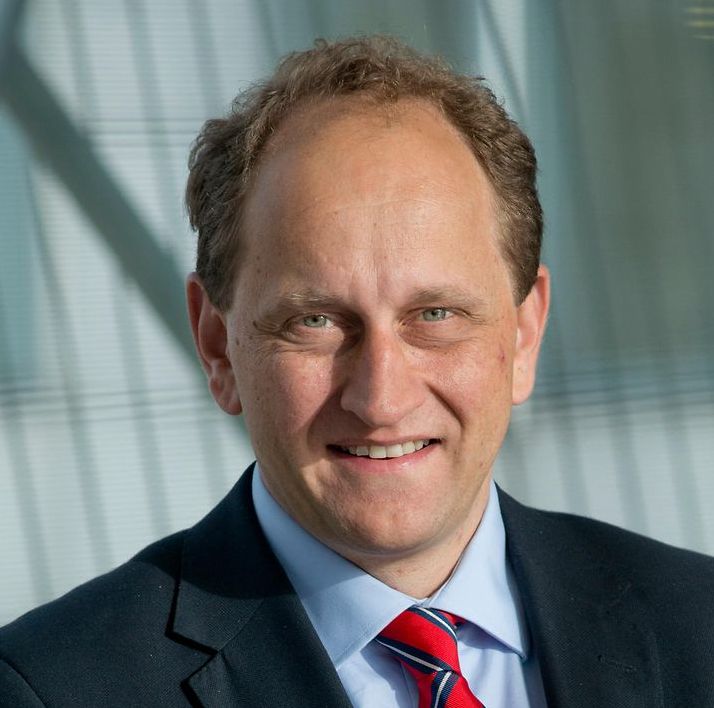
Alexander Graf Lambsdorff
Ambassador
Ambassador of Federal Republic of Germany to Russia
Carnegie does not take institutional positions on public policy issues; the views represented herein are those of the author(s) and do not necessarily reflect the views of Carnegie, its staff, or its trustees.

Are Germany’s economic, industrial, and political struggles becoming a liability for the EU’s ability to rise to the geopolitical moment?

Rym Momtaz, ed.

European Commission President Ursula von der Leyen is about to give her annual address on the state of the EU. Here’s what she won’t—but should—say.
Rym Momtaz

Radical-right parties are expected to do well in upcoming elections in four of the EU's biggest member states. If successful, they could prevent the union from addressing key challenges ahead.

Stefan Lehne

The aftermath of the Ceuta crisis shows Europe has drawn the wrong lessons. Rather than doubling down on failed migration policies, the EU needs to address the underlying roots of such episodes.

Richard Youngs

An overwhelming victory by a far-right-wing party in a small state in eastern Germany will have major repercussions for Chancellor Friedrich Merz’s coalition.

Judy Dempsey