

Commentary
As we close out another season of Strategic Europe, it is worth taking stock of the deep shifts underway.
Rym Momtaz
Source: Getty
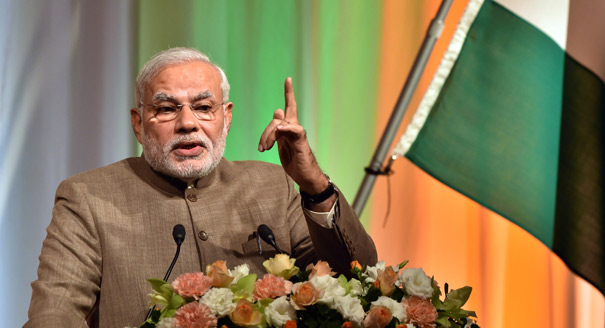
India’s new prime minister wants to expand the country’s global role. Economics will take center stage in the effort, but Modi may also emphasize democracy promotion.
Ever since the Bharatiya Janata Party (BJP) won India’s 2014 parliamentary elections in a landslide, debate has intensified over the likely direction of the country’s foreign policy. The BJP and the new prime minister, Narendra Modi, have received the strongest mandate ever for an Indian political party other than the dominant Indian National Congress. Given that, there are unprecedented expectations that the new government will finally unburden the country’s foreign policy from the ideological fixation of the Nehruvian era,1 reorienting to meet the demands of new geopolitical realities. While it is too early to know precisely what the new foreign policy will be, a few signposts—the BJP’s vision statement, Modi’s own political beliefs, and some of his recent statements—offer clues.
Modi’s foreign policy is likely to be a mix of nationalist-led geopolitics and expedient geoeconomics. These twin foci mean that democracy and human rights issues will become second-order issues. However, Modi may push international democracy more than the previous Congress-led government as part of his geopolitical agenda to extend Indian global power.
The nationalist in Modi would like to revive India’s “civilizational role” and restore its ancient glory. To that end, India must assume a larger role in the shift of global power toward Asia. This can only be achieved on the basis of domestic strength. Modi’s pre-election statements suggested he would eschew any exaggerated portrayal of India’s power. As he said, “we have to put our own house in order so that the world is attracted to us.”2 For him, membership in international clubs or regional groupings does not in and of itself make India a serious contender for a seat at the high table of global power. Its path there begins with real changes in the economy, governance, and national power. “India first,”oft repeated during the election, is his clarion call.
Modi’s push to strengthen India’s domestic core is not merely governed by his own beliefs but also the country’s recent economic deceleration. Following the global economic downturn and prolonged domestic policy paralysis, India’s “tiger economy” has been stuttering below 5 percent growth (although recent figures suggest a slight upturn). India barely survived a major credit rating downgrade by Standard & Poor’s in 2013,3 which claimed its budget deficit was too high. These economic woes have greatly diminished Brand India, the campaign to bring business to the country.This has combined with significant domestic political change and an accumulated drift in foreign policy to reduce India to a local player that even the tiny Maldives can afford to snub, as it did during its 2013 election by rejecting the pro-India candidate.4
At its current pace, the Indian economy lacks the dynamism and depth to absorb the 12 million youth who join the labor market every year.5 Given the enormity of the economic challenges, the new government will necessarily emphasize trade and commercial relations. It will prioritize economic diplomacy to facilitate India’s economic revival. Modi stated recently that “I believe a strong economy is the driver of an effective foreign policy.”
To achieve this Modi will have to ensure peaceful external conditions in India’s immediate neighborhood. He is aware that an unsettled neighborhood with various failed and failing states puts considerable strain on the economy. And he has signaled his aim to reset India’s relationship with its neighborhood by taking strong action, such as imaginatively securing the participation of most South Asian Association for Regional Cooperation leaders, including Pakistani Prime Minister Nawaz Sharif, at his swearing-in ceremony and by choosing Bhutan as his first foreign destination after becoming prime minister.
Yet Modi’s regional engagement cannot just be based on visits; it will require efforts to harness the trade and economic potential of the neighborhood. As the long-serving chief minister of Gujarat, a state bordering Pakistan, Modi knows the transformative potential of international trade in goods and services. More than once, Modi has made clear his intention of turning border regions into porous business hubs by easing restrictions, strengthening infrastructure connectivity, and genuinely integrating common markets. Trade could fundamentally alter the region’s conflict-ridden history.
When it comes to dealing with big powers, geoeconomics (or neomercantilism as some analysts would describe it) will likely guide Modi’s foreign policy. The prime minister is an unabashed pioneer of trade and economic diplomacy. As chief minister of Gujarat, he made several trips to China, Japan, and South Korea, cultivating a personal rapport with leaders like Japanese Prime Minister Shinzo Abe. Modi plans to expand his Gujarat template to all of India. He will seek trade routes to deepen relations with big powers that matter to India’s economic revival and geopolitical rise.
For instance, geoeconomics will play a central part in driving Sino-Indian relations. Modi is well aware that China needs the big Indian market, while India desperately seeks large Chinese investments to build transit and other infrastructure critical to its economic revival. Acrimony over borders and geopolitical rivalry in the region notwithstanding, trade will be the centerpiece of India’s policy toward China.
Geoeconomics will also set many of Modi’s policy choices vis-à-vis the rest of East Asia and Southeast Asia, especially concerning India’s growing relationship with Japan. Japanese firms that are facing growing hostility in China increasingly see India as a better destination for investments. Given his rapport with Abe, this could be fertile ground for Modi.6
And the Modi government will deploy geoeconomics to strengthen India’s most critical relationship: with the United States. The Indo-U.S. relationship has suffered in recent years from stagnation on trade negotiations, disputes over intellectual property, sluggish economies, and the Obama administration’s preoccupation with Afghanistan and Syria. The once-blossoming relationship recently fell to a new low after the arrest of an Indian diplomat in New York.7 Aware of this, Modi has already taken important steps to facilitate a turnaround. The bold announcement to open India’s $250 billion defense sector to private participation,8 which of course will include U.S. firms, could revitalize Indo-U.S. economic relations.
Trade will also be the cornerstone of Modi’s foreign policy with the EU, much of the Middle East, and Eurasia. With Modi eager to make India a manufacturing hub (he called for a “Made in India” campaign in his Independence Day speech in August 2014),9 trade with Germany, India’s biggest partner in Europe, assumes greater importance.
In all likelihood, Modi will highlight issues relating to trade, investment, infrastructure, and the other economic and development inputs necessary to revive economic growth. In short, his government’s priority is to bridge the gap between the country’s development goals and its foreign policy.
Democracy is likely to be a second-order issue in Modi’s foreign policy. But it still offers opportunities for the new government, and Modi’s nationalist perspective on geopolitics and national power could mesh well with democracy promotion.
Even as the BRICS forum builds momentum, what sets India apart from those countries are its long-standing democratic credentials. For many countries striving to be democracies, India remains an inspiration. As Modi said in his first speech after assuming office, the world should understand the strength of India’s democracy so the country gets the respect and status it deserves.10 The prime minister reiterated this during his Independence Day address when he referenced the power of democracy in his own rise from a boy selling tea to the office of prime minister.11 This is not out of character for a leader from Modi’s party—it was a previous BJP prime minister, Atal Bihari Vajpayee, who took an unprecedented departure in 1999 from the tradition of nonalignment and nonintervention to dedicate funds to the Community of Democracies, former U.S. president Bill Clinton’s initiative to encourage democratic norms and institutions.
The India-West rapprochement on democracy issues has taken a beating during the last ten years of the United Progressive Alliance government, a coalition led by the Congress party. This has been largely due to the government’s ambivalence toward democracy support, which it considered interventionist in nature,12 and a series of high-profile scams and scandals that overwhelmed the government in its second term and left little time for external engagement with democracy promotion and human rights protection. This may change under Modi.
While the prime minister will personally push the BRICS through geoeconomics, Modi will also push for the democracy club IBSA—India, Brazil, and South Africa—to get its due. On the margins of the BRICS summit in Brasilia this July, Modi secured hosting the next IBSA meeting in 2015. He is keen to build on India’s soft power.
However, his natural playfield for democracy promotion will be in South Asia. With Nepal, Myanmar, Pakistan, Bhutan, the Maldives, Bangladesh, and Afghanistan experiencing political upheavals and needing support to secure or achieve democracy, India’s democratic experience can be of considerable help. Modi did well in this regard during his recent visit to Kathmandu. Not only did he praise the Nepalese population for shunning violence and embracing democracy, he applauded their efforts to prepare a constitution and promised to provide the interim government all possible help in its journey toward democracy. Modi’s conviction that the “democracy glue” will eventually bind South Asia together serves the cause of democracy promotion well.
Other than its normative importance, democracy offers Modi the opportunity to consolidate and expand India’s power in the rapidly changing geopolitics of the Asia-Pacific. China’s swift rise and the uncertainties over its ambitions have generated considerable momentum among the major powers of the region to create a democratic hedge against the authoritarian power.13 Pro-democracy platforms that could drive realignment in Asia, such as the quadrilateral initiative between the four major democracies of Australia, India, Japan, and the United States, as well as an “axis of democracy” between Japan and India, could provide immense strategic value to India against a rising China.
As India’s own development budget increases, there will be additional resources for projects relevant to democratic reform. However, only time will tell to what degree Modi can overcome the country’s traditionally low-key posture on democracy promotion.
The new government of Narendra Modi has raised huge expectations for India’s foreign policy. Every move the government makes is being keenly watched, and there are indications that Modi’s foreign policy will be significantly different from that of his immediate predecessors. With his known aversion to the Nehruvian worldview, the most significant change will be the gradual abandonment of nonalignment for neorealism.
While expediency will demand that most foreign policy engagements be cast in terms of geoeconomics, the nationalist in Modi may push toward geopolitics and major power politics. He has long and frequently exhorted India’s ancient glory and former global role, so he is likely to drive the country’s geopolitical ambitions forward, particularly in Asia. In addition, his personality and ideological background suggest a muscular foreign policy. His strong conviction that India is not proud enough of its democratic successes is good news for democracy supporters. In short, Modi’s foreign policy engagement is going to be active and full of surprises.
Yet, one does not know for sure how different triggers will shape the foreign policy of this ambitious new Indian leader. Although his comfortable election victory potentially frees his foreign policy from being held hostage by domestic politics, this could also lead to adventurism and overambition. The recent cancellation of foreign secretary talks with Pakistan is a reminder of this. Modi can be impulsive and unpredictable.
Finally, it remains to be seen how he addresses some of the key structural bottlenecks constraining India’s foreign policy. For a country and society as diverse and as complicated as India, foreign policy should not be made in a straitjacket. The biggest challenge will likely not come from Pakistan or China; it will be internal, coming from India’s ambitious regional leaders and from Modi’s own backers in the BJP and its affiliates.
Interesting times lie ahead for India’s foreign policy.
Niranjan Sahoo is a senior fellow at the Observer Research Foundation in New Delhi.
The Carnegie Endowment is grateful to the Robert Bosch Stiftung, the Ford Foundation, and the UK Department for International Development for their support of the Rising Democracies Network. The opinions expressed in this article are the responsibility of the author.
1 India’s first prime minister, Jawaharlal Nehru, who had been at the forefront of the anticolonial struggle, regarded nonintervention as the key attribute of sovereignty and the guiding principle for an evolving international order. Nonintervention and nonalignment were the core principles of Nehru’s foreign policy, and all administrations after him have followed that lead. Thus, excepting India’s interventions during Bangladesh’s war for independence in 1971 and the attempted coup in the Maldives in 1988, India’s foreign policy has had a left-of-center bias and most Indian political parties still subscribe to Nehru’s worldview.
2 Dhruva Jaishankar, “Eeny, Meeny, Miney, Modi,” Foreign Policy, May 19, 2014, http://www.foreignpolicy.com/articles/2014/05/19/does_narendra_modi_have_a_foreign_policy_india_pakistan_china.
3 Suvashree Dey Choudhury and Shamik Paul, “In Blow for India, S&P Affirms Negative Ratings Outlook,” Reuters, May 17, 2013, http://in.reuters.com/article/2013/05/17/india-ratings-sp-idINDEE94G06Y20130517.
4 For an excellent account of how the Maldives has been ignoring India’s counsel on a range of issues including democracy and electioneering, read Harsh Pant, “India Marginalised in Backyard”, the New Indian Express, November 26, 2013, http://www.newindianexpress.com/columns/India-marginalised-in-backyard/2013/11/26/article1910865.ece.
5 See “A Modi-led Government Likely to Boost Job Market in India: Experts,” Press Trust of India, May 14, 2014, http://profit.ndtv.com/news/economy/article-a-modi-led-government-likely-to-boost-job-market-in-india-experts-388338.
6 As expected, Modi’s visit to Japan in summer 2014 proved to be a huge success as the two countries upgraded their relationship to “Special Strategic Global Partnership.” Japanese companies promised to invest a record $34 billion in India’s crumbling infrastructure sector, among other industries. Moreover, the Modi-Abe relationship climbed to new heights as the Japanese prime minister flew to personally receive Modi in Kyoto. “PM Narendra Modi’s Japan Visit: 10 Key Takeaways,” the Economic Times, September 2, 2014, http://articles.economictimes.indiatimes.com/2014-09-02/news/53479892_1_india-and-japan-bullet-trains-pm-narendra-modi.
7 Vibhuti Agarwal and Niharika Mandhana, “Obama and India’s Modi to Meet in Washington,” the Wall Street Journal, June 6, 2014, http://online.wsj.com/articles/obama-and-indias-modi-to-meet-in-washington-in-september-1402056996.
8 Tommy Wilkes, “Indian Firms Tool Up for Defense Order on Modi’s ‘Buy India’ Pledge,” Reuters, August 20, 2014, http://www.reuters.com/article/2014/08/20/us-india-defence-idUSKBN0GK2AQ20140820.
9 Rama Lakshmi, “India’s Modi Takes on Rape Issue in His First Independence Day Speech,” the Washington Post, August 15, 2014, http://www.washingtonpost.com/world/indias-modi-calls-for-more-toilets-less-trash-and-chinese-style-manufacturing/2014/08/15/4e024c91-b1e8-4d5b-90ab-851391811e29_story.html.
10 Reported in “World Should Realize the Strength of India’s Democracy: Narendra Modi,” the Siasat Daily, June 2, 2014, http://www.siasat.com/english/news/world-should-realize-strength-india%E2%80%99s-democracy-narendra-modi.
11 Full transcript of speech available from the Hindu, August 21, 2014, http://www.thehindu.com/news/resources/prime-minister-narendra-modis-independence-day-address/article6338687.ece.
12 Shiv Shankar Menon, “India and the Global Scene,” (lecture, Prem Bhatia Memorial Trust, August 11, 2011), http://www.maritimeindia.org/Archives/INDIA-AND.html.
13 China’s rising ambition and the uncertainties it has created, as seen in the East China Sea concerning Japan (over the Senkaku Islands, known as the Diaoyu Islands in China) and in the South China Sea concerning the Philippines and Vietnam (over the Spratly Islands), has unnerved this once-stable region and led to plenty of power realignment. For a quick update on China’s rise, see “What China Wants,” the Economist, August 23, 2014. http://www.economist.com/news/leaders/21613263-after-bad-couple-centuries-china-itching-regain-its-place-world-how-should?spc=scode&spv=xm&ah=9d7f7ab945510a56fa6d37c30b6f1709.
Niranjan Sahoo
Niranjan Sahoo is a senior fellow at the Observer Research Foundation in New Delhi.
Carnegie does not take institutional positions on public policy issues; the views represented herein are those of the author(s) and do not necessarily reflect the views of Carnegie, its staff, or its trustees.

As we close out another season of Strategic Europe, it is worth taking stock of the deep shifts underway.

Rym Momtaz
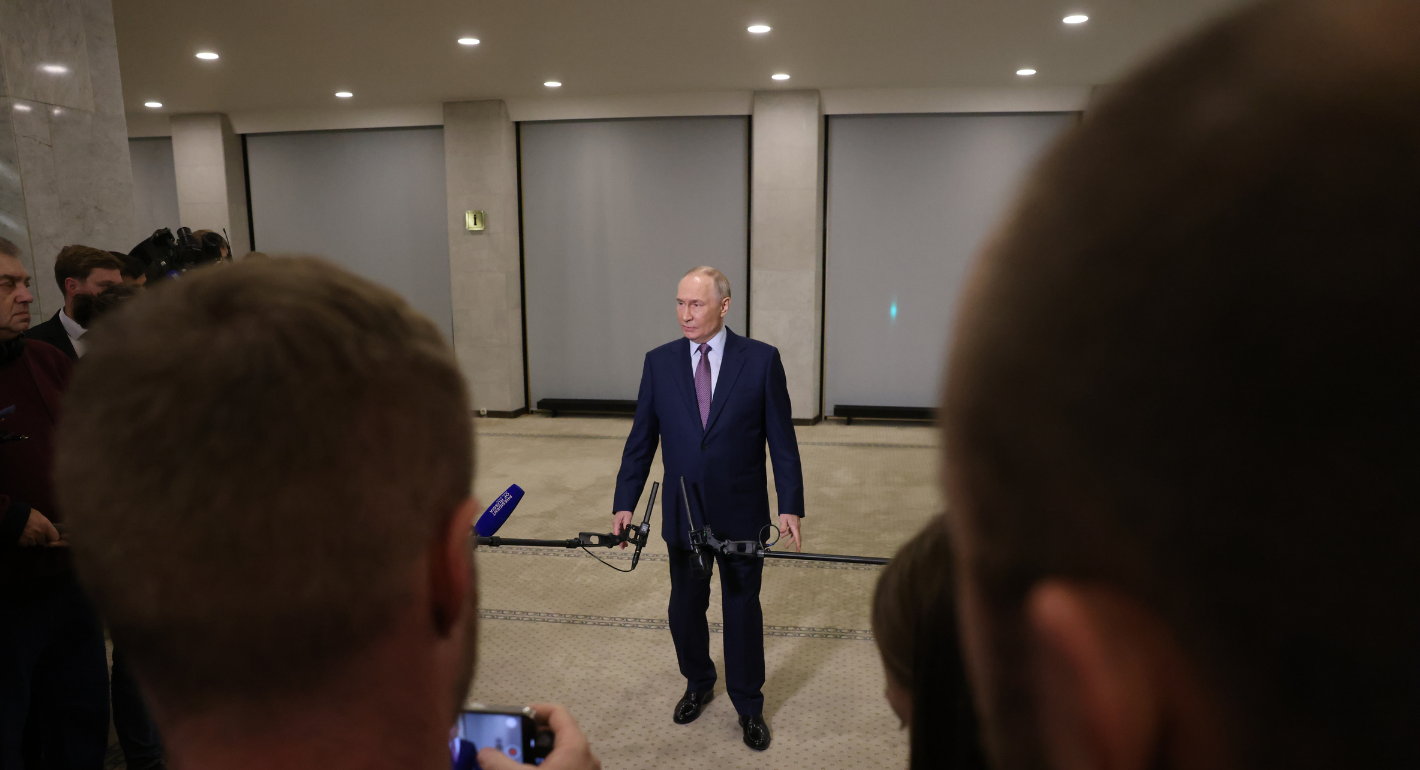
The EU had to compromise to adopt a twenty-first sanctions package against Russia, exposing growing cracks in the union’s resolve. Is this latest, weaker round worth it to keep pressure on Moscow?
Rym Momtaz, ed.

Trump is distracted and Ukraine wants Europe to step up. The continent’s leaders must find their voice and assert it in talks with Russia.

Alissa de Carbonnel

Mounting economic strain and battlefield losses will not necessarily make the Kremlin less dangerous. They could instead push Moscow toward a more aggressive hybrid campaign designed to test NATO’s Eastern flank, exploit allied hesitation, and fracture European resolve.

Maksym Beznosiuk
Over the past ten years, NATO has held almost as many summits as it did during the entirety of the Cold War. Are they still useful, or is it time to stop holding annual meetings?
Rym Momtaz, ed.